As a warming climate changes skiing, is it making the sport riskier?
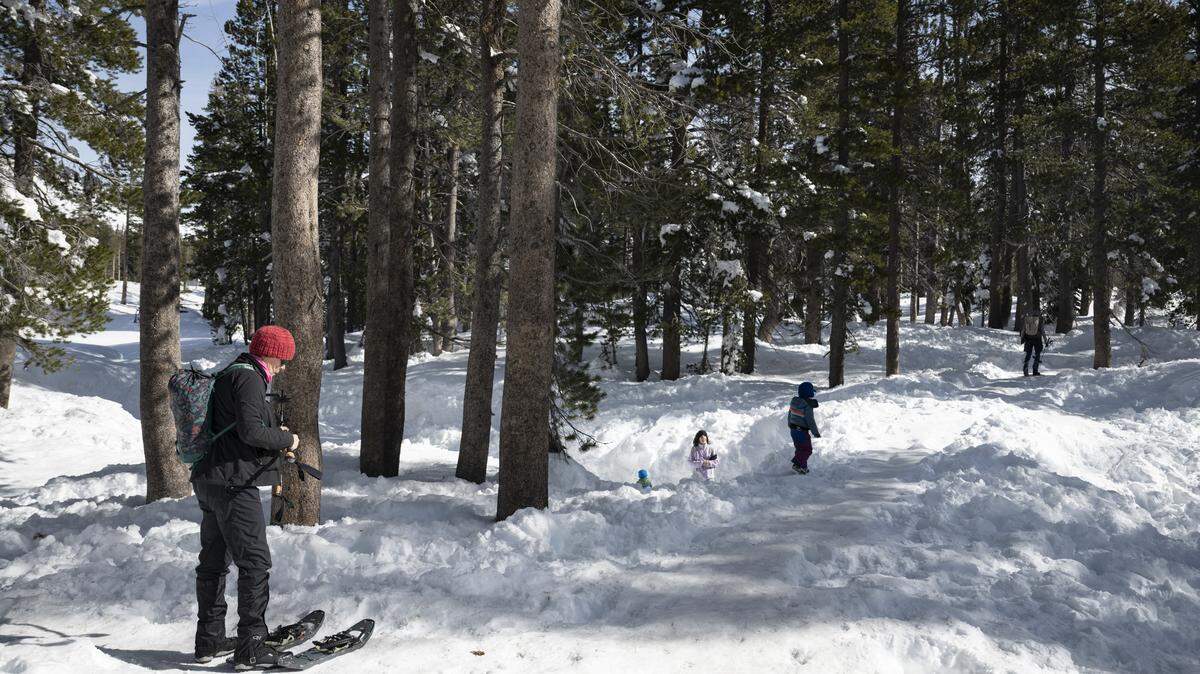
Skiers and snowboarders, especially when fired up by fresh snow, can talk with enough slang that it can sound like they’re speaking in tongues. One new addition to the lingo is the term “frothing” — a foaming-at-the-mouth excitement to plunge downhill into deep, light , fresh powder snow.
For Sierra skiers and snowboarders, the frothing has been rare this winter. Throughout the 2025-2026 ski season, weeks have gone by without snow. And what’s already been a thin season may now be headed toward an early end.
Data from the Department of Water Resources shows snowmelt accelerated unusually early as of March 1, with 20% of the statewide winter snowpack already gone.
“Temperatures are stubbornly, unseasonably warm — even overnight in the Sierra Nevada mountains,” the agency noted Wednesday. That same day, Mt. Shasta Ski Park became the first resort in Northern California to close, citing the dwindling snowpack and an incoming stretch of warm weather.
Amid such a season, it was only natural ski lovers wanted to make the most of the February blizzard that blanketed California mountains and over four days dropped as much as eight feet of new snow in parts of the Sierra.
The storm brought skiers and riders some of their best turns of the year – but also a series of deaths. Nine people died in an avalanche near Donner Pass while trying to exit the backcountry amid a historic blizzard. Three more people died in bounds at Tahoe-area resorts amid and immediately after that storm, as skiers flocked to the new snow. Those causes of death aren’t public yet, but in one case, authorities indicated a skier fell into a tree well at Northstar Resort, a hazard increased by large new snowfalls.
The death toll prompted the mayor of South Lake Tahoe to issue a warning. “We know that the mountains are a place of sanctuary, but they can also be unforgiving,” he told visitors and residents.
The Sierra has seen snowier ski seasons in recent years. But this year’s snow drought — and the ferocious February storm in the middle of it — are both in line with how climate experts expect Sierra winters to evolve in a warming world.
Those changes are expected to increase the chances of large, destructive avalanches. And if ski opportunities shrink, the deaths in February also raise the question of whether it will become riskier to enjoy them.
“The frothing that has been happening (after the February snows) is so real for those of us who find respite and joy and, you know, reprieve in the mountains,” said Sara Boilen, a Montana-based psychologist and backcountry skier who studies skiers’ decision-making. “And that frothing influences our choices in thousands of ways that we don’t even understand.”
Skiers are always going to take risks for good snow, Boilen added. In a bad snow year, the heightened danger, she said, “exists at that intersection of desperation, desire, longing, and drought.”
As winters shrink, storms intensify
Across both avalanche and resort deaths, there has been no documented increase in skier deaths in recent years. While avalanche deaths in the United States are well documented, ski resort deaths are not, outside of media accounts and law enforcement notifications.
In California, there is no statute requiring the state to monitor ski resort deaths, making it difficult to determine whether one winter is more deadly for skiers in bounds than any other, CalMatters reported.
But this winter, there have been at least five recorded deaths at Tahoe resorts, and another four at Mammoth Mountain.
“Skiing and snowboarding fatalities and catastrophic injuries are tragic, but also exceedingly rare,” said John Rice, president of Ski California, which represents 36 resorts in the state, including Mammoth as well as Northstar and Heavenly, where the Tahoe-area deaths occurred.
Ski California did not have data on ridership at its resorts during the February blizzard, a spokesperson for the group said.
Last winter, the 2024-2025 ski season, was the second best season for resort visitation nationwide on record, according to Ski California. That year, the group’s resorts stayed open an average of 140 days as nearly a third of the association’s members kept ski lifts running longer than anticipated.
This year, forecasters say such a long season is increasingly unlikely. And in the long run, there’s evidence climate change will mean fewer chances to ski.
One study, published in 2023, compared ski seasons across the U.S. from 2000 to 2019 with the period from 1960 to 1979. The first two decades of this century saw ski seasons that were five to seven days shorter, on average, the study found. By the 2050s, the study predicted ski seasons may have shortened by anywhere from 14 to 62 days, depending on what, if any steps, are taken to lower carbon emissions.
As of 2021, California had already lost roughly 75% of its Sierra Nevada glaciers compared with the beginning of the 20th century. But the warming mountain range doesn’t mean fewer major snowstorms, Daniel Swain, a climate scientist at University of California Agriculture and Natural Resources, said. In fact, it could mean more.
“We actually do see an increased likelihood of very large single snow events in a warming climate, potentially at very high elevations — just like we saw in February in the Sierra Nevada ... because there is more atmospheric moisture,” said Swain. “You can have heavier individual snow falls, even if snowpack decreases on average.”
There’s no concrete research on whether shortened ski seasons could lead to more crowds, or more risk-taking, at resorts when the big storms do come — but it’s not hard to imagine those two factors colliding.
“Winter sports come with inherent risks, but ski areas and our industry continually take steps to enhance guest safety,” Rice said.
In the backcountry, away from the resorts, snow safety researchers found that avalanche deaths have remained relatively flat since 2020, even as that branch of the sport has grown.
But there are scientific projections that climate change could increase the risk of larger avalanches.
Destructive dry avalanches
Avalanches happen when the snow pack gives way and slides down steep slopes. During winter storms, heavy snowfall can dangerously load those steep slopes, particularly if it comes after a warm period has weakened the existing snowpack structure. The risk factors for both intense dry avalanches, amid cold storms, and wet avalanches, when warm weather impacts the snowpack, could rise as a result of climate change.
Swain described the February avalanche as a “dry slab avalanche.” The key risk factor for such slides, he said, is how fast the snow falls, not just how deep it is. When a lot of snow falls very quickly, it stays powdery and loose and doesn’t have time to settle, compact or bond into a stable layer. That loose, unconsolidated snow is more likely to slide, making avalanches potentially larger during big storms.
Ned Bair, a research associate at the Earth Research Institute at UC Santa Barbara, said that while the total number of avalanches may decrease over time as the overall snowpack diminishes, the ones that do occur could become more intense due to climate change. The state’s Fourth Climate Change Assessment forecasts that by the end of the century the Sierra could face roughly a 48% to 65% loss of snowpack compared with the historical April 1 average due to “progressively warmer climate.”
“The number of avalanches across the entire Sierra Nevada or the entire western U.S. will probably decrease because the area covered by snow will decrease, but there will be more intense events,” Bair said. “Some of these areas where people are recreating now…may see more avalanche activity, or more days with higher danger.”
Even in a warmer climate, the Sierra Nevada will still have a core winter period at high elevations, while rising temperatures shrink the snowpack at low- and mid-level elevations. But near the mountaintops, more intense storms are expected, which could lead to more frequent and more intense avalanches during that winter window, Bair explained.
For backcountry skiers, on storm days, larger avalanches could run further and wider. In the worst cases, they may reach skiers on ground they considered safe during non-storm conditions.
The warming climate can also create unstable layers in the snowpack during weather “whiplash,” Swain explained. When the weather flips back and forth between warm and dry, then cold and snowy, then warm again, the existing snow can partially melt and refreeze into a hard, slick, icy surface. And that icy surface becomes a slippery layer with low friction underneath for dumps of powdery snow later, leading to a weak boundary between the icy layer below and the heavy, loose snow above, he noted.
“It does look like some of the major risk factors that applied to this particular tragedy in February in the Sierra are the kinds of risk factors that we would expect potentially to increase in a warming climate,” he continued.
Wetter, heavier avalanches
Warming temperatures over the long run could also mean more frequent and destructive “wet” avalanches, Bair warned.
Wet avalanches involve snowpack with water moving through it, either because rain has fallen on the snow or because warming temperatures have caused meltwater to pass through the layers of the snowpack. Wet avalanches typically move downhill more slowly than dry, powder avalanches, but the snow is much denser and heavier, which can make them just as destructive.
Those types of avalanches are becoming more common, even at higher elevations, Bair said.
Melt‑driven wet avalanches have traditionally been more of a spring problem, driven by strong sun and high sun angles rather than just warm air. In a warmer climate, he says a growing concern is more frequent rain‑on‑snow events, which can destabilize the snowpack and trigger unusual, sometimes very dangerous avalanches.
“Sierra Nevada temperatures have clearly increased due to global warming, and in fact across most of the mountain chain, reached their warmest levels on record this (2025-26) winter,” said Swain.
Historically, most winter precipitation used to fall as snow at South Lake Tahoe’s elevation of about 6,000 feet, Swain said. Winter rain was rare. Now, at that same elevation, a majority of winter precipitation is falling as rain.
That’s led to a “profound shift” at Lake Tahoe’s elevation, Swain said. “Increasingly, we see rain even at much higher elevations, like we did this winter. This winter, it’s rained many times at nine and even 10,000 feet, and on a couple of occasions, even up at 12,000 feet.”
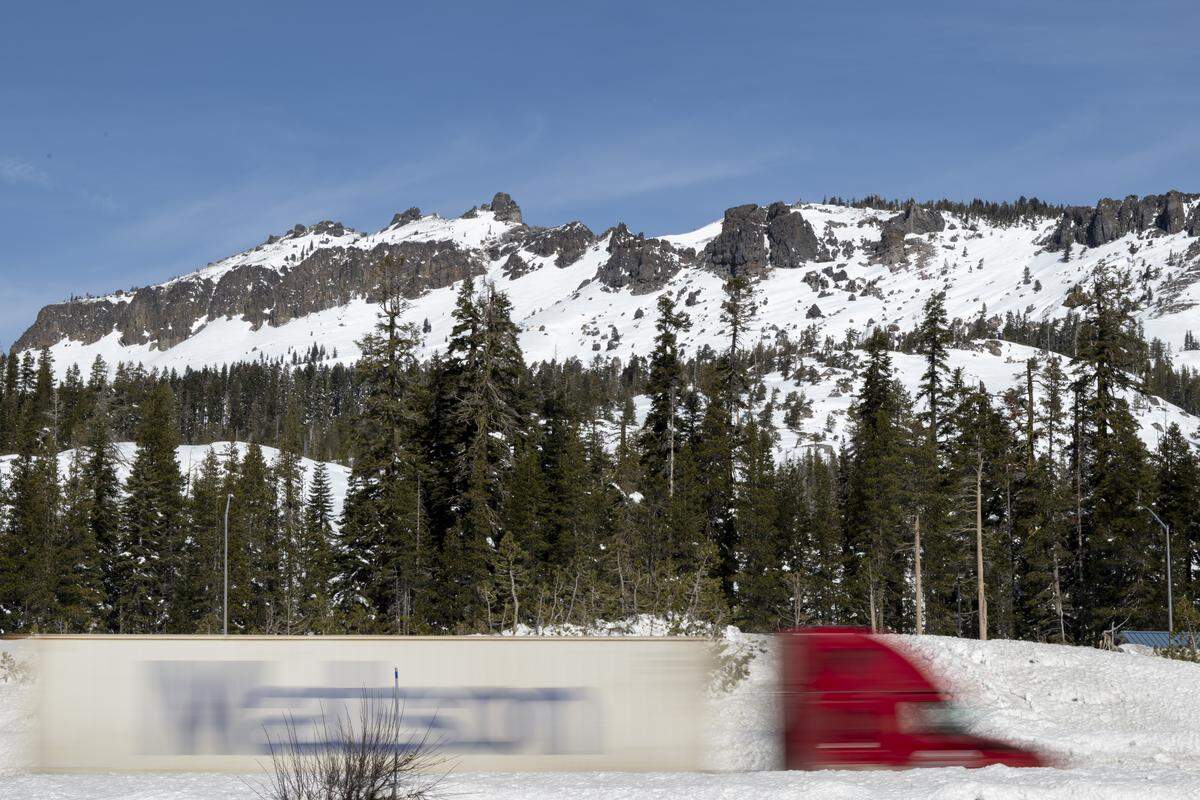
Last month’s deadly blizzard finally cleared on Feb. 20, and there were three days of powder skiing. Then, temperatures warmed. Rain fell, devastating the snowpack. On Feb. 24, that led the Sierra Avalanche Center, which forecasts avalanche risks, to issue its first high avalanche warning since the midst of the storm.
“Widespread areas of wet, unstable snow and numerous avalanches are expected today,” the warning read, stating rain was likely at all elevations of the range. “Avalanches from above could travel down through treed terrain, often considered ‘safe’ during storms.”
Fortunately, and perhaps because less people are “frothing” to ski in the rain, there were no reported deaths or injuries. But the powder was long gone.