Uber spends big on push to limit car crash lawsuits, kneecap trial attorneys
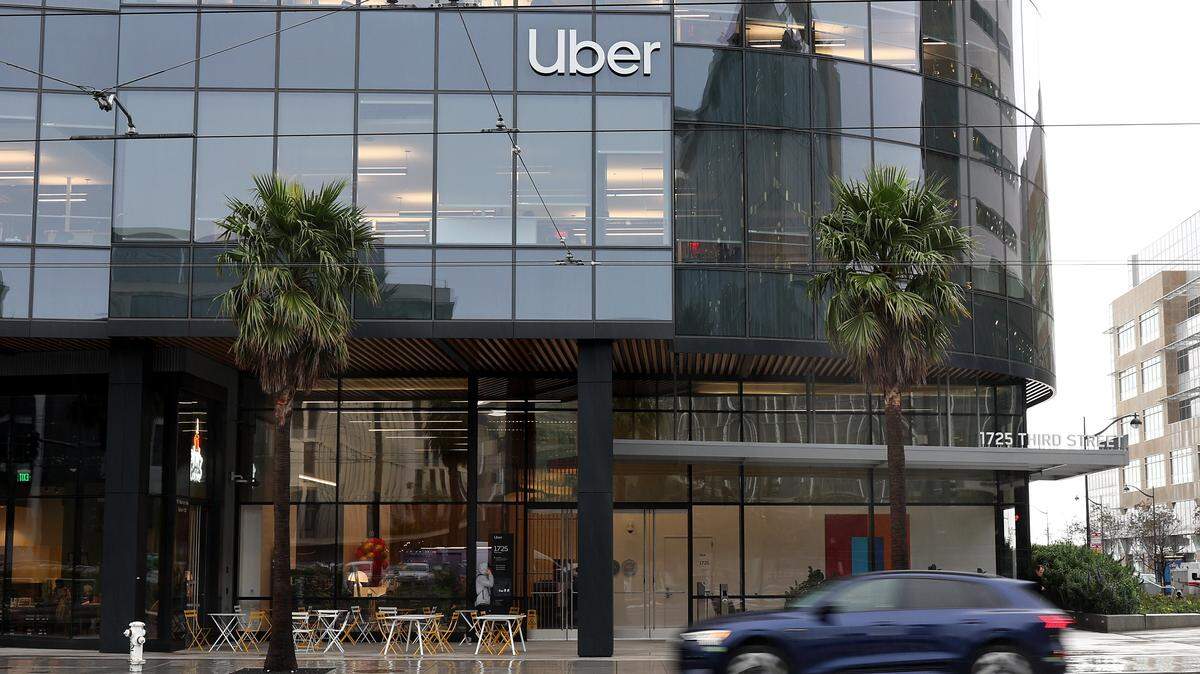
The ads from both sides describe an unscrupulous, moneyed and ruthless entity preying on people at their most vulnerable moments.
On one side are warnings of “predatory billboard lawyers who descended like vultures,” after natural and manmade disasters, illegally siphoned off settlement dollars and left car crash victims with medical debt but no settlement money. Those ads are paid for by the ride-hailing company Uber.
One the other side, ads with a similar aesthetic remind voters of a New York Times investigation that found Uber received a report of sexual assault or misconduct in its rideshares every eight minutes between 2017 and 2022 but delayed implementing safety measures.
“Now Uber is taking it one step further,” the ad voiceover intones, “trying to stop car crash victims from holding them accountable.”
Welcome to one of the most expensive ballot fights this election cycle. Uber, a perennial, prolific political spender, seeks to kneecap a longtime foe, the Consumer Attorneys of California, through a measure that would limit the fees attorneys can collect in car crash cases.
Legal experts warn the measure could have far-reaching consequences for the state’s civil court system, hitting not just attorney pocketbooks but denting courtroom access for people who are injured in accidents and don’t have the money to pay a lawyer up front.
Still, Uber might have the money to push its measure through. The company has spent more than $25 million this year on its campaign, according to campaign finance filings, with much more to come. Last month, the company dumped another $45 million into its campaign account. Campaign officials cited spending well above $25 million, citing $28 million in television ad buys alone.
Trial attorneys are, so far, spending almost as heavily, though it’s unclear how long they’ll be able to compete with the rideshare giant. The Alliance Against Corporate Abuse, a PAC the Consumer Attorneys of California created to fight Uber, reported spending $20 million so far this year with another $47 million on hand as of mid-April.
The group dropped two previous ballot measures that would have protected people’s right to hire legal counsel and increased Uber’s liability for injured passengers. A spokesperson told Politico that the group wanted to focus its resources on “beating Uber.”
In a statement, Uber ballot initiative spokesperson Nathan Click categorized the effort as “flailing,” and said the company wasn’t “going to let up an inch.”
“Spending $25 million of your donors’ money on a measure that didn’t qualify is political malpractice,” he said.
‘People first’
A third anti-Uber measure has likely made the ballot.
The Alliance Against Corporate Abuse announced last month they’d gathered sufficient signatures for that measure, which will ask voters to make ride-hailing companies liable for sexual misconduct during rides and require more background checks for drivers.
The trial attorneys and their allies say Uber’s inaction on sexual assault and harassment in the company’s vehicles is indicative of a company that would rather spend millions to change the legal system for all Californians than take responsibility for its drivers.
Uber meanwhile hopes voters are sick of consumer attorneys, and their ubiquitous billboard advertising, after scandals such as Thomas Girardi, the once-famed attorney convicted of embezzling from his clients, and the Downtown L.A. Law Group, which is accused of paying people to join its lawsuits over pollution and sexual assault claims.
With little public polling on the measure, it’s unclear if either side’s ad-buying blitz is swaying voters one way or another.
Roger Salazar, a Democratic political consultant who is not involved in either campaign, said he had noticed both campaigns aggressively advertising on streaming platforms like Hulu and YouTube.
He compared the spending blitz to the start of World War II, “when you had your main belligerents and then other countries got pulled in.” He noted groups like the Providers for Patient Care PAC, a new organization, and Consumer Watchdog have also weighed in against Uber.
“To me, it becomes a question of confusion for voters,” Salazar said. “Voters have to wade through ad, and both sides are portraying themselves as on the side of ‘people first’ on this. Uber is trying to protect itself from further legal damage, and the attorneys are trying to not be limited by artificial ceilings.”
But some legal experts, academics who aren’t part of either campaign, say there’s a real danger to California’s civil justice system lurking beneath the high-dollar grudge match. Though capping attorney fees at 25% may seem benign to voters who aren’t familiar with the civil justice system, a growing chorus of law school professors and researchers say it would remove the financial incentive for law firms to take up cases where they aren’t paid any fees upfront.
“Uber’s interest, of course, is not really about helping automobile accident victims — no one should think that for an instant,” UC Berkeley School of Law Dean Erwin Chemerinsky wrote in a column for The Bee in March.
Attorneys invest significant sums of money and time to take on cases without an assurance of a return, University of Washington Professor Emeritus Michael McMann told The Bee in a March interview. They approach those cases like a stockbroker considers a new investment, McMann said — with an eye toward making a return. By capping the amount of that return, Uber would significantly narrow the cases attorneys will risk taking up, he said.
The civil justice system is “one of the few mechanisms we have to hold corporate power and government power accountable,” McMann said. “It’s not a great system, and it’s inadequate, but to further undercut it would undercut consumer rights.”
Healthcare providers have also come together to oppose the measure, because of conditions it would place on the amounts of medical fees that could be awarded through court settlements.
The Attorney General’s office, in its fiscal analysis of the measure, wrote that it could drive up costs to Medi-Cal as less accident-related doctors’ bills get paid through lawsuits and people have to rely on the state. Increased Medi-Cal costs could run into the tens of millions, according to the analysis.
Doctors and other providers formed a new political action committee last year to contest the measure. That PAC is likely to be a smaller player in the ad wars — it’s reported only $5 million as of April.
Leverage
Federal juries found Uber liable in two cases where one driver in North Carolina groped a woman and another in Arizona raped a woman. In the Arizona case, Uber was ordered to pay the female survivor $8.5 million, which the company said it would appeal.
Uber has long maintained that it is a technology company that facilitates rides and is not responsible for the behavior of its drivers, who are considered independent contractors under labor law. In 2020, a coalition of “gig economy” companies including Uber, its rival Lyft, DoorDash, Instacart and Postmates spent over $200 million to convince voters to pass Proposition 22, which kept them classified as independent contractors who are not entitled to the same benefits as full-time employees. The measure was the most expensive initiative in state history.
Critics have more recently sought to highlight the ride-hailing company’s early support for former Rep. Eric Swalwell, whose campaign collapsed after five women accused him of sexual misconduct. Swalwell has denied the allegations. Uber cut a $2 million check for an independent expenditure backing Swalwell three weeks before he dropped out and resigned from office. The company also donated $150,000 to former Democratic Rep. Katie Porter and $39,200 to Republican Steve Hilton, whose wife is a former Uber spokesperson.
“There’s something just so ironic about a company who’s been accused of turning a blind eye to sexual abuses among its drivers funding the IE for a big sexual offender for governor,” said Jamie Court, the president of advocacy nonprofit Consumer Watchdog, which has frequently inveighed against industry groups.
“We’ve engaged in the governor’s race because, as a California-based company, we have a direct stake in the state’s future. We’ve supported candidates focused on innovation, competitiveness and affordability,” Uber spokesperson Zahid Arab said in an email.
Uber received roughly $153,000 back of its $2 million investment from Swalwell, according to campaign finance records. Swalwell spent the outstanding $1.85 million on ads, according to a spokesperson for Bearstar, which managed the former congressman’s super PAC until he withdrew from the race.
Bearstar, which has long advised Gov. Gavin Newsom, is now running a super PAC in support of former Attorney General Xavier Becerra, who has surged in polling since Swalwell dropped out of the race.
Arab said Uber had not decided on any future candidates to support and had not donated to anyone else.
Uber and the Consumer Attorneys are likely trying to gain as much leverage as possible in the event the Legislature takes action, according to Republican consultant Rob Stutzman.
“In terms of public opinion, it’s ‘how well positioned are you?’” he said. “They want to accumulate as much political capital as possible.”