After Newsom couldn’t stop it, California braces for billionaire tax brawl
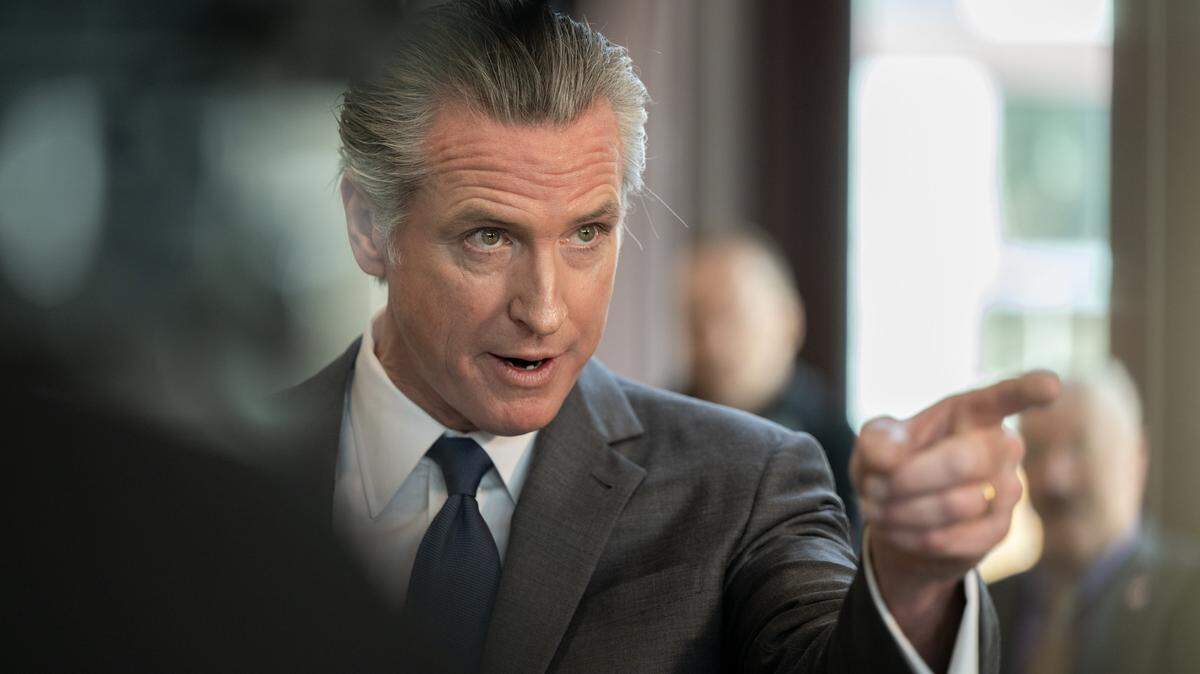
A week after Gov. Gavin Newsom failed to broker a deal to stop a proposed billionaire tax, both sides of the fight are trading blame and bracing for a high-stakes, nationally-watched political brawl that could set a new benchmark for voters’ anti-establishment mood.
If passed by voters in November, the proposed tax, now labeled Proposition 40, would levy a one-time 5% tax on California residents with more than $1 billion in net worth. Backers arguing the revenue is needed to stabilize California’s healthcare system after federal cuts approved by President Donald Trump and Republicans last year. Legislative analysts predict up to two million Californians could lose Medi-Cal coverage because of the federal law, H.R. 1, threatening the bottom line of hospitals that rely on that revenue.
Critics, including Newsom, argue the wealth tax will drive away high earners, whom the state heavily relies on for tax revenue to balance its budget.
In an interview with The Sacramento Bee Wednesday, the labor leader behind Proposition 40 accused Newsom of failing to propose any alternative ahead of the June 25 deadline for withdrawing ballot measures.
Dave Regan, the president of SEIU United Healthworkers West, said he has not met with Newsom since December and that the governor “never entertained a serious plan” to respond to healthcare cuts triggered by the Republican megabill signed by Trump last June.
“The only thing that [Newsom] communicated clearly to us was that he would not consider any tax on billionaires,” Regan said.
Regan declined to rule out future taxes on billionaires to plug what SEIU-UHW estimates to be an annual $20 billion shortfall caused by federal cuts. But he said his coalition was crossing “one bridge at a time.”
Newsom’s press office didn’t respond to requests for comment. But Rob Lapsley, president of the California Business Roundtable, said the governor’s office “tried hard” to get the measure off the ballot, without going into specifics. He accused Regan of making demands that were “extremely unrealistic.”
“There was never a good faith effort on [Regan’s] part, quite frankly, to try and come up with something that would work for all sides,” Lapsley said.
He projected confidence the billionaire tax would fail in November but said opponents of the new tax are already preparing legal strategies to stop it if voters approve the initiative.
Surveys suggest a close fight
The Prop. 40 fight ramps up amid a rising tide of frustration from Democratic voters over the party’s platform and politicians.
In Congressional primaries in Maine, New York, Colorado and California’s Central Valley, Democratic voters have recently elevated progressive candidates who made economic populism a central pillar of their campaigns.
And despite his opposition to California’s billionaire tax, Newsom laid out his own, narrower national tax proposal last week targeting tax-free loans billionaires use to skirt paying income taxes.
It’s not clear how those trends will shape a statewide race focused on the billionaire tax. In June primaries, California voters narrowly rejected the gubernatorial field’s most outspoken progressive — Democrat Tom Steyer, a reluctant supporter of the billionaire tax — in favor of two critics of the measure: veteran Democratic politician Xavier Becerra and Republican Steve Hilton.
Polls suggest at least so far, Newsom and other prominent Democratic politicians who’ve opposed the measure are at odds with their base.
A May poll by the Public Policy Institute of California found 54% of likely voters backed the measure after hearing a short summary of it, with 45% opposed. That poll found some of the strongest support among Democrats, more than three-quarters of whom said they back the measure. Support was also strong among voters under the age of 45, renters and lower-income Californians. It was weakest among Republicans, white voters, and people living in the Central Valley.
Backers of the proposition have also cited a different, February poll by POLITICO and UC Berkeley’s Citrin Center for Public Opinion that found 50% of registered voters supported the initiative; another 14% were undecided and leaned toward backing it.
“It is overwhelmingly popular," Regan said.
Still, PPIC pollster Mark Baldassare noted that opponents of California ballot measures historically have had an easier time convincing voters to vote “no,” especially if they buttress their message with campaign spending.
“There’s less at stake in voting no than there is in voting yes,” Baldassare said. “You vote no, you’re just voting for the status quo.”
A reprise of a recent fight?
Opponents of the ballot measure formed a panoply of groups to counter the new tax, including ones backed by Newsom, Google co-founder Sergey Brin, the Roundtable and Bay Area billionaire Chris Larsen.
Lapsley said those groups are now coordinating messaging and strategy. Allies include Brin’s Building a Better California, which is bankrolling two counter-measures aimed at undermining the billionaire tax.
The critics also plan to lean on a playbook honed in the fight over Proposition 15 in 2020. That measure aimed to eliminate Prop 13 tax breaks for commercial and industrial properties, with the resulting funding directed at public schools and community colleges.
One September 2020 PPIC poll found 51% of likely voters supported the so-called “split roll.” But an identical percentage of voters ultimately cast ballots against it, seemingly persuaded by business groups’ argument that it would chase employers out of state and force them to pass costs to consumers.
Billionaire tax critics are already making a similar argument around Prop 40: that its impact will extend far beyond the ultra-wealthy. They point to language in the measure that allows the Legislature to alter the Billionaire Tax Act with a two-thirds vote, which Lapsley argues opens the door to far more sweeping tax changes.
Regan dismissed such arguments —the measure only allows the Legislature to alter “if the statute is consistent with and furthers the purposes of the 2026 Billionaire Tax Act”—and said his proposal was far simpler, more straightforward and more popular than the 2020 measure.
Other critics of the tax are highlighting statements from Newsom that the tax endangers state revenues, seemingly targeting left-leaning voters who may have reservations about the proposal. Larsen’s group, Golden State Promise, has already spent $10 million on voter contact, including mailers prominently featuring Newsom’s opposition to the tax.
Roger Salazar, a Democratic consultant leading the group, said they aimed to separate voters’ general feelings about taxes on billionaires from this specific proposal.
“Whether it was well intended or not, it ends up hurting the folks it’s designed to help,” he said.
Regan has had a tense relationship with some quarters of the labor movement and didn’t collaborate with some of the labor movement’s biggest players on the billionaire tax. Several unions, including the California Teachers Association and State Building and Construction Trades Council of California, have come out against Prop 40, citing fears about long-term state revenue.
It’s not clear whether CTA, a major Sacramento power broker, will actively commit resources to countering the billionaire tax. A spokesperson for the group said it was focused on passing its own ballot measure that cements a current tax on high earners.
Regan predicted most unions would eventually join his fight, with several expected to take votes in the coming months. The group plans on recruiting 50,000 volunteers and is actively fundraising to pass the measure.
Regan argued skeptics like Newsom and the CTA were betraying their base.
“They are out of step with their own constituents and their own members and the people that they claim to represent,“ he said. “I think that a handful of so-called leaders ought to wake up and smell the coffee.”
Lia Russell contributed reporting.