June election drew the highest turnout in governor’s primary race since 1998
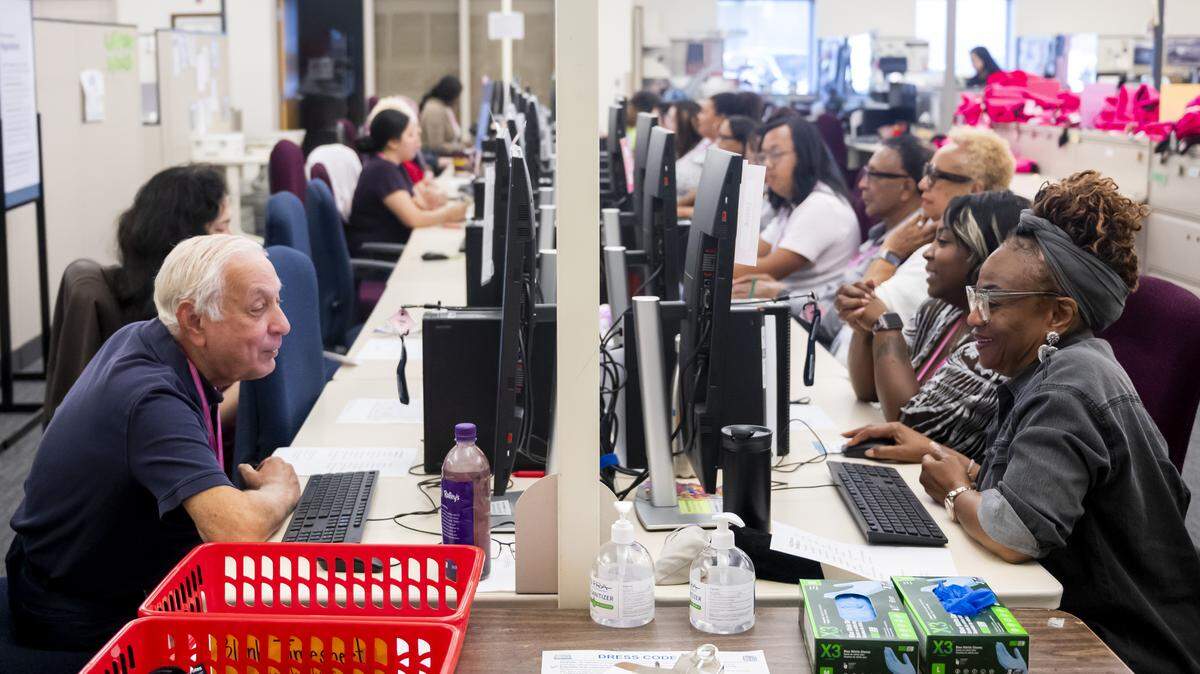
The highly competitive race to replace Gov. Gavin Newsom helped draw more voters to cast ballots in almost three decades of gubernatorial primaries.
Nearly 41% of registered voters cast ballots in the June primary, according to Secretary of State Shirley Weber, who certified the results of the primary on Friday. The last governor’s race to top that turnout was 1998, when Democrat Gray Davis emerged from a crowded field. That year, more than 42% of registered voters cast ballots in the primary.
While the Associated Press called the 2026 primary last month for Democrat Xavier Becerra and Republican Steve Hilton, the final results show Democrat Tom Steyer came within 167,000 votes of locking out Republicans from the November election. Under California’s jungle primary rules, the top two candidates advance, regardless of their party affiliation.
The final tallies:
- Democrat Xavier Becerra: 28%
- Republican Steve Hilton: 24.6%
- Democrat Tom Steyer: 22.8%
- Republican Chad Bianco: 10.2%
- Democrat Katie Porter: 4.4%
- Democrat Matt Mahan: 3.5%
Turnout was highest in Marin County, where 61% of registered voters cast ballots. The lowest turnout was Imperial County, where the total was 27%. Sacramento County saw above-average, 44% turnout.
Of the more than 9.4 million ballots cast in June, almost 9 out of 10 were cast by mail.
Despite this year’s relatively high voter participation, turnout in California elections was substantially higher from the 1950s through 1970s, when more than half of registered voters regularly cast ballots in primaries. Turnout in gubernatorial primaries peaked in 1978, with nearly 69% of registered voters casting ballots.
Turnout hasn’t reached those heights in the modern era despite changes advanced by California Democrats in recent years designed to increase voter participation, like mailing all registered voters a ballot.
Mindy Romero, the director of the nonpartisan Center for Inclusive Democracy, said the issue partly came down to civics education and campaign spending. Primaries were often seen by voters as less consequential and campaigns often narrowly targeted their messages at people most likely to cast ballots. But she argued voters also needed more proof that their voice mattered.
“People have grown, I think, understandably cynical and more removed from the voting process,” Romero said.