
‘We’re at war’: Opponents reveal embattled California union president’s past troubles
Richard Louis Brown dodged his opponents for nine months.
The SEIU Local 1000 president survived claims that his election was illegitimate. He scoffed at a board of directors vote to strip his leadership powers. Brown, 52, even managed to return to his office in the union’s Sacramento headquarters after three vice presidents locked him out.
But he was forced to concede — at least temporarily — when a Sacramento Superior Court judge ordered him last week to stop exercising any powers as president of California’s largest state employee union.
The dramatic events leading to the court order have raised the stakes for questions about Brown’s leadership position and determining the way forward for the influential organization that represents 100,000 state employees and oversees a $47 million budget.
“It’s been such an unexpected chain of events,” said Jared Reece, a Local 1000 steward. “I don’t think anyone could have seen it coming.”
The union’s three vice presidents suspended Brown’s presidency and locked him out of the organization’s Sacramento headquarters Feb. 28. The trio scheduled a board of directors meeting Saturday, March 5, in part to ask the board to affirm the suspension.
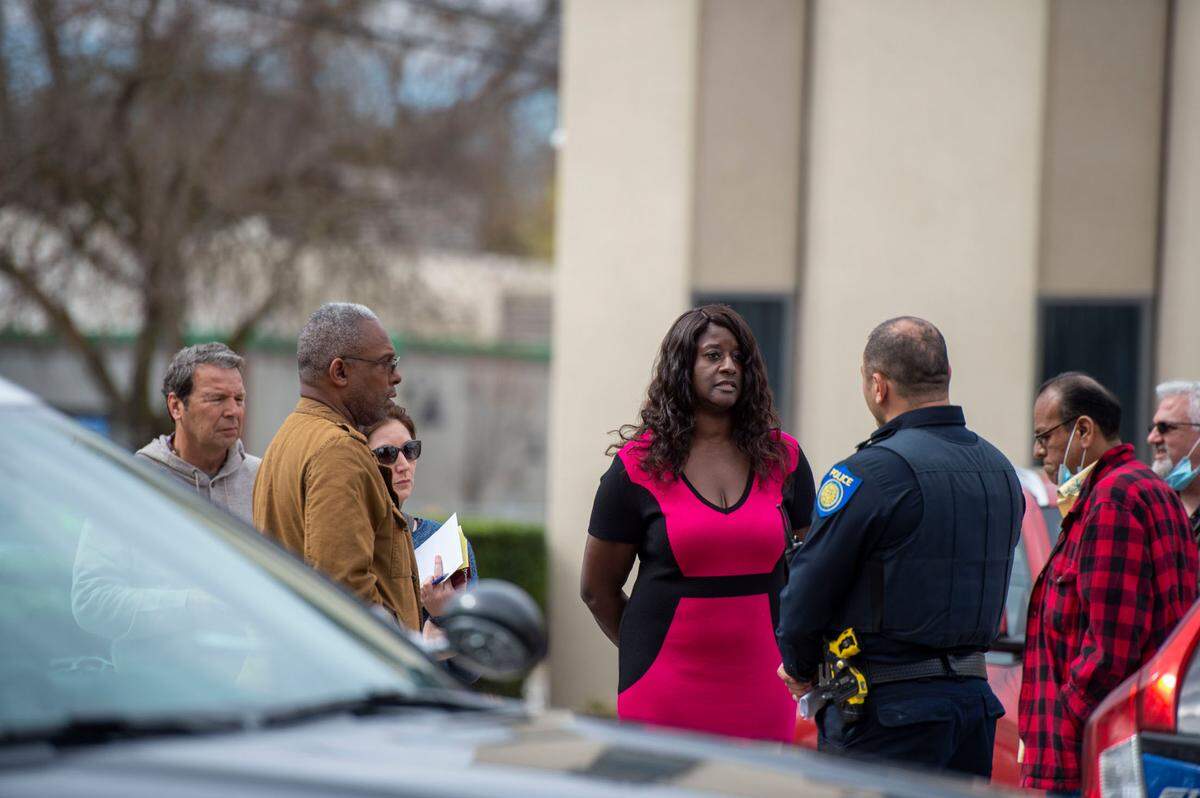
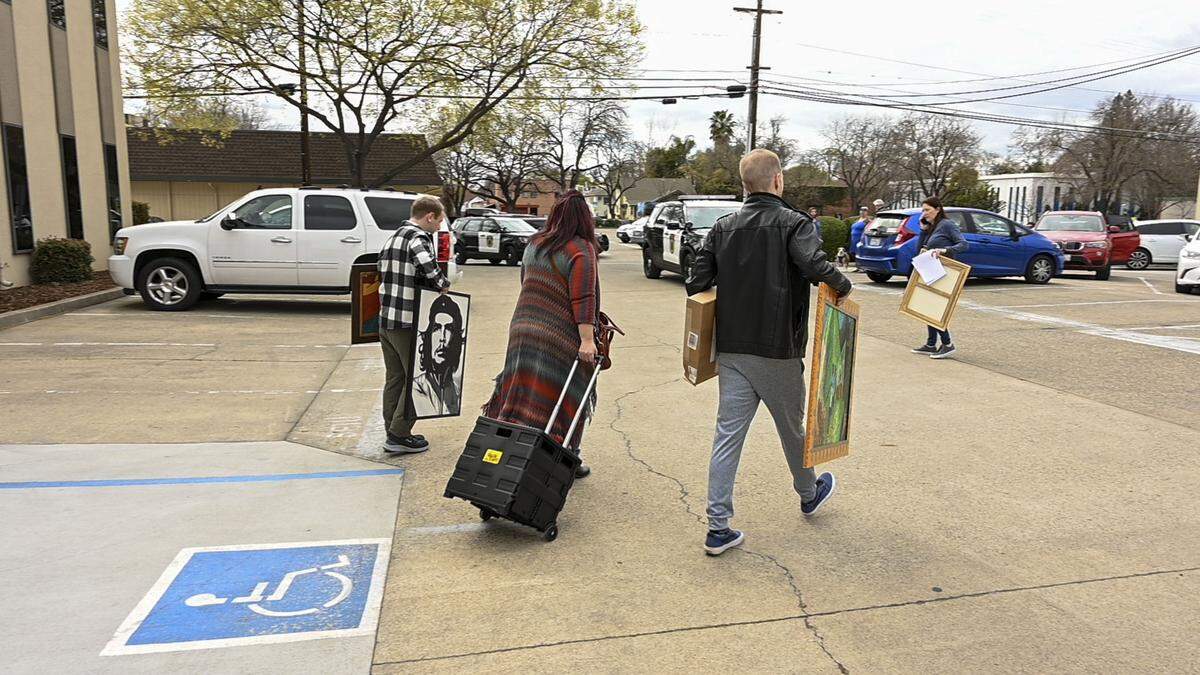
A group of Brown’s supporters gathered at the union’s headquarters that morning to protest the meeting, which was being held virtually. One of the protesters, identified in court filings as Cheryl Butters, grabbed an entrance door as it swung shut. Butters let in Brown and about 20 supporters, according to a building maintenance employee’s declaration filed in Sacramento County Superior Court.
The board delayed its meeting as it learned about the events at headquarters, where Brown’s supporters had called a locksmith to help penetrate deeper into the building. Brown was soon removing boxes of documents.
He has clashed with some board members since his election in May, but many in the union, eager for change after the last president’s 13-year stint, tried to work with him. By the time he slipped into the union’s headquarters 11 days ago, after months of contentious livestreamed meetings, he was lashing out at all three vice presidents, the chief of staff he hired, the union’s chief counsel and many of Local 1000’s employees.
“Local 1000, we’re at war with each other,” he said.
But he still had the support of the voters who elected him, including employees of a rural Lassen County prison Gov. Gavin Newsom is trying to close.
“They don’t realize what they’re doing,” Brown said of his opponents. “When they’re trying to remove me from office, suspend me permanently, what they’re telling people is your vote doesn’t matter. In this great country that I served, your vote matters.”
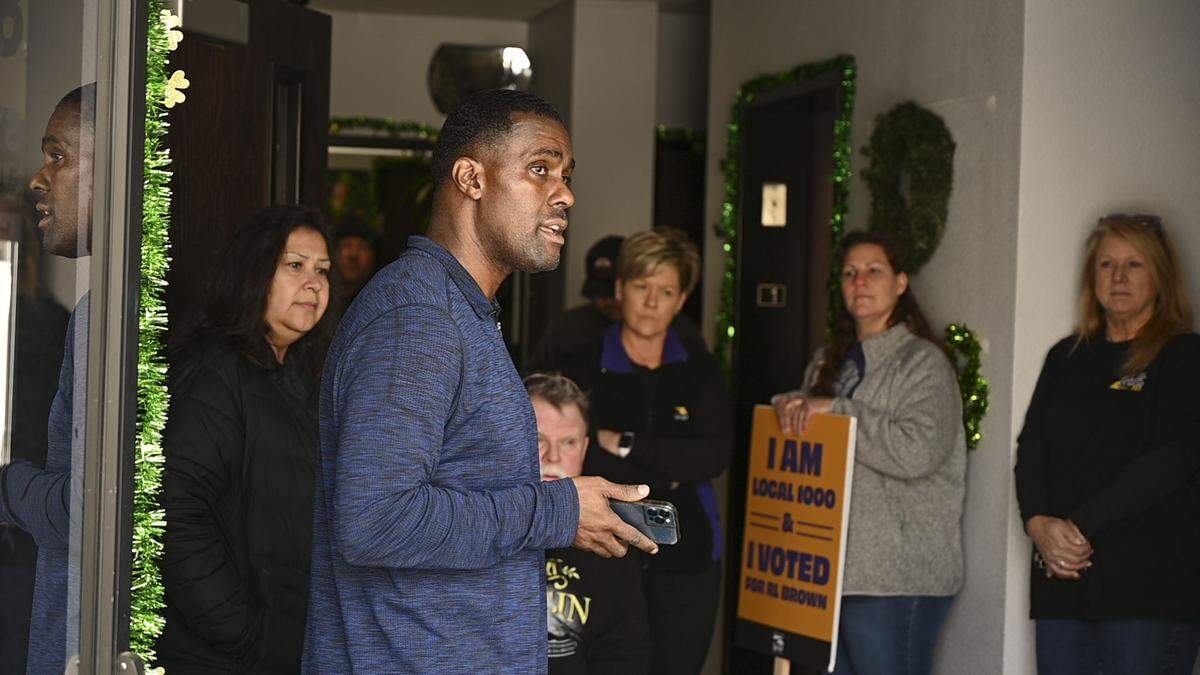
The board meeting’s participants — about two-thirds of the 65-member board — met in closed session. When the meeting entered open session, secretary-treasurer David Jimenez announced the group had voted unanimously to support the suspension.
Some board members skipped the meeting, questioning its legitimacy. Some of Brown’s supporters in the building stayed through the weekend, saying they had the right as union members to be there. Brown issued a leader’s directives in the following days, offering to provide union leave time to members to recruit new members.
Judge Steven Gevercer issued the restraining order Thursday, ordering Brown to leave the building, return the documents and stop exercising powers as president. Gevercer set a March 25 court date to decide whether to extend those restrictions through an injunction.
Joyce Thomas-Villaronga, the president of UAW 2350, the union that represents the 108 employees who work for Local 1000, said she wants to the the union’s leader to focus on its day-to-day operations, rather than all the infighting.
“I have managers laughing because they see all this stuff,” Thomas-Villaronga said. “I don’t know how you work there. The labor community thinks we’re a joke. I’ve never seen where one day this is a directive and the next day this is the directive and the next day this is the directive. It’s just constant moving and never knowing where we’re landing.”
Felony gun conviction
Brown now faces a union disciplinary hearing over the allegations on which the suspension was based. A lawsuit seeking to remove him from office likely will advance.
As more state workers represented by the union find out what’s going on, Brown’s opponents are sharing court records related to a felony and a divorce. And they’re raising questions about his mental health, occasioned by Brown’s rapid emotional shifts, numerology references and statements that his presidency was ordained by God.
The court records, obtained independently by The Sacramento Bee, fill in some gaps from Brown’s background that weren’t disclosed during his campaign and in interviews after he was sworn into office.
They show he was convicted on a felony gun charge 27 years ago, when Brown lived in St. Louis and was serving in the U.S. Air Force. And they allude to Brown’s exit from the city, leaving behind a wife and a young child.
Brown was arrested shortly after midnight on June 16, 1995, the night of his 26th birthday, in a park on the Missouri side of St. Louis, according to Missouri Circuit Court 22nd Judicial District records.
He was charged with a felony for carrying a concealed, loaded 9mm Glock in his waistband, the court records show.
Brown didn’t use the weapon or threaten to use it, according to the records.
A police officer testified to pulling up behind a blue BMW parked in O’Fallon Park, a spot officers said was known for illicit activity. An officer spotted the handgun after asking Brown to step out of the car, according to a trial transcript.
Brown told a prosecutor the police improperly pulled him over before the officer found the gun. He said he was driving through the park after becoming lost.
In the passenger seat was a woman, according to the transcript. Police said they recognized her as a prostitute, according to the transcript. She identified Brown to police as “Michael,” according to a police report.
Brown said that as far as he knew, the woman wasn’t a prostitute, according to the transcript. He said she was a friend he had met the day before, adding he spent time with her kids and family.
A jury found him guilty of unlawful use of a weapon in January 1996.
In interviews with The Bee, Brown said he owned the handgun legally but acknowledged he was carrying it illegally that night.
“I was protecting myself during that time period in the area where I lived in,” he said. “It’s not something I’m proud of, it’s something that happened. I know why it happened. And I don’t think it would have happened to someone who looked like you,” he said, suggesting race played a role.
He served a year of probation and was ordered to pay a $2,500 fine, according to a statement of the case submitted as part of an unsuccessful appeal by an attorney for Brown.
Concealed carry has since become legal in Missouri and many other states.
Didn’t pay child support
Brown was married at the time to Theresa Brown, who’s the same age he is. They had been married four years, according to Missouri Circuit Court divorce records.
Two years after the arrest, in April 1997, Theresa Brown gave birth to their son, according to the divorce records. The records show the couple separated in July 1999, when the boy was 2.
In an interview, Theresa Brown said she was unable to locate her husband after she broke up with him.
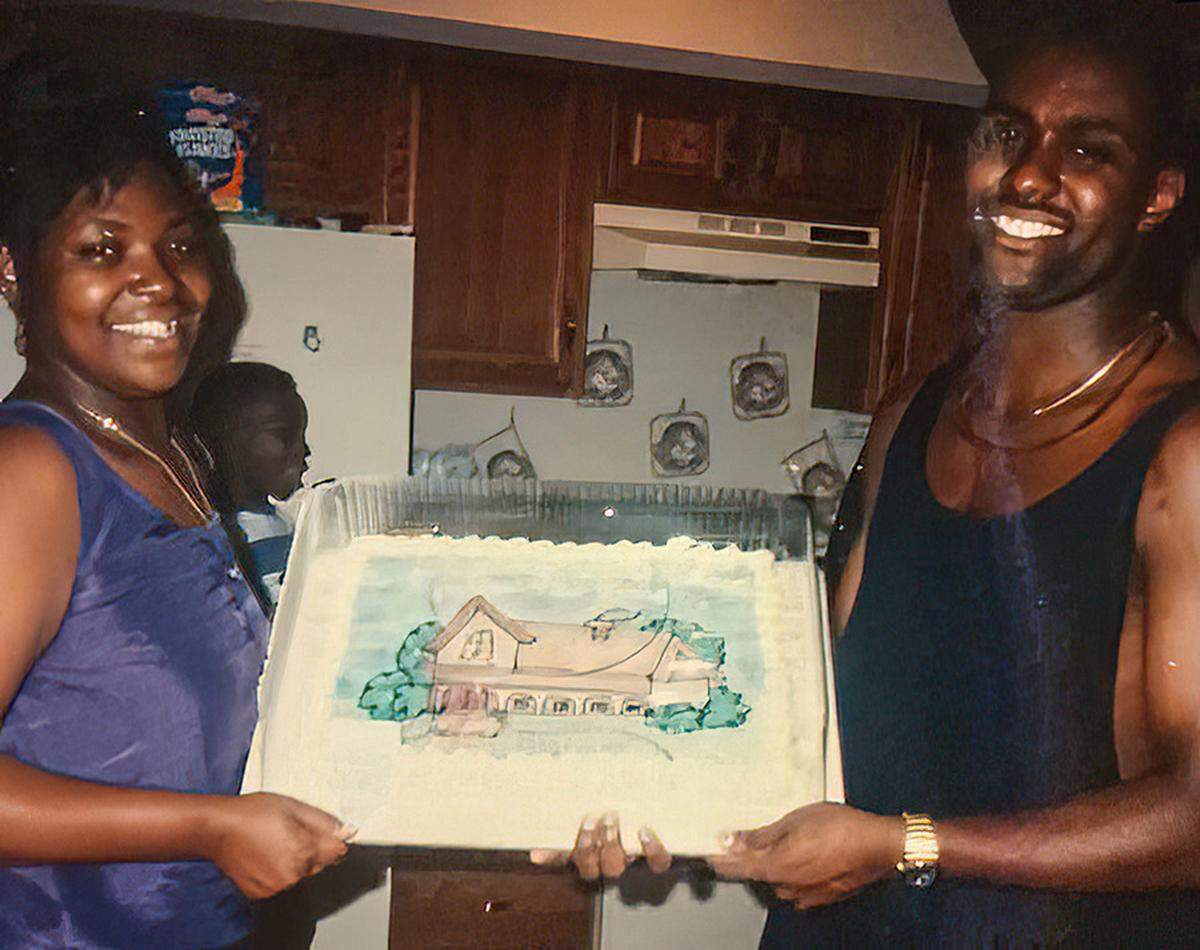
She said she tried to find him, but was told only that he had moved “out West.”
She completed formal divorce proceedings four years later, in his absence, in 2003, court records show. She said she had to publish a notice of the divorce in a local newspaper since she couldn’t find her husband.
She was awarded “all property currently in her possession,” along with responsibility for a loan on a 1999 Chevy Malibu, according to a judge’s divorce order.
The judge didn’t order any child support payments due to “inability to personally serve respondent,” according to the order.
“The only thing he’s done for (our son) was bought six cans of formula when he was born,” Theresa Brown said. “He’s never paid a doctor’s bill, Pampers, glasses, sports equipment, none of that.”
Richard Louis Brown did not respond to specific questions about his divorce and his son in a voicemail or a text. In an interview outside the union’s headquarters, he dismissed a general question about the court records.
“My past has nothing to do with me being the Local 1000 president,” he said. “People are saying these things about me to discredit me, to destroy me. Again, that’s racism, because anytime a Black man comes and brings the heat, and he refuses to sell out, they want to go into his past, they want to make stuff up, they throw everything on the wall, they see what sticks. That’s Racism 101.”
Campaign videos
He often references his Air Force service. In a June interview, he said he served from 1987 to 1996.
Brown said in that interview that he was an only child with a single mother, who was schizophrenic. He declined to share many other details, saying only that he had been married and divorced.
He graduated from Arizona State University with a Bachelor of Science degree in 2007, the university confirmed.
He said he started working for California’s Employment Development Department in 2009 and transitioned to a Treasurer’s Office commission in 2011. He first campaigned for Local 1000 president in 2015.
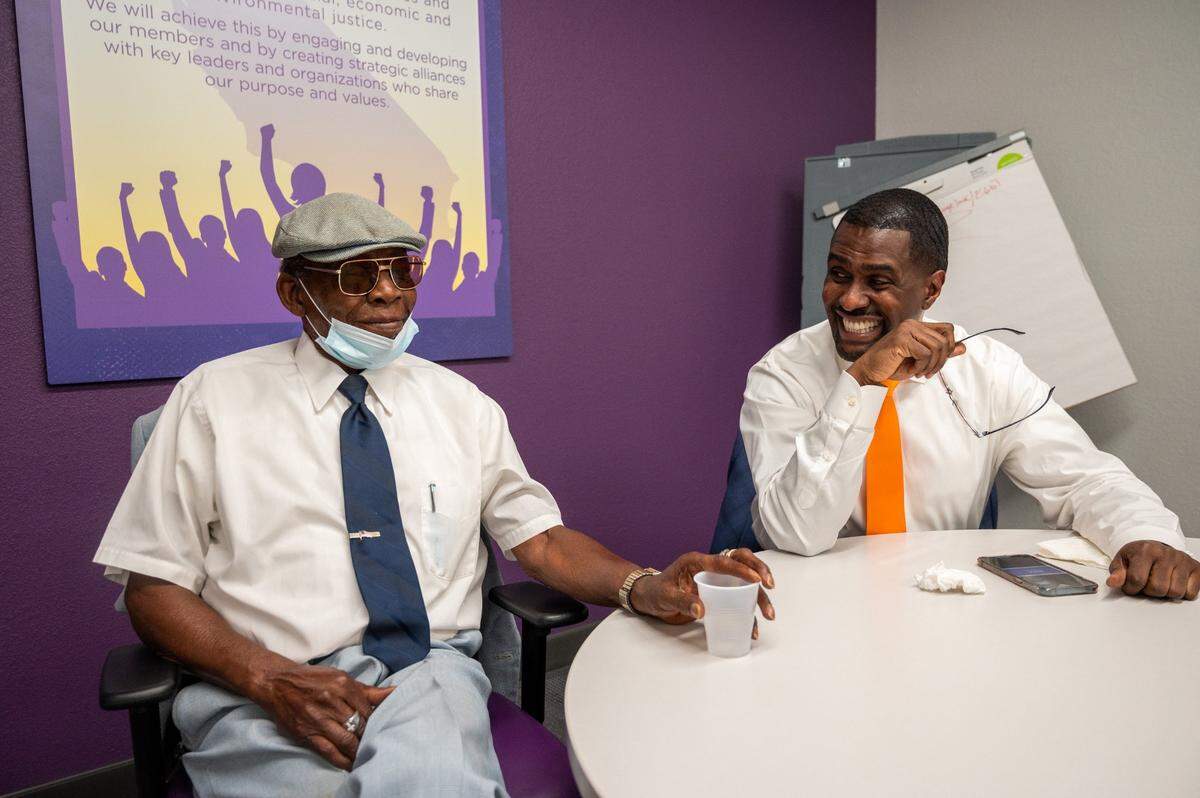
Theresa Brown said she heard he was in Sacramento. She occasionally searched for her ex-husband on Facebook without any luck, she said.
In 2016 or 2017, she typed in his name again, and, “lo and behold, there he was,” she said.
“It was campaign videos,” she said, referencing the recordings Brown made in his first bid for Local 1000 president. “I said to myself, ‘Look at this s---’”
She said she called him several times. He answered once, she said, and he hung up.
Now their son is 24 and has a son of his own, she said.
Theresa Brown said she was a steward with the American Federation of Government Employees Local 96, the union that represents employees at the Veterans Affairs Medical Center in St. Louis, where she has worked for 30 years.
She said she wants Local 1000’s members to have a fuller picture of their president.
“I want his story out there so his followers can know, this is the type of person you voted for,” she said. “And I feel like he could just walk away from the union at any time.”
Election claims, board vote, lawsuit
Richard Louis Brown’s background hasn’t come up in official efforts to strip his power or suspend him.
Those efforts, which resulted in board of directors votes in October and on March 5, have focused on board members’ allegations that Brown has excluded board members from union governance and misspent union money, including unauthorized political spending on a California Public Employees’ Retirement System election.
Brown has said all the efforts to constrain him have come from entrenched board members working to preserve the status quo at the organization, accusing them of being concerned above all else with securing paid leave to do union work rather than their state jobs.
He has said a Sacramento police visit to his home set the tone of his presidency. Police arrived early in the morning on May 25, the day after his election, to check on an anonymous report of a woman screaming.
“They were hoping that I’d lose my life,” he said of the police call in a livestreamed meeting Dec. 15. “And so I’ve been fighting since the time i walked up in here, and I’ll be fighting when I walk up out of here as well.”
He also regularly cites a text that board member Theresa Taylor sent saying Brown could “suck a d---.”
He cites those two incidents nearly every time arguments with directors and union members turn heated.
Some union members told Local 1000’s parent organization, SEIU International, that they feared for their safety ahead of a planned meeting in December due to Brown’s comments.
In August, ahead of planned rally outside the Capitol to protest the closure of California Correctional Center in Lassen County, union member Michael Guss urged Brown to support Gov. Gavin Newsom, who faced an imminent recall election. Guss expressed concerns the rally would be perceived as anti-Newsom.
Brown said he found Guss’ comments disrespectful.
“Y’all come on down with your protesters, and them folks from Lassen County — because they’re not all coming on buses, some of them are coming in their pickup trucks. Mm-hmm. Pickup trucks — they believe in the Second Amendment, maybe even freedom of speech. Come on down and tell them that,” Brown said in the video call.
In a Sept. 15 video, Brown invited critics to face him at his house, providing his Oak Park address.
“You ‘bout the cops, no, you come to my house yourself,” he said. “Don’t send the cops to my house. You show up at my house if you’re looking for some action.”
Brown has repeatedly said he was told by God in a dream that he would be the union’s president.
“I told you this, I was put here through a revelation,” he said outside the union building March 5.
On March 6, in a lengthy video recorded inside the headquarters, he made several numerology comments.
He riffed on the number of the union chapter represented by Bill Hall, a board member who is a leader of the effort to strip his powers. Hall is president of District Labor Council 744.
“Seven plus four is 11,” Brown said. “And 11 plus four is 15. What does that matter? Because in the 15th day of June — because 6 and 15 is 21 — I showed up,” he said, referencing his birthday. “So thank you, Bill.”
Controversial election
The union has about 53,000 dues-paying members, and represents about 100,000 employees in a broad range of state jobs from prison nurses to urban office assistants to inspectors and custodians.
Just 7,880 of the members voted in the union’s May 2021 election, choosing among five candidates for president. Brown emerged with 33% of the vote, a plurality that made him president with a three-year term.
His victory was celebrated by a contingent of members who said they had been ignored by Yvonne Walker, the incumbent of 13 years, and who wanted the union to focus on pay and benefits rather than what they’ve called social justice objectives. The group includes clusters of rural prison employees, DMV workers and nursing home inspectors.
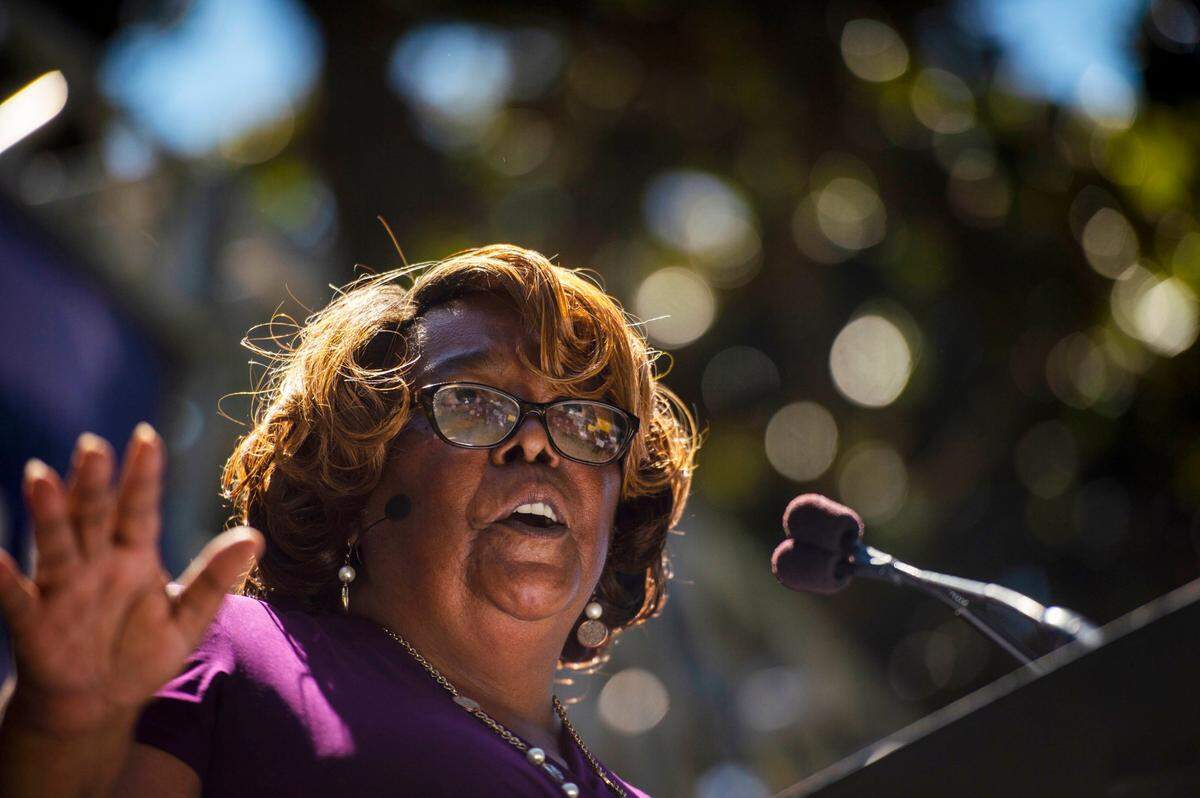
Both Brown’s supporters and his opponents have likened him to former president Donald Trump.
“He kind of appealed to those on the fringe that don’t always feel they have a voice,” said Reece, the union steward.
Candidates challenged the outcome in the days that followed, with several alleging irregularities and one accusing Brown of violating the union’s election code of conduct. A protest committee didn’t find cause to take any action.
From the start, Brown promised to make big, unconventional changes at the influential union. He maintains he will get represented employees a 21% pay increase and eliminate their retiree health care contributions. During his campaign he said he would cut their union dues in half. He also pledged to eliminate the union’s political spending and eliminate its involvement in social advocacy.
When board directors wouldn’t go along with parts of his agenda, he pursued changes himself. He made major spending decisions, held “confidential” budget meetings and didn’t disclose lawsuit details to the board, according to legal filings against him.
In October, 33 or 34 board members met. Brown called the meeting illegitimate, since he hadn’t called it to order as provided in the union’s policies.
Twenty-three participants voted in favor of proposals to transfer most of the president’s leadership powers to a chairperson selected by the board.
The group selected Hall, the board member, as chairman. Brown refused to acknowledge the result.
Hall sued Brown in January, seeking to force him to accept the changes, to remove him from office and to bar his re-election.
Hall filed the lawsuit Jan. 12. Brown was served legal papers after a funeral in Sacramento on Feb. 18.
‘I’m strategizing’
Around that time, he issued new directives requiring union representatives to get new approvals before helping members. He issued notices of adverse action to two employees he said veered from the directive.
Thomas-Villaronga, the UAW 2350 president, said Brown issued conflicting directives before initiating the discipline.
Local 1000 employees banded together to protest the discipline notices, saying the conflicting orders were characteristic of Brown’s management style, Thomas-Villaronga said.
Brown said the directives didn’t conflict, they just required clarification. But shortly after the employee protest, the three vice presidents voted to suspend him.
At March 5’s meeting of about 40 board members, 25 voted to support stripping Brown and future presidents of leadership powers. Under the proposal, the president becomes essentially another board member, albeit one elected by members at large. The vice presidents acknowledged Hall as leader in an announcement two days later.
Brown remained defiant in a livestreamed meeting Wednesday, March 9, the day before the judge issued the restraining order.
His supporters on the call vowed to fight for him, but some contemplated just canceling their membership.
Brown urged them not to. He asked them to send him money to help pay for attorneys’ fees.
“My enemies know that I’m not sitting back taking this punch, and I’m strategizing,” he said.
This story was updated March 16, 2022 to clarify when Richard Brown was served legal papers.
This story was originally published March 16, 2022 at 5:00 AM.