
California had to shell out $$1.7 billion for overtime, but not because all its workers wanted it
In an ideal world, Cal Fire Captain Jordan Motta said, he would volunteer for one or two days of overtime per month.
In reality, said Motta, a union representative with Cal Fire Local 2881, the state union representing about 5,600 permanent firefighters, he is regularly ordered to work double or triple that, and many times more in the height of fire season.
Last year, he said, he earned an average of about $4,000 per month in overtime pay on top of his regular $5,800 monthly salary. But with a girlfriend and a dog at home in Sacramento, he said the weeks away weren’t worth the money.
“The more you work, the more it becomes imbalanced for the pay-to-satisfaction ratio,” said Motta, 38. “If I work 30 days in a row, I don’t care how much I get paid. I want a break.”
Overtime has increased faster at Cal Fire than at any other California state agency in recent years, growing by 135% since 2012, according to an analysis by The Sacramento Bee. It is accelerating, adding costs for taxpayers and stress for some employees.
.JPG "SAC_xm0804riverFire149181 (1).JPG")
California paid state workers about $1.7 billion in overtime last year, up 8% from 2020, according to the analysis.
The figure, which was double the state’s OT bill from a decade ago, reflects pandemic costs and the deepening of long-running trends.
While annual raises have increased state workers’ pay across the board, overtime has gone up more. In 2013, agencies paid about $6.96 in overtime for every $100 in regular pay. The figure ticked up to $7.57 in 2017, and in 2021 reached $9.24, according to The Bee’s analysis.
The top four departments, with combined overtime spending of nearly $1.3 billion last year, have consistently topped the state’s list of overtime spenders.
They’re all departments with 24/7 operations and public safety functions that come with staffing mandates: Cal Fire, the Department of Corrections and Rehabilitation, the California Highway Patrol and the Department of State Hospitals.
The Employment Development Department was a newcomer to the list, ranking fifth with about $87 million in overtime pay last year.
Some of the reasons for the spike in overtime — more fires, more unemployment insurance claims, more protests — were beyond control. But several union leaders said the state’s difficulties hiring and retaining workers are forcing employees to work increasingly long hours.
“If we had invested along the way and brought in more folks, a lot of these problems and a lot of these extreme overtime hours probably would have been averted,” said Eric Soto, president of the California Association of Psychiatric Technicians. The union represents about 6,800 employees who work in state mental hospitals.
Cal Fire
The Department of Forestry and Fire Protection paid $247 million in overtime in 2021.
That’s up from $105 million in 2012, according to The Bee’s analysis. In that time, the state has battled eight of the 10 most destructive wildfires in its history. Fire seasons are getting longer and conditions more explosive.
“The growth in the amount spent on overtime compensation in CAL FIRE is directly connected to incident activity and increased fire potential over the past decade,” spokesman Chris Amestoy said in an email.
Overtime is also built into firefighters’ schedules, because many work continuously in three-day, 72-hour rotations, responding to calls, performing other tasks and resting when possible at stations. For most state departments, overtime is any work over 40 hours. For Cal Fire, the threshold is 56 hours and the remaining 16 are overtime.
Lawmakers have been dedicating more money to firefighters and fire fighting. The recently passed state budget calls for hiring 486 new permanent Cal Fire employees and a similar number of seasonal employees over the next four years. But the department doesn’t have enough to meet the demands of today’s conditions, said Tim Edwards, president of Local 2881, which in addition to 5,600 full-time, year-around employees represents about 2,000 seasonal firefighters.
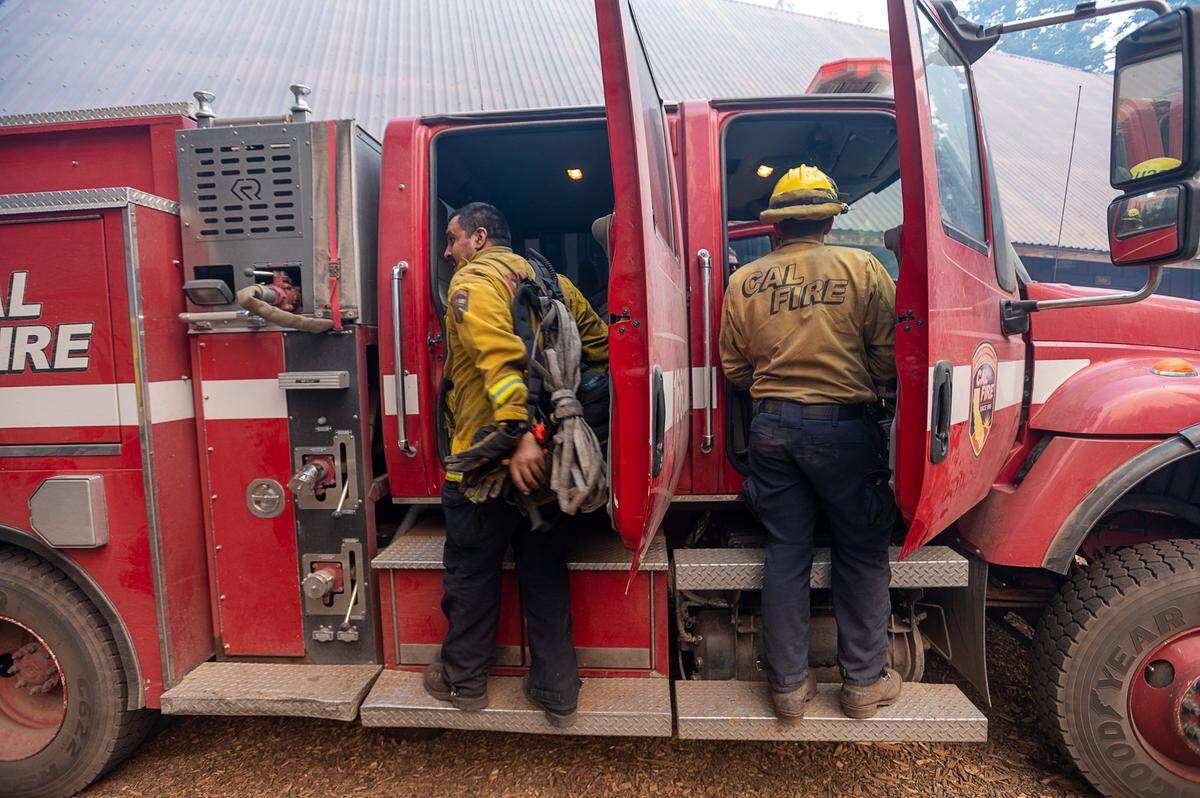
As a result, firefighters often spend six weeks or more fighting wildfires, even though they’re supposed to be given a break after three weeks, Edwards said.
“It’s not because our members want it; it’s because it’s being forced upon them,” Edwards said.
Long weeks on the fire lines are harming mental health and driving up divorce and suicide rates among firefighters, Edwards said.
Motta, who works out of Skylonda Fire Station in San Mateo County, said firefighters’ uncertainty about when they’ll get to go home is one of the most difficult parts of the job. They often get calls at the end of their 72-hour shifts notifying them they’ll have to keep working at a station or go to a wildfire, he said.
“You go to work in the summertime and you expect to be home in three days but in fact you don’t know when you’ll be home,” he said. “It takes its toll on family life when you leave, and you’re leaving home, and you say I’ll see you in three days or 30, and you don’t know.”
Motta said the long hours are driving people away. Last year, 10% of Cal Fire employees quit, CalMatters recently reported.
The state is often slow to hire replacements, so more vacancies mean more overtime.
“CAL FIRE clearly has an interest in reducing overtime not only from a fiscal standpoint, but in that each hour of overtime indicates time our employees spend away from home and family engaged in taxing and potentially dangerous work,” Amestoy said in the email.
Department of Corrections and Rehabilitation
Overtime spending grew 95% over the last decade, reaching $703 million last year.
Each COVID-19 wave has hit state prisons especially hard. The department, which has 62,000 employees, has confirmed about 44,600 COVID-19 infections. Fifty have died, according to agency figures.
Spokeswoman Dana Simas said the department analyzes overtime and works to limit it, but said it is “sometimes unavoidable” at the 24-hour facilities responsible for inmates’ safety and medical care.
.JPG "SAC_xm0824SRFCfolsom111281 (1).JPG")
Filling in for absent coworkers and covering vacant positions are just two of the reasons for overtime, Simas said.
She also cited state mandates that drive overtime: transport of inmates with physical and mental illnesses to outside hospitals; expanded rehabilitation opportunities approved by voters in 2016 with Proposition 57, and the department’s role in helping inmate crews fight wildfires.
California Highway Patrol
Overtime increased 87% in the last 10 years, reaching $183 million last year.
The CHP closed its Academy due to the pandemic from March to September 2020. That affected overtime spending since the usual crop of new recruits wasn’t available to replace retiring officers, spokeswoman Jaime Coffee said in an email.
Data provided by Coffee shows the department has fewer officers and more openings than it did a decade ago.
As of June 1, the CHP employed 6,646 officers and had 974 officer vacancies.
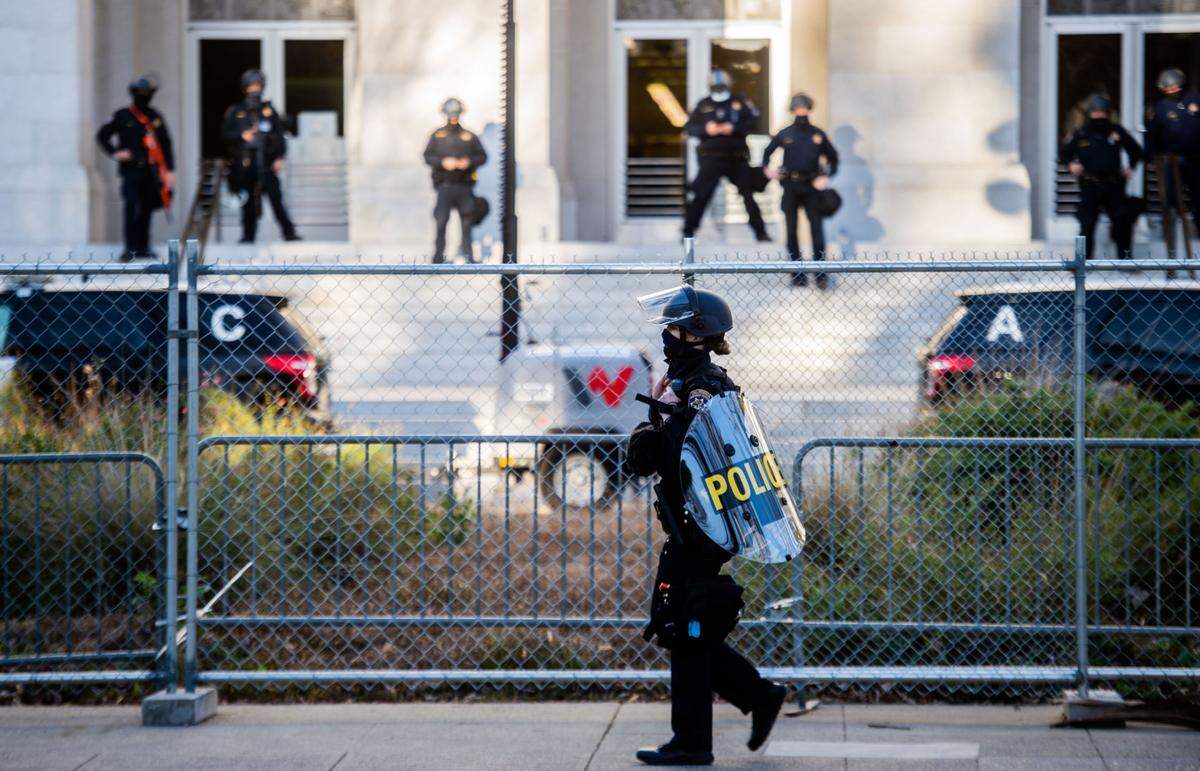
On the same date in 2011, there were 7,711 officers and 396 vacancies.
Coffee said the department is confronting recruitment challenges shared by police agencies around the country, with fewer people choosing to start law enforcement careers.
Carrie Lane, the chief executive officer of the California Association of Highway Patrolmen, agreed the biggest factor in rising overtime is the challenge of recruiting.
Lane said that for the first time in her 30-year career, mandatory overtime is an issue among the officers she represents.
“Anecdotally, I have heard it is more common these days,” she said.
She said recruitment and retention pay could help, but noted the union is in the middle of a contract that extends to 2024.
Department of State Hospitals
Overtime pay grew 81% in the last decade, reaching $145 million last year.
“(The department) is one of the largest state departments when it comes to the number of state workers and the department is responsible for the 24/7 operation of providing care and treatment at five facilities across the state,” spokesman Ralph Montano said in an email.
The department has to meet mandated staff-to-patient ratios, and its population has increased over the last 10 years along with salaries and wages, Montano said.
Mandatory overtime has been a point of contention for a long time, and extra shifts are becoming more common, said Soto, the psychiatric technician union president.
“Some of it was the pandemic, but at a lot of those facilities they were already experiencing this prior,” he said. “The pandemic kind of put gasoline on the fire.”
Extra shifts, which employees might be assigned with little warning at the end of regular duty, are especially hard on single parents who have to make arrangements for child care, Soto said.
Still, voluntary overtime far exceeds mandatory shifts, according to department data.
In January of this year, psychiatric technicians worked about 97,000 hours of voluntary overtime and about 14,000 hours of mandated overtime amid a COVID-19 surge, according to data provided by the union.
Both figures were lower in February and March, but voluntary overtime hours remained much higher than mandatory OT.
Soto said the extra shifts are a good option for some employees who want to earn extra money for things like their children’s college. But excessive use of mandatory overtime can negatively affect employee and patient safety, he said.
Employment Development Department
The overtime tab of $87 million was a big jump from 2019, when it paid about $5 million.
The department confronted an unprecedented wave of unemployment insurance claims in 2020, when the jobless rate rose sharply from 3.9% to 17%, spokesman Gareth Lacy said in an email.
The EDD paid over $180 billion in benefits during the pandemic, about four times as much as during the worst two years of the Great Recession, Lacy said.
While about 80% of claimants received benefits within a week of filing, others waited months, and a backlog developed. New federal programs, including relief for contractors such as people who work for ride-hailing apps, added new complexity and expanded workloads.
The agency expanded its call center hours to 8 p.m. on weekdays, then added Saturdays, then Sundays.
Sixty-three employees, including managers and rank-and-file, earned more than $100,000 in overtime pay in 2021. Most of them had base salaries of between $55,000 and $70,000. The department employed about 15,000 people in the fiscal year that ended in July 2021.
“It’s not about the money, it’s about the service we can provide … I feel like I have the skills to assist people,” said Ben De La Torre, a claims processor who averaged 400 hours of work per month in 2021.
This story was originally published July 10, 2022 at 5:00 AM.