California governor ordered that homeless encampments be removed. Has anything changed?
One month after Gov. Gavin Newsom escalated his approach to clearing homeless encampments from state property, progress has been slow.
“There are no longer excuses,” Newsom said in a July 25 video, unveiling an executive order that directed state departments to replicate a well-worn policy from the California Department of Transportation to move people and their belongings off of state property.
Since then, Caltrans has removed 142 encampments around the state as of Aug. 15, according to data provided by the department, while other state agencies have yet to take any measurable action.
During fiscal year 2023, Caltrans removed 2,682 encampments from state property, for an average of about 223 per month. The removals conducted this past July and August occurred at about the same rate.
An outlier was fiscal year 2024, which ended June 30, when Caltrans removed significantly more encampments — 7,083 — around the state.
Over the past three years, Caltrans said it has cleared over 11,000 encampments and 250,000 cubic yards of debris found at these sites. In that span, those sweeps removed more than 38,000 people from those encampments, according to the department’s data. Based on the data provided, the numbers can fluctuate, with many more sweeps conducted some months and fewer in others.
Since Newsom issued the order, Caltrans has continued conducting homeless sweeps, relying on its existing infrastructure across the state that includes private contractors who are responsible for collecting items at the sites, throwing away debris and cleaning the spaces.
Other state departments already have existing policies that need to be updated or are in the process of writing their own versions of Caltrans’ guidelines, spokespersons said.
The California Department of Motor Vehicles told The Sacramento Bee that there currently are not any encampments on any of its properties. In the event there are people living on the department’s property, the DMV will follow guidelines set by Caltrans’ policy, which includes hiring outside contractors to do the work, department Public Information Officer Ronald Ongtoaboc said.
California State Parks said the governor’s executive order complements the department’s existing policy on homeless encampments. The Department of Parks and Recreation manual outlines similar guidelines to Caltrans’ policy, the agency said in an email. When removing an encampment, state parks employees should collect and store items, notify people living in encampments ahead of the sweep and connect those individuals to services.
The Department of General Services told The Bee it is still in the process of drafting its policy, but expects it to be completed soon.
The governor’s directive came after a recent U.S. Supreme Court ruling empowered local governments to take more aggressive actions, like arrests or fines, against people who lack other shelter and camp in public areas. Newsom urged California cities and counties to pick up the pace on clearing encampments. And he’s threatening to withhold funding from counties that don’t make swifter progress on an issue that has beleaguered the state for years.
“It’s time to move with urgency at the local level to clean up these sites, to focus on public health, to focus on public safety,” Newsom said. “This executive order is about pushing that paradigm further and getting the sense of urgency that’s required of local government to do their job.”
The Caltrans policy around clearing encampments includes guidelines on how to provide shelter and services to people living on highways and underpasses. But critics maintain that these sweeps are a distraction from evidence-based solutions to homelessness, like finding more permanent housing.
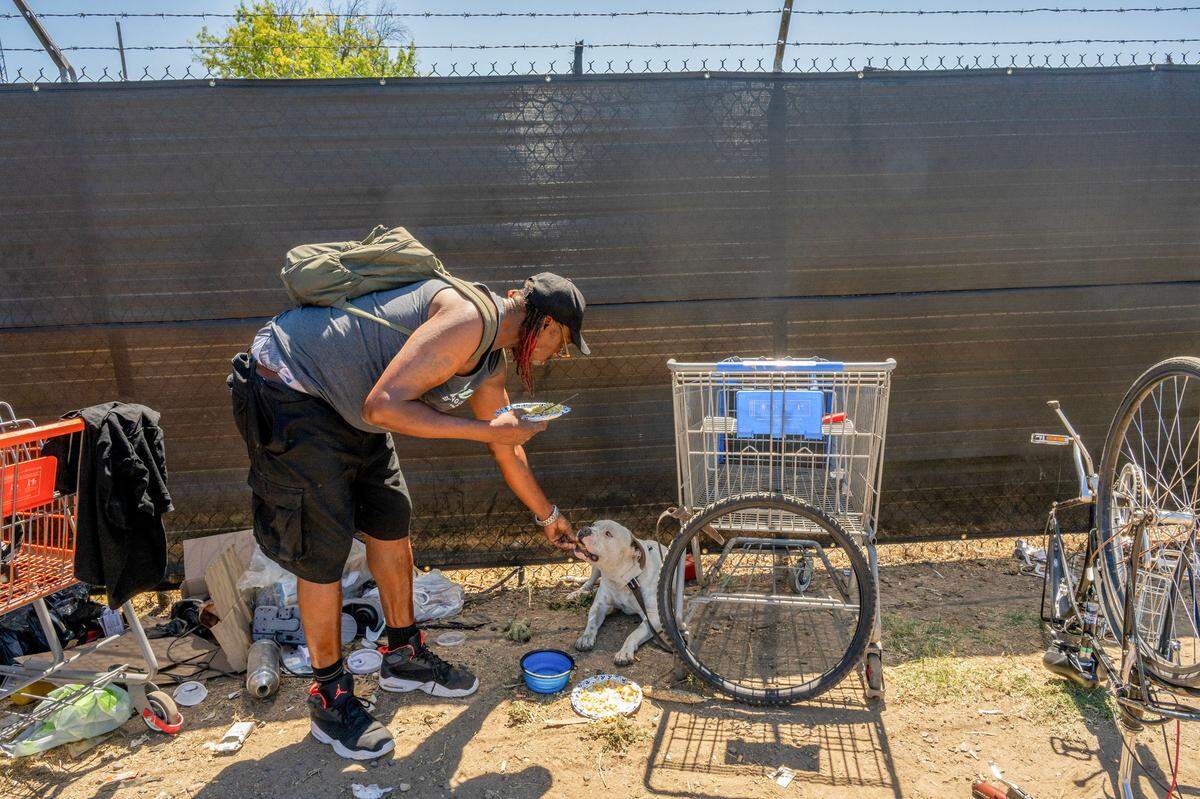
Cities are not subject to the order
While not subject to the governor’s order, the response from local leaders has been mixed.
Some cities, like San Francisco, took immediate action. Mayor London Breed has directed officials to issue citations for people lying or camping on sidewalks. She also encouraged city officials to offer individuals sleeping on the streets a bus ticket out of the city.
Other local leaders have declined to clear these encampments and pushed back against the effort, arguing the sweeps don’t address the root of the problem — a lack of housing — and threatens to destabilize local efforts to get people off of the streets.
In Los Angeles, Mayor Karen Bass has promoted a program to rehouse people in motel rooms. This past year, Los Angeles’ homeless population decreased for the first time in six years.
In Sacramento, authorities said the directive would have little effect on how the city handles homelessness. Mayor Darrell Steinberg said recently that Sacramento led the state in reducing unsheltered homelessness.
A recent count of people living outside in Sacramento found that Black people are three to four times more likely to be homeless in Sacramento, while American Indian and Alaska Native people are five to six times more likely to be homeless in Sacramento.
The state has invested $24 billion into trying to fix the problem: converting hotels into housing for homeless people and sending $4 billion in grants to local governments to spend on homelessness. But experts say there are still not enough shelter beds for those living outside, and California’s high housing costs continue to push people into homelessness.
Antonia Fasanelli, the National Alliance to End Homelessness’ executive director, said Newsom’s executive order was “shameful” and urged the governor to rescind the mandate.
“The order fails to provide alternative shelter while forcibly removing people from where they live under the guise of public safety,” Fasanelli said in a statement. “Any actions taken by California state and municipal police to punish homeless people for having nowhere to live will hit hardest on Black and brown communities who are historically overrepresented among the state’s homeless population.”
How Caltrans clears encampments
Of the dozens of departments, boards and agencies under Newsom’s administration, Caltrans has undertaken the lion’s share of the homeless encampment sweeps in recent years.
The policy that outlines how the sweeps are conducted has existed for years. It requires the department to post a notice to vacate the site two days before removal of items begins, unless the department decides more urgent action is needed to sweep a site.
According to the policy, Caltrans makes providers available to those living at the encampment with outreach services and the department will store personal property 60 days after the sweep for collection later. Caltrans said in a statement that it provides at least two weeks’ notice to local partners who are asked to help offer shelter to those living in encampments and other available resources.
Chris Clark, a public affairs deputy division chief at Caltrans, said the department is responsible for maintaining the state’s transportation network.
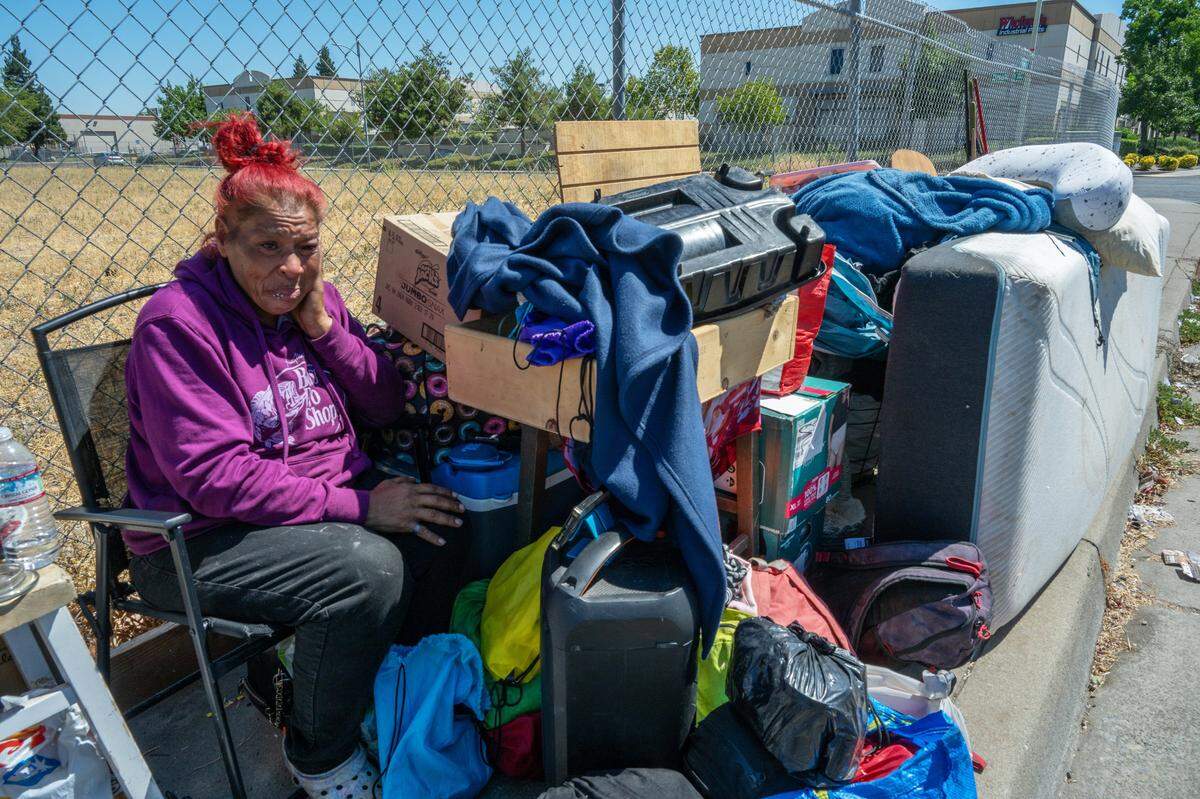
“This work includes assessing encampment sites for safety threats,” Clark said in a statement to The Bee. “Threats may include excavation at or near structures that increase the risk of collapse; encampments that physically block traffic or pathways; and encampments that put individuals experiencing homelessness, the traveling public, Caltrans’ maintenance crews, first responders, and the nearby community at risk.”
Caltrans documents each removal through reports that include time-stamped photographs or videos; lists of items collected; personal property receipts, and names of contractors, social service providers and law enforcement officers involved.
In each of the department’s 12 districts, Caltrans employs over 30 District Encampment Coordinators who manage the encampment removals. Caltrans employees do not clear encampments in the field, but rather the state hires HAZMAT-certified contractors to actually remove the items and clean the spaces.
While Newsom’s executive order did not provide a timeline of when departments must comply, state officials said the administration expected the policies to be enacted quickly.
A “race to the bottom”
Critics of the governor’s policy said encampment sweeps are a distraction from evidence-based practices like providing more permanent housing and services. Divya Shiv, a senior homelessness policy advocate with Housing California, worries that the executive order will prompt a “race to the bottom” among local governments.
“Cities who want to fund these programs and provide housing may get political pressure to instead focus their energies on sweeping encampments,” Shiv said.
California only has capacity to shelter 39% of unhoused people, Shiv said, which raises the question of where people without permanent shelter will go after the state orders them to leave an encampment.
A 2022 report by the Corporation for Supportive Housing found that over 225,000 units would be needed over 12 years to meet the housing needs of Californians living, or expected to live, on the streets.
Fasanelli, of the National Alliance to End Homelessness, said the only way to eliminate homeless encampments is to provide safe and affordable housing for everyone.
“It [the executive order] sets a dangerous precedent for states that are dealing with rising homelessness across the country due to a lack of affordable housing,” Fasanelli said.
This story was originally published August 23, 2024 at 1:32 PM.