With free taxi rides, this program hopes to take the risk out of public transit
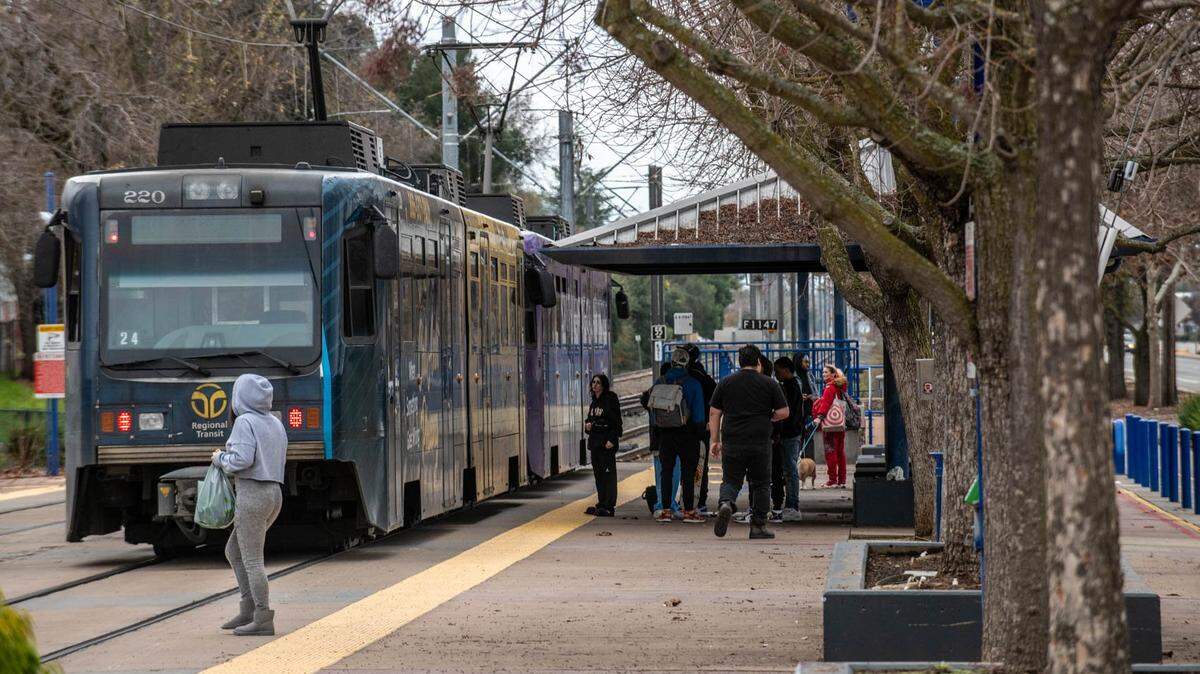
Anyone who uses public transit to get to and from work knows that small disruptions, like bus delays or mechanical failure on the light rail, can cause major headaches for the commuters.
The risk of arriving to work late or needing to leave the office at an unexpected time serves as an obstacle to many who might be able to use public transit for commuting.
For Sage Oh, a civil engineer who commutes via bus and light rail from a Rancho Cordova neighborhood to a California Department of Transportation office twice a week, it’s necessary to have a backup transit option when the train is late.
“I need some sort of insurance, right?” Oh said.
To ensure Oh can get to his destination on time, he relies on a program that offers public transit users with free Uber, Lyft or taxi rides to use in emergency situations, like when a bus is delayed or a bike commuter gets a flat tire.
The “guaranteed ride” program offered by the local nonprofit 50 Corridor Transportation Management Association allows members who primarily commute by public transit to spend up to $50 per trip on five rides throughout the year. The program is one of many supports the 50 Corridor TMA provides to encourage state workers and other Sacramento-area employees to travel by other means besides cars.
To help make state workers’ commute more affordable and less stressful, the transportation management association is hosting an educational event on Wednesday, Sept. 17, on the west side of the Capitol from 11 a.m. to 1 p.m. Along with other community partners, 50 Corridor TMA will share information about resources available to commuters to reduce their greenhouse gas emissions and keep cars off Highway 50.
“Educating people about their options is one of the most effective ways to reduce driving,” Cheryl Croshere, the executive director of 50 Corridor TMA, said in an interview.
Public transit agencies don’t have large marketing budgets and without experience taking the bus or light rail, many will avoid doing so, Croshere said. By increasing state workers’ knowledge of the services available to them, Croshere said she hopes more will opt to leave their cars at home and take public transit.
The association’s other services include help finding a carpool buddy, bicycle maintenance and personalized transportation planning.
Wednesday’s event was planned before Gov. Gavin Newsom delayed his four-day in-office directive for another year, Croshere said. But there is still usefulness in educating state workers coming into offices two or three days a week about these resources, she added.
To be eligible for the “guaranteed ride” program, which the nonprofit said has existed for over 20 years, state workers’ employers must be a member organization of the transportation management associations. Some of the larger departments that pay an annual membership fee to the association include: Caltrans, the Employment Development Department and the California Environmental Protection Agency.
Other 50 Corridor TMA member organizations include: Sacramento County, the city of Sacramento and the Sacramento Municipal Utility District.
Nefretiri Cooley, a CalEPA spokesperson, said the agency partners with 50 Corridor TMA because these programs help reduce single-occupancy vehicle trips, lower greenhouse gas emissions, ease congestion and parking pressures, and improve employee wellbeing.
“The Guaranteed Ride Home program is especially beneficial, offering employees a reliable ride home for emergencies or when they work later than planned,” Cooley said. “The program makes it easier for people to carpool, vanpool, bike or walk knowing they have a safe and reliable backup option if they need it.”
Croshere said the members who hope to take advantage of the program will need to provide a receipt from the ride-hailing service and a brief description of why the user needed an emergency taxi.
While the cost of commuting by car outweighs the convenience, Caltrans employee Oh said he hopes that the “guaranteed ride” program could be expanded so that it can be used more than five times throughout the year. Oh said he has to be very judicious about when to use the emergency rides.
Croshere said capping the number of guaranteed rides at five allows the nonprofit to keep membership rates low, though individual membership organizations could choose to increase the amount employees are eligible to receive.
Currently, commuters can spend up to $50 on the trip, but if a trip costs less than that users can’t carry that money forward. Croshere said the nonprofit doesn’t have an easy way to track users’ “balance” on their account, but that feature is something to take into consideration for the future.
This story was originally published September 16, 2025 at 5:00 AM.
CORRECTION: A previous version of this story incorrectly spelled CalEPA spokesperson Nefretiri Cooley’s name.