California state workers, and absurdity of public service, are the stars in ‘DMV’
There’s plenty of public servant representation on TV these days. Teachers and firefighters frequently star in sitcoms and serials.
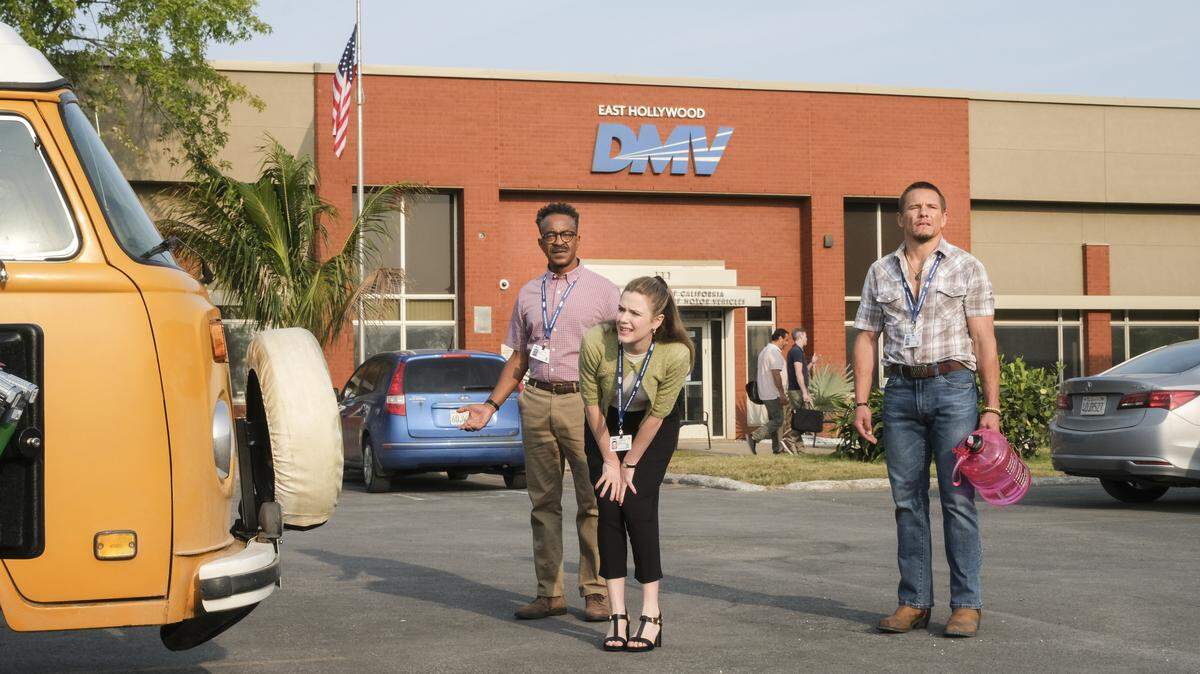
But for maybe the first time, California state workers will be the stars of a new comedy — set in a fictional East Hollywood DMV office.
The sitcom “DMV” plays off the subtleties and frustrations of being an employee of the California Department of Motor Vehicles: the endless line of frustrated customers, the absurdity of bureaucracy and the omnipresent pressure from state officials to work more efficiently.
A DMV office — which elicits something akin to dread for many — makes for a good setting because there is an inherent tension between customers and the government, said Matt Kuhn, one of the show’s executive producers.
The showrunners wanted the comedy to highlight the conflicting pressures facing government workers, who often are the target of the public’s ire just for just doing their jobs.
“We’d like the show to be a nod to DMV employees because we feel like they are people with hopes and dreams and layers,” said Executive Producer Dana Klein. But “when we walk into a DMV we’re kind of just seeing them as the thing that is preventing us from getting what we want as quickly as possible.”
Portraying public employees
Klein said the show was inspired, in part, by Katherine Heiny’s short story “Chicken-Flavored and Lemon-Scented.” Klein said she’s been spending a lot of time at the DMV lately as her three teenagers have been going through the process of getting their licenses.
The series, which premiers Monday, follows several driving examiners played by Harriet Dyer, Tony Cavalero and former Saturday Night Live cast member Tim Meadows. Other characters include a branch manager that may remind viewers of Michael Scott, the bumbling, loveable boss from “The Office,” one of the most well-known workplace comedies.
The show does a good job of capturing the sentiment some state workers hold toward their bosses in Sacramento.
In the pilot episode, two outside consultants who have been tasked to determine which Hollywood DMV branch to shutter interview various employees about their work. Meadows’ character, a former English teacher-turned-DMV employee, gives the consultants a blunt response to their questions.
“Don’t you think it’s ironic that the state is spending all this money on you two to figure out what’s wrong with the DMV? When everyone knows what’s wrong is that we don’t have enough money,” Meadows says to the two stunned suits.
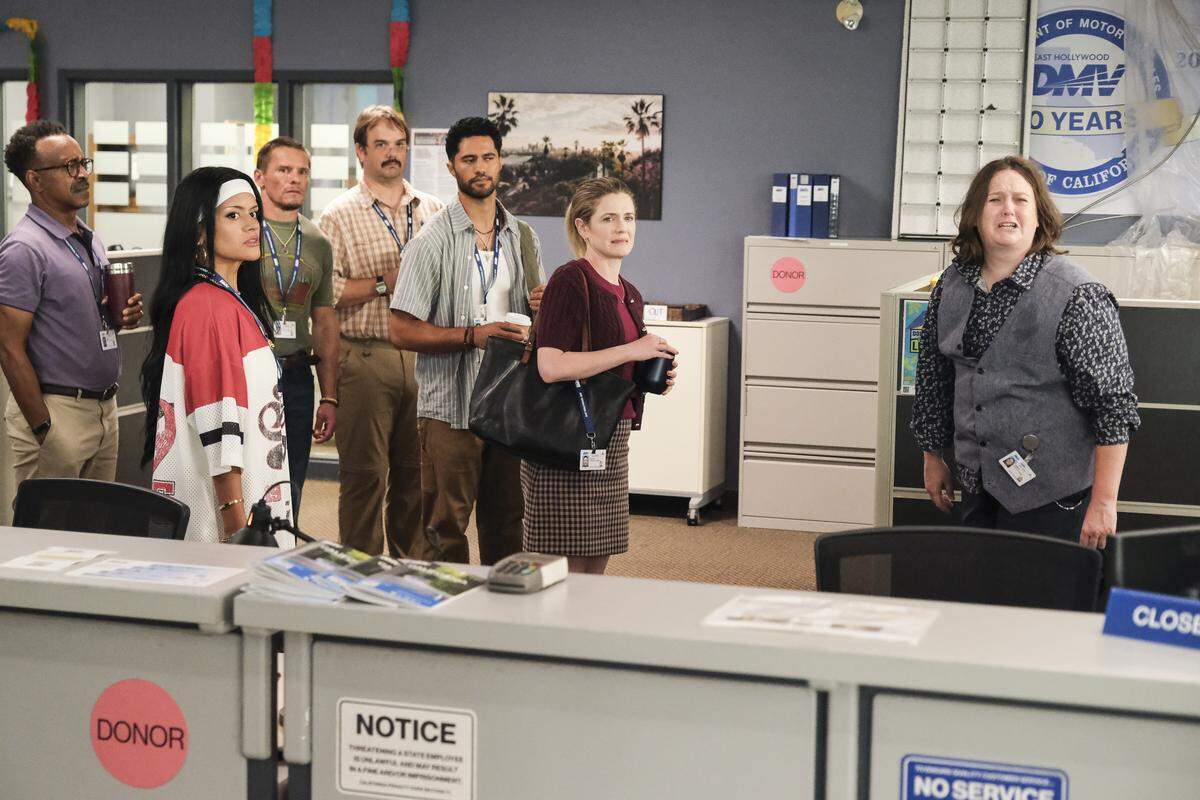
Another recurring bit that the showrunners expect will resonate with anyone who has worked in bureaucratic systems is Meadows’ exasperating attempts, stymied by red tape, to fix a broken office chair.
State government, on the screen
It’s clear that elements of the show were inspired, in part, by real forces shaping the California DMV.
While writing the pilot, Klein said her research into the state agency turned up a task force pushed by Gov. Gavin Newsom in 2019 to make the department more efficient. On screen, that task force comes in the form of consultants who, as one character puts it, “the governor hired to cut costs.”
One of the series’ central conflicts is which Hollywood branch will be turned into a fully automated office. In the real world, the state has moved several DMV services online to create a more “user-centered culture for customers.”
The actual DMV said the series was a good reminder of the value state workers provide the public.
“While the show is a fun satire, the DMV wants to highlight our dedicated civil servants behind the counter,” department spokesperson Jonathan Groveman said in a statement. “The more than 8,500 California DMV team members, working across 170 field offices, strive to provide excellent customer service to California’s 29 million drivers, reduce wait times, and solve complex issues every day to keep Californians safely on the road.”
Kuhn said one of the series’ goals is to highlight the absurdity of being caught in the middle between the public, who don’t want to be told they brought the wrong form of identification, and government officials, who are constantly pushing new directives on state workers.
There’s built-in conflict, Kuhn said, and that’s what drives a good story.
DMV premieres on CBS on Monday, Oct. 13 at 8:30-9:30 p.m. ET/PT.