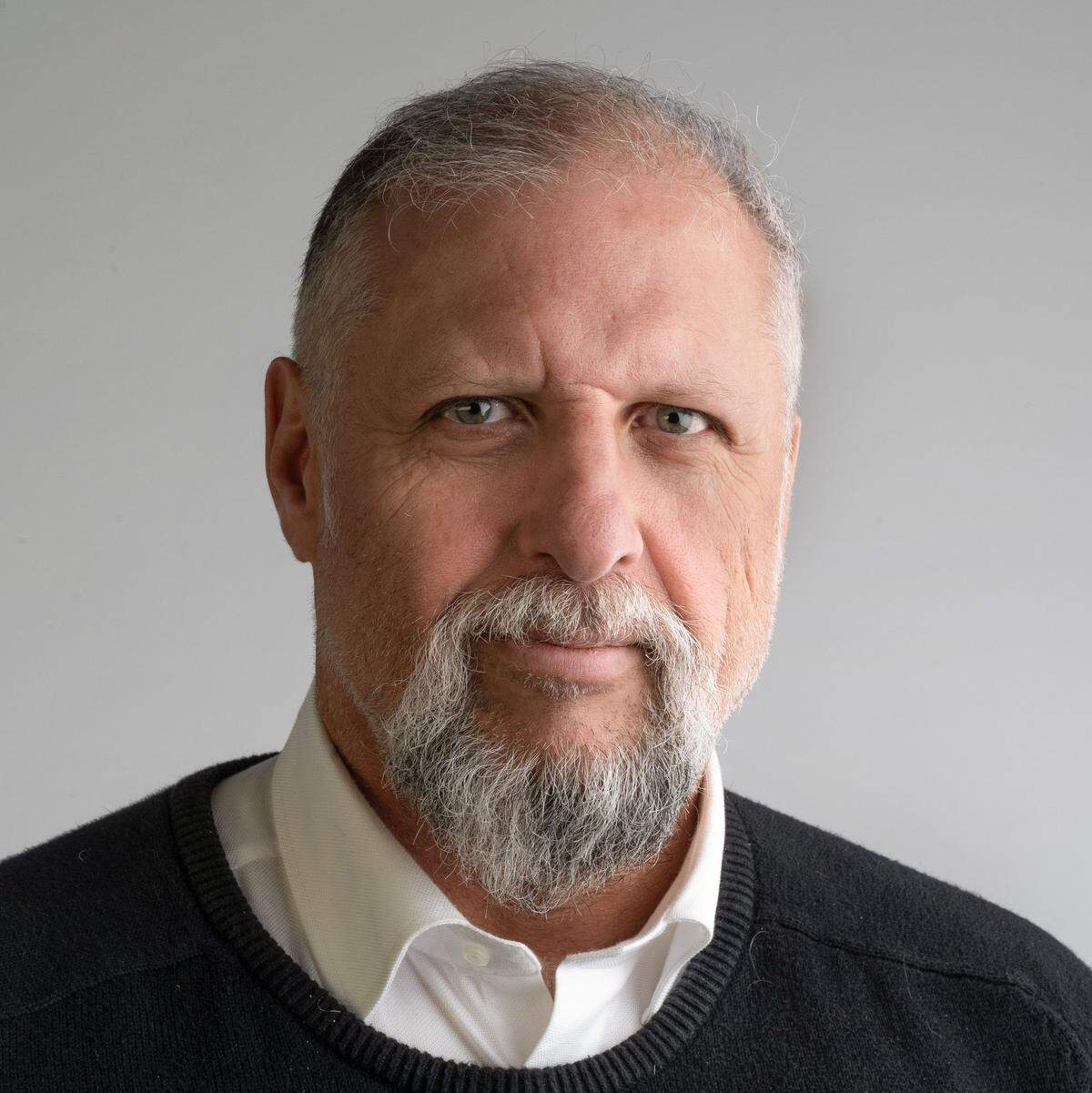
A passing of an era: Former Sacramento Councilman, cop Robbie Waters dies from coronavirus
Robbie Waters, who served on the Sacramento City Council for 16 years after a long career in law enforcement, including one term as county sheriff, died in the pre-dawn hours Monday after recently testing positive for COVID-19.
A former lieutenant in the Sacramento Police Department, Waters had been in fragile health after he fell and broke his hip on June 30 in his Greenhaven home. While he was recovering from hip surgery, Waters’ family was informed that he had tested positive for COVID-19.
On July 20 Waters was admitted to the ICU at Sutter General Hospital and placed on oxygen after experiencing difficulty breathing. His family had been told by doctors to hope for the best, but not to rule out the worst. Two of Waters’ three grown children and their spouses had returned to Sacramento from their Montana homes as the condition of their father worsened.
Waters was 84.
“It’s a great loss,” said Judie Waters, his wife of 60 years. “On his last day, he was struggling to breathe but he thanked the doctors. He thanked everyone....Robbie was well loved but we also have to pray for the other people who are suffering with this horrible virus. People should be aware this could happen to everyone.”
A perennial figure in Sacramento for more than 40 years, Waters was a conservative in a liberal town who had friends across the political spectrum.
“Robbie and I came from different places in the political world but none of that mattered. I considered him a dear friend,” said Sacramento Mayor Darrell Steinberg. “He loved Sacramento and made a lifelong impact on our city.”
Waters was a self-made man whose family feared he had contracted polio when he was a student at Kit Carson Junior High School in Sacramento. He was hospitalized and quarantined for a time, while his family worried that he would be in a wheelchair for life.
Waters recovered, grew tall and played football and ran track at Sacramento High School. His childhood health scare drove him to pursue an active life and he never forgot the feeling of being a frightened child in a hospital bed.
“To this day, I see people in wheelchairs and think that could have been me,” Waters said in a Bee interview in 2018.
Cop of action and ‘Robbieisms’
Waters served in the U.S. Air Force, graduated from Sacramento State with a degree in criminology and became a standout cop in a city police department where he would thrive for nearly 30 years.
Tall and slender in his youth, Waters cut a rugged figure as a young cop in the 1960s. He was a quintessential mid-century American man of action.
In his 1970s heyday, Waters climbed the ranks within the Sacramento Police Department while garnering professional accolades. In 1975, Waters was awarded the Sacramento Police Department Silver Medal of Valor for his actions during and after a shooting at a south Sacramento shopping center. He became a homicide lieutenant, and ran internal affairs.
Also in 1975, Waters caused a stir by signing off on the eavesdropping of phone conversations between Bee reporter Wayne Wilson and a source. In a Dec. 4, 1975 piece in The Bee, Waters defended violating the privacy of the reporter and the freedom of the press.
He said the department had received information that Wilson was interfering with a murder case and listened in on Wilson’s calls to investigate the allegation. “This case involved a serious inquiry into a very serious matter,” Waters wrote. “And we acted accordingly.”
Of Waters’ tactics,Wilson said: “I think it was an unconscionable invasion of privacy and a flagrant disregard for the tenants of justice.” First Amendment lawyers decried Waters’ actions and Thor Severson, Ombudsman of the Bee in 1975, wrote:
“What was attempted here was regrettable. Moreover, the public is but one step removed in this process: Its right to know is just as surely impaired as the newspaper’s right to inquire.”
At the end of his career with Sacramento PD, Waters was the lieutenant in the personnel training division. He would be the first ranking career cop young recruits would encounter, including Rick Braziel, who joined the department in the late 1970s and years later became chief of the Sacramento Police Department.
“When you met with Robbie, you had to be prepared for his “Robbieisms,” Braziel said. “It started with a faint smile. That was the tell and what followed was Robbie’s version of policing. This entailed a story about the way it was back in the day. He would then make the transition to the way it should be today. He always kept you on your toes.”
Waters ran for the office of county sheriff in 1982 and won. He is credited with establishing a sheriff’s substation in the north area and with expanding the sexual assaults bureau within the department. But in his later years, Waters spoke of how entrenched interests fought him. He was an outsider within the sheriff’s ranks.
“After being elected Sheriff, the deputies hung me in effigy,” Waters wrote in his self-published book, “Through the Years.” “In the Sheriff’s garage, they had a dummy with pants stuffed and a paper head.”
He said the pressure he was under partially explained the DUI he received in 1984, which Waters said embarrassed him greatly.
According to accounts in The Bee, Waters had attended a reception for a Sacramento County Superior Court judge and was driving on westbound Interstate 80 toward I-5 at 11:30 p.m. on Sept. 5, 1984. He crashed into a collapsible freeway barrier filled with water. The crash badly damaged the county Ford sedan he was driving.
The California Highway Patrol reported that his blood alcohol level was at .18, well above the legal limit. Bee stories raised questions as to why Waters was allowed to go home first before heading to a local hospital for treatment. In another Bee story, an official from Caltrans said that hitting a barrier filled with water likely saved Waters’ life.
Waters paid a $681 fine, served two days in a work-release program and suffered facial lacerations in the crash.
It also hurt him politically. Two years later, in 1986, Waters lost his re-election bid to Glen Craig. He became a businessman, running several ventures in his Pocket-Greenhaven neighborhood, but the allure of public service motivated him to run for the Sacramento City Council in 1994. Waters won and was re-elected in 1998, 2002 and 2006. During these years, Waters was the only Republican member of the council.
A contrarian voice
Waters was often a contrarian voice of conservatism among liberal colleagues. He sparred often with former Sacramento Mayor Joe Serna Jr., sometimes on the council dais and often in private. Waters wrote in his book that Serna was “Latino first and Mayor second. That was his whole philosophy.”
By all accounts, Serna pushed back hard and their relationship was emblematic of a changing community.
In a sense, Waters represented the Sacramento of his youth while Serna embodied a community becoming increasingly diverse in the ‘80s and ‘90s, when people of color were first elected to office by Sacramento voters. In 1940, when Waters was four, Sacramento was almost 95 percent white.
But by 2010, when Waters was unseated from the council while seeking a fifth term in office, African Americans, Latinos and Asians made up nearly 60 percent of the population in Sacramento. In the 2010 primary, Waters finished behind two Asian American challengers in a race eventually won by Darrell Fong, also a former city cop.
Though his city changed and his generation of leaders was succeeded by a new one, Waters always remained popular in his city.
And in his day, he used his authority to respond to his changing community. Months after being excoriated for a lack of minority hiring with his department in 1984, then Sheriff Robbie Waters promoted two veteran Black deputies to sergeant in 1985.
Also in 1985, Alexandria Magness was a captain in Waters’ department who was promoted to command a sheriff’s detectives division. She was thought to be the first woman in the nation to head such a division, according to a Bee story. Under Waters, the department also began hiring more people of color and women.
Despite being a Republican in a liberal town, 17,095 people voted for him the one time he ran for mayor in 2000. The seat was open after Serna died in 1999 and interim Mayor Jimmie Yee decided not to run. Waters just missed the November run-off by 2,000 votes.
In his last years in office, Waters was close to former Sacramento Mayor Kevin Johnson.
“A character in the truest sense of the word,” Johnson said. “Robbie was driven by his love for Sacramento. From his days as a Sac High Dragon, to serving on Sacramento PD, to sheriff, to an esteemed career on the City Council, Robbie was a dedicated public servant, and the best of our city. I’m better for having known him. He was a mentor and a friend and I’ll miss him.”
A new city library in the Pocket-Greenhaven neighborhood was named after Waters. Waters remained active in his community and kept his eye on local politics. In his final days, his family said they were inundated by phone calls and well-wishes from longtime friends, including Steinberg and U.S. Rep. Doris Matsui.
“That beautiful library that bears his name will keep him with us always,” Steinberg said.
Judie Waters said what was hardest of all is that his family didn’t see him again after he broke his hip on June 30th. COVID-19 restrictions kept the family away from his bedside through his final weeks.
“A favored nurse was with him at the end and she told us he was at peace,” Judie Waters said. “She said she told him to, ‘Go fly high,’’
Waters is survived by his wife Judie, their three children, two grandchildren, a son in-law and daughter-in-law, a sister and a brother.
A celebration of life will be planned for a later date.
This story was originally published July 27, 2020 at 8:46 AM.