The homeless have come to this Sacramento business park to live in cars. Is it a dead end?
Commerce Circle is where the homeless crisis in Sacramento seems insurmountable.
Here, the $113 million the city directed to deal with homeless services over five years, from 2017 to 2022, seems a like futile gesture. That money is presumably being spent on something other than helping desperate people like those living in the 100 or so vehicles parked single file in this spot.
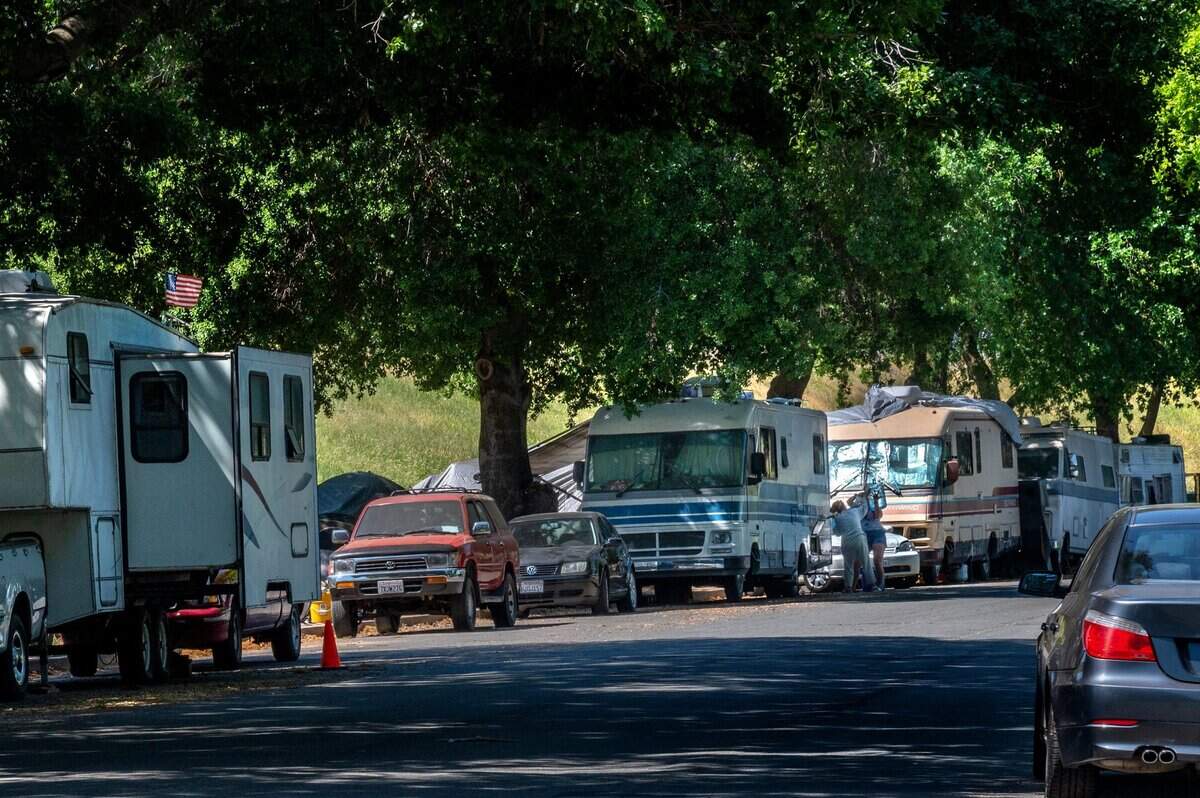
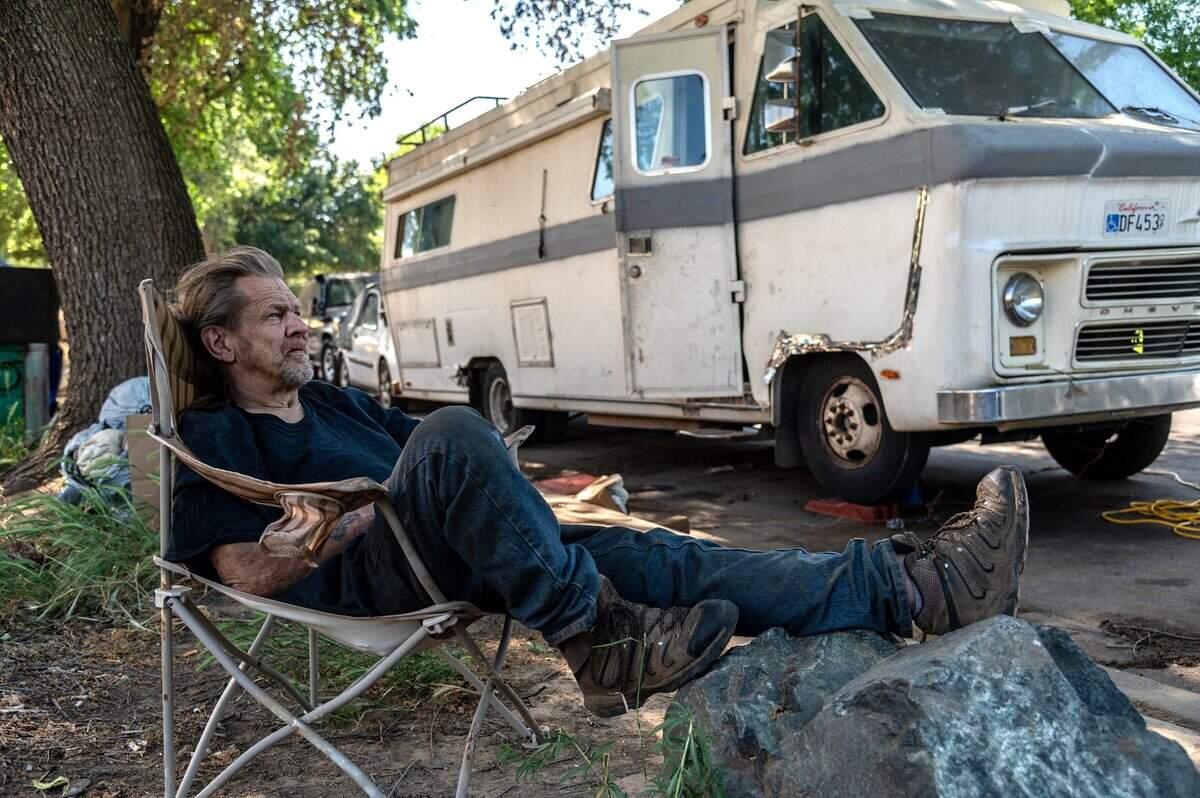
They live in cars, campers, trucks, utility vehicles and handmade hybrids. They are all filled with people with nowhere to go, no place to turn, no idea how to change their circumstances.
You are probably not familiar with Commerce Circle. You would have no reason to go there unless you have to intersect with the Johnston Business Park, a collection of small businesses based in a secluded corner of the city of Sacramento. It’s a dead end, both literally and figuratively, between Highway 160 and Lathrop Way.
It’s not even a circle. It’s a rectangle of urban despair. All the elements of the homeless crisis converge here. They suffer from poverty, mental illness and drug addiction. They have been chronically incarcerated, or have bad credit or have too many possessions hoarded from years on the streets.
What is clear from repeated visits to Commerce Circle is that the scope of the “homeless solution” is far bigger than anything the city of Sacramento can accomplish on its own.
A hiding place from life
You can shop at the Costco and REI just a few miles away on Expo Parkway and not even know or see the human pathos just a few turns away on Commerce Circle.
Driving through the area, the cumulative effect of moving past vehicle after vehicle of dispossessed people is overwhelming. It’s like a slice of the Great Depression and some dystopian nightmare of American culture gone terribly wrong.
The sound of generators running can be heard night and day here. Many people simply sit in their vehicles all day, or they sit on folding chairs, watching their property. They seem suspicious of anyone they don’t know.
Some are very approachable. Some are really scary. This is not some Hollywood version of modern poverty. This is where people at the very bottom have gone to hide from life.
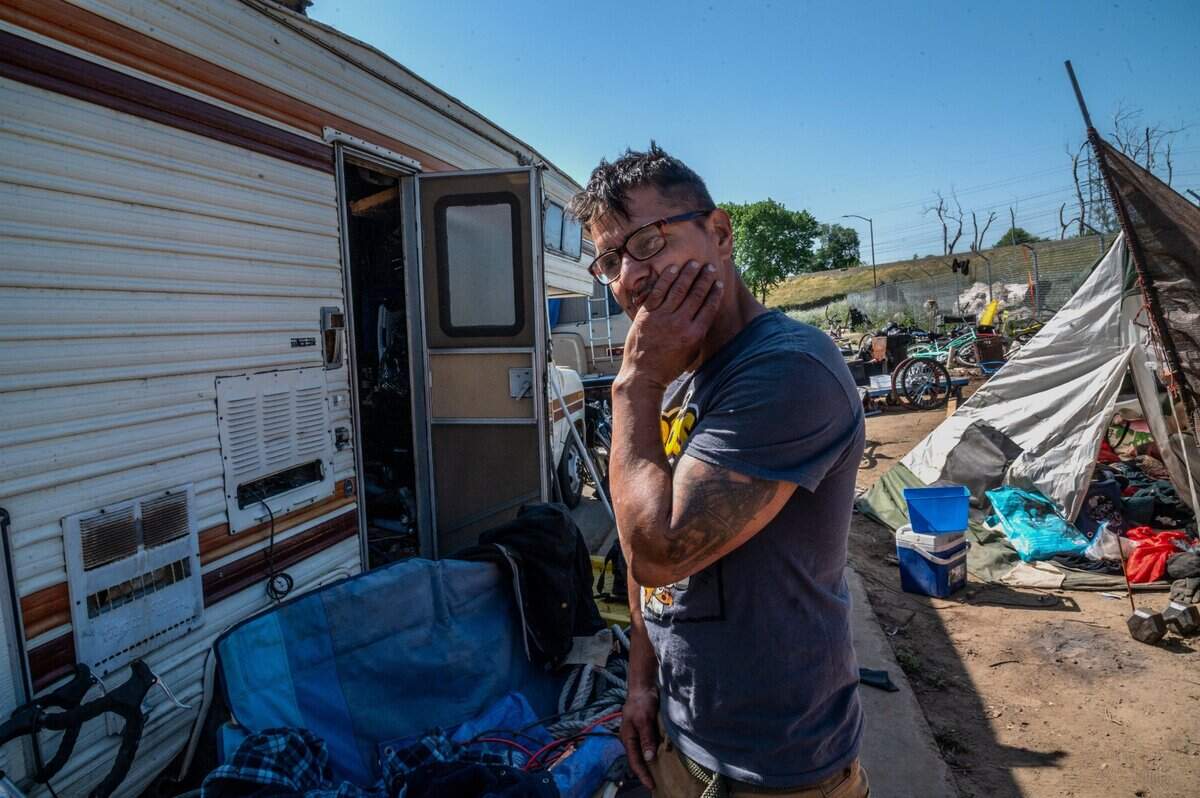
“I’ve been homeless since the virus started,” said Erick Read, 48. “We were in south Natomas, and cops evicted us and told us to come here.”
Read said he was working as a dishwasher in the restaurant industry until he lost his job because of COVID-19. And even as restaurants are scouring for people, he has remained unemployed.
As Read spoke, a dark thought occurred to me: What if we can’t turn the tide on the increasing number of homeless people subsisting and dying in plain sight? What if the proliferation of people on Commerce Circle is just further proof that Sacramento’s homeless crisis is already beyond our capability to solve?
The remedies elude us
Jeff Harris, the Sacramento City Councilman who represents the business people on Commerce Circle and the homeless people as well, is not giving up. But even the remedies that he is seeking will take years to implement if they are implemented at all.
“It’s going to be a tremendous effort, but I don’t think we have any choice,” Harris said recently. “We will end up like Portland or Seattle otherwise. (Those cities) are so beleaguered, I’m not sure they will ever be able to climb out of it. I don’t want to let our city become so beleaguered that people start leaving our business districts. “
Of course, such scenes are hardly news to people who live in Sacramento. Downtown is more overwhelmed by homelessness now than ever before. The nearby American River Parkway has been badly damaged by fires caused by homeless campers along the lower stretch of the river in recent years.
The river water has been polluted by human waste. Homeless people live in clusters near freeway overpasses.
How is Commerce Circle any different? To begin with, as Read and several other homeless people said, they were directed here by Sacramento police.
Once COVID-19 shut down Sacramento in March of 2020, a few cars parked with people living in them turned Commerce Circle into a city of people on wheels. The unemployed, the evicted, the elderly, the lost — they congregated here.
Unlike downtown Sacramento, no nearby services can assist the people on Commerce Circle. Though Harris said city employees have come to Commerce Circle to help, the effort has not been sustained.
The city’s new Department of Community Response was created just last year as an alternative to sending cops on 911 calls. But the unit is built to respond to the crisis, not solve it.
The rise of a homeless city
The city needs campgrounds for the homeless and is still slowly lurching forward on that front with mixed success at best. Hotel vouchers might ease the problem for some, but the people on Commerce Circle have accumulated possessions scavenged on the streets.
COVID-19 forced a county health order that discouraged the displacement of homeless people out of fear of spreading the virus. The homeless found a solution, where they could go with their stuff.
“What’s junk to you and me is their lives,” said Louis Warfield, a local business owner.
He is equal parts sympathetic to the homeless people who have taken over the street where he works and frustrated with the damage they cause.
“We initially had six vehicles, and then a seventh showed up,” Warfield said. “Then an eighth and ninth. I would start calling the police, and they would move them, but at some point, the county didn’t want the homeless people moved around during COVID, which is understandable.
“But they are risking my health with feces and urine,” Warfield continued. “It’s just gotten worse, and now they are entitled and angry because we are trying to deal with it. One of them broke the windshield of my car. One of them shot a pellet gun at the gardener who services over here. We call the cops, and they come out and can’t do anything.”
Though people park on a public street, some of the dwellers routinely trespass on private property. City police have much more urgent priorities.
Apparently, no one can do anything about the situation on Commerce Circle. And if the only response is to roust people, well, that’s not the answer to this crisis.
What’s needed
Sacramento Mayor Darrell Steinberg’s push to have the city create homeless encampments around town is admirable, and is a step badly needed. But that is not enough by itself.
The people surviving from day to day on Commerce Circle need a tremendous amount of help from trained professionals before they could ever functionally live off the streets. This area needs teams of social workers, paid for by the county of Sacramento, to descend multiple times to begin the process of moving the souls on Commerce Circle beyond the mind-numbing cycle of homelessness.
The people interviewed here, though, don’t want to go to a hotel. They are unaware of city efforts to move more homeless people into safe spaces and out of commercial corridors such as this.
Larry Jankiewicz, for one, doesn’t want any help. He’s 62 and, by his account, has been in and out of state prison. He has faded tattoos on both arms and sandy brown hair.
“There are lots of good people here and lots of scandalous people, too,” he said.
He struggles to survive with his only source of income his $900 a month Social Security check. He said he wasn’t aware of city efforts to assist him.
“I don’t know nothing about these safe zones,” Jankiewicz said.
He said he was living in a rented house until he had a heart attack. Since then, he’s been living in his 15-foot storage camper. How can the city or county serve Jankiewicz if he doesn’t want anything from them and if he doesn’t want to part with his camper and his belongings?
The answer will be expensive and will take countless hours of trained professionals to triage people whose lives disintegrated until they found themselves here.
Does Sacramento have the will to return Commerce Circle to a business park instead of a homeless camp? If neighboring cities continue to view the city of Sacramento as a dumping ground for humanity and if elected officials in the city and county continue finding reasons why they can’t directly address the crisis we all can see, then the answer is, no.
Then we will fail. Then we will become the next Seattle, Portland, San Francisco, Los Angeles.
Are we prepared in Sacramento County to invest the kind of money in such an effort that would make the city’s $113 million seem like chump change? Can we even think and act clearly to address this humanitarian crisis without retreating to the safety of our self-serving political biases?
The problem is hidden here and yet right in our faces.
Avoiding that fate will mean reaching people like Gwen Mayse. At 61, Mayse has been homeless off and on for the past five years.
She feels badly about the garbage that accumulates on Commerce Circle. She is constantly sweeping and tidying up as best she can.
“It’s hard,” she said. “We’ve been out here for so long, and now we have our grandson living with us. I’m tired of living this way, but everything is so expensive. You can’t get into anything. It’s unfair, and that’s why there are so many living out here.”

This story was originally published June 16, 2021 at 5:00 AM.