In parts of Sacramento County, COVID vaccine resistance is a symptom of societal failure
At first, it was about access. People lined up hoping there would be a cancellation and they could squeeze in to get an extra shot.
Now, said Dr. Kawanaa Carter, “every needle, to me, is a success.”
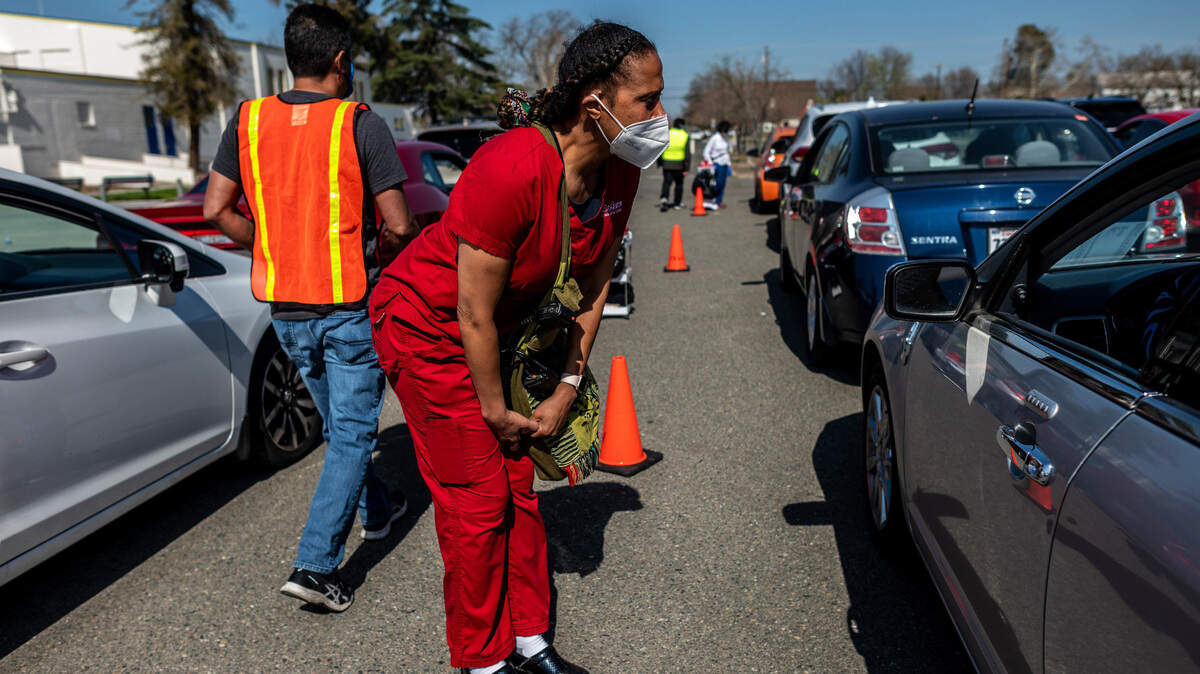
Carter, a neurosurgeon in Folsom, along with a newly hired team of just four, has been spending months hitting the streets of Sacramento’s Del Paso Heights neighborhood, hoping to convince vaccine-hesitant residents there to get the jab.
At one point earlier this year, she said, they were administering more than 1,000 shots per day.
“Now the one that I do, I feel so good about it,” she said.
That’s because those who have yet to be vaccinated need the most convincing, with little in the way of accurate information making a dent in their reluctance. At this point, Carter said she’s heard every excuse in the book, from microchips and altered DNA to infertility and hasty clinical trials. Someone told her they didn’t need the shot because they were “protected by God,” she said.
“God also gave you good sense,” was her retort.
A similar struggle is playing out in North Highlands. Slavic American Chamber of Commerce President Sergey Terebkov said proudly that the group was able to provide 10 shots over the course of two community clinics last month and complete nearly 100 COVID tests. He blames the low numbers on a lack of reliable information and education as well as a natural suspicion of government among immigrant communities.
Some of the poorest and most ethnically diverse communities in Sacramento County have the region’s lowest vaccination rates. In the zip codes covering Elverta, McClellan Park, North Highlands, Rio Linda and Foothill Farms, the full vaccination rate is no higher than 40%, according to the California Department of Public Health. These are neighborhoods that work hard to get by; the median income in McClellan Park is $31,000, and 61% of its residents live below the poverty line.
Sacramento County Public Health Officer Dr. Olivia Kasirye said one problem the county has been facing in unincorporated areas like North Highlands is a lack of community agencies to partner with. In areas like South Sacramento, where there are plenty of such agencies, the Sacramento County COVID-19 Collaborative has been working with the county to get out the word and boost vaccination rates — in some cases, even going door to door.
“But we don’t really have that level of activity in North Highlands,” Kasirye said. So even though “there’s been a vaccine clinic at McClellan Park for months,” she said, the county is not seeing the same vaccination rates there as in other communities with similar demographics.
“It’s about us being able to develop that trust,” Kasirye said. “It’s a slow process, and it will take time.”
But time is not a panacea. Some of Carter’s prospective patients still remember and refer to the infamous Tuskegee experiments that ended nearly 50 years ago, she said. Nor are more community agencies likely to spring up and help the county gain trust in the short term.
Meanwhile, volunteers like Carter and Terebkov need the backing of local government and private entities not only to fund their clinics but also to help with the “deep psychology” of hesitancy, confusion and anger surrounding vaccination, Carter said. A heavy marketing campaign aimed directly at these communities and their fears is necessary, she said.
But Carter also believes that only a vaccine mandate from on high can get Sacramento County close to herd immunity.
“People here have to understand that there will be regular consequences if they do not get it,” she said. “It has to be just like every other vaccine.”
The shame and fear of societal ostracism could be the most effective motivation for some of those still on the fence.
But vaccine hesitancy is not uniform; it is caused by a variety of factors that each need individual attention. Some of those reluctant to get the shots are watching and waiting; some see vaccine requirements as an infringement on their rights. Some are scared of side effects, and some have been outright lied to by bad actors.
However they came by their concerns, the people living in these communities do not deserve to be written off or left to die for lack of information and explanation.
This is a multidimensional problem that requires a multidimensional approach. Carter is out on the streets weekly, beating the pavement and fighting for every needle used, but she said she has to run the clinics, do the marketing and outreach, explain away patients’ fears and give the shots with scant support.
A problem this important to our society should not and cannot be addressed by anyone acting alone. The fact that huge swaths of Sacramento County are vaccine-hesitant shows there are deeper forces at play. There has to be a more concerted effort from local and state governments that have historically neglected these communities lest COVID go down as one more example of that neglect.
The bill is coming due for years of that complacency. Failing to get ahead of the problem earlier in the pandemic helped us get here, allowing misinformation and fear to overrule common sense and make every needle a fight.
Restoring trust in these places — places that historically have every right not to trust their government — will take focused attention and a serious plan. If the county truly cares about vaccinating its population and moving past the horrors of the last 18 months, then we can’t continue to depend on the dwindling energy of a handful of volunteers to persuade these holdout communities to do the right thing for themselves and the rest of us.