
‘Threading the needle’: Why California’s most innovative prosecutor might be in Yolo County
On Nov. 20, 2009, then-15-year-old Renwick Drake aimed a .22-caliber revolver at three kids he had just robbed at a West Sacramento skate park. Drake was reluctant to pull the trigger, but the 16-year-old he was with that night had already shot four rounds into the air and told him to “put in work” for the Tiny Rascals Gang, according to court records.
Drake opened fire, but the bullet ended up striking a tree.
The West Covina native avoided an attempted murder charge, but in January 2012, a Yolo County jury convicted him of second-degree robbery and two counts of assault with a firearm. With seven different enhancements tied to those charges due to his gang affiliation and discharging a firearm, a judge sentenced Drake to 24 years in prison.
Last month, the Yolo County District Attorney’s Office successfully petitioned for his early release. Drake’s remarkable rehabilitation — working numerous jobs and taking college courses; enrolling in anger management, parenting and youth offender programs; and launching his own weekly self-help workshop to help others transform — is the type of turnaround we like to think is possible. According to court filings, none of the victims objected to his release, and Drake will have the support of his mother and brother as he goes from transitional housing to full independence.
Using California’s penal code and the expanded powers of district attorneys under Assembly Bill 2942, Yolo County District Attorney Jeff Reisig has secured early release for nine reformed inmates after the latest resentencing law took effect three years ago.
After resentencings for nonviolent offenders and drug crimes, this year’s cases — Drake and another reformed violent offender with gang ties — were the most ambitious yet.
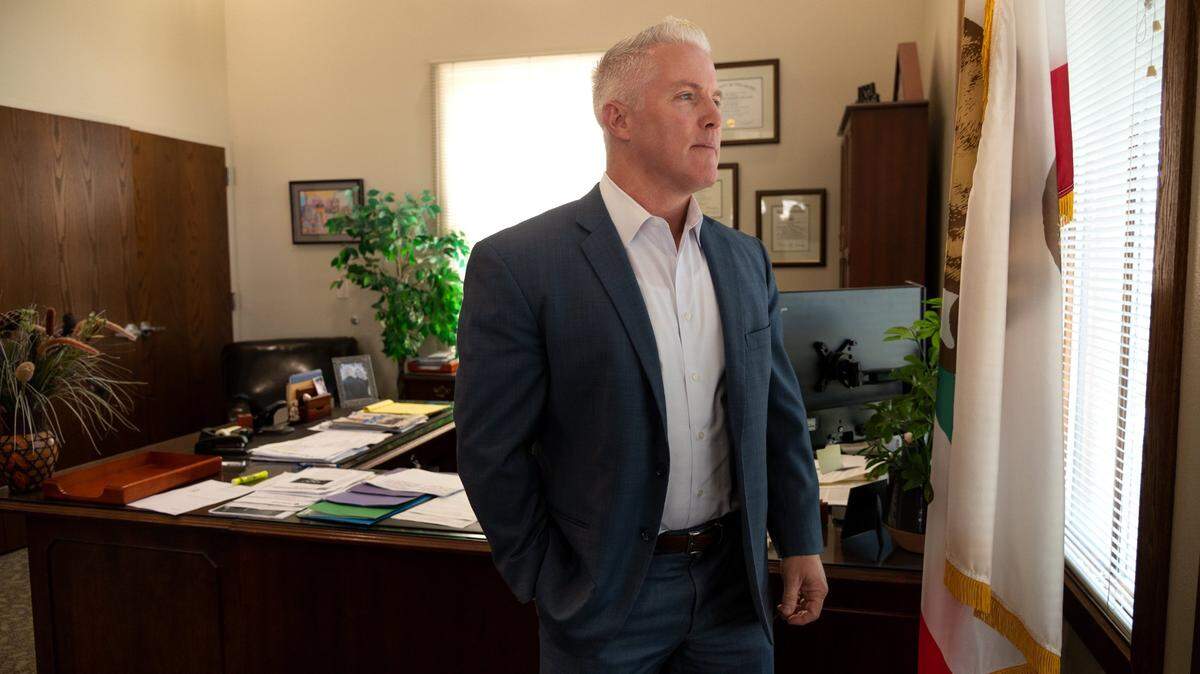
Reisig, a 52-year-old career prosecutor who came up during the height of California’s 1994 Three Strikes Reform Act, is simply following the data, no matter how ugly it is. And he’s also respecting the fundamental truths of the criminal justice system: That our prison complex is far too big and costly, and it’s disproportionately filled with Black and brown people.
If humans can learn and evolve, so can a person in prison — and so can a prosecutor.
“I’m not an ideologue,” said Reisig, Yolo’s top prosecutor since 2007. “I’m not in the same category as hardcore progressives that are looking to fundamentally rip down the system and rebuild it. I view our job more as threading the needle of criminal justice reform and public safety at the same time.”
Innovative prosecuting
Yolo County has embraced restorative justice when it’s an option and, this year, became a national leader with a groundbreaking public platform, Commons, to boost transparency and public confidence. To avoid any chance of bias, the office launched a sentencing tool that completely removes race from the equation.
What Reisig and Chief Deputy District Attorney Jonathan Raven are doing in Yolo County is more than simply offering an innovative approach to prosecuting. They’re charting a sensible path to contemporary criminal justice and lasting change.
Their work contrasts with that of well-known progressives such as San Francisco District Attorney Chesa Boudin and Los Angeles District Attorney George Gascón. It’s a model that traditionalists like Sacramento’s Anne Marie Schubert can and should be emulating.
Protecting and serving victims is still the priority under Yolo County’s “bill of values.” They just do it differently.
“What we were doing 20 years ago was just too extreme,” Reisig said. “It was not justice. It was one size fits all. Everything looked like a nail and we were the hammers. Now we view this more as there are a lot of gray areas and we need to be very strategic.”
To avoid filling jails with people who suffer from mental illnesses, Yolo County created a mental health court. It was so successful that at least 26 other counties, including Sacramento, Placer and El Dorado, launched their own.
To avoid filling jails with people who enter the criminal justice system because of substance abuse, Yolo County created an addiction intervention court.
To avoid filling jails with people whose offenses could be rectified outside a traditional courtroom, Yolo created a neighborhood court. Using the restorative justice model, a popular school discipline technique that generally requires a victim, offender and other community members to meet, Yolo has successfully healed victims, reduced incarceration and diverted juveniles into pretrial programs that give them a second chance.
The strategy is employed on a case-by-case basis for charges ranging from resisting arrest and hit-and-run to possessing stolen property. It’s been incredibly successful. A University of Colorado audit of the program found that over 90% of victims were satisfied with the process, Reisig said, and there was a 37% reduction in recidivism.
Pay attention to Woodland
Yolo County Chief Public Defender Tracie Olson aligns with her sometime rivals in the prosecutor’s office on the need to address race-based disparities and reduce mass incarceration. Second chances have become a shared value in the western Sacramento Valley.
“I can’t tell you how many men and women I’ve met, years after their initial sentence, who are simply different people,” Olson said. “They are insightful and deeply remorseful, and giving back by becoming firefighters, tutors, hospice workers and dog trainers who provide service dogs to those in need. They have families who love them, and children who need them.
“By offering these individuals a second chance, we are helping to transform our system into one that is more humane, while also helping to safely end mass incarceration and saving California millions of dollars in the long run.”
Hillary Blout, a former San Francisco prosecutor under Kamala Harris and founder of For the People, helped write AB 2942 and has aided Yolo County’s resentencing efforts. For her, today’s prosecutors play a critical role in remedying the unjust and uneven outcomes of previous generations. What Reisig is doing “gives me hope,” Blout said.
“It gives me faith, it gives me certainty that this is possible,” she said. “We cannot undo what we’ve done in this country, as it relates to mass incarceration, without having prosecutors play a central role. Working with an office like Yolo — with career prosecutors — it gives me hope that … we can transform these offices and still protect public safety.”
Instead of looking to San Francisco, Los Angeles or Sacramento for examples of a California district attorney, we should be paying more attention to Woodland.
Reisig’s approach avoids sparring matches over ideology. By letting the data shape policy, he is letting the undeniable truths of the criminal justice system dictate how a modern prosecutor should enforce the law.