
‘They want Commerce Circle action’: Absent progress, Sacramento returns to homeless sweeps
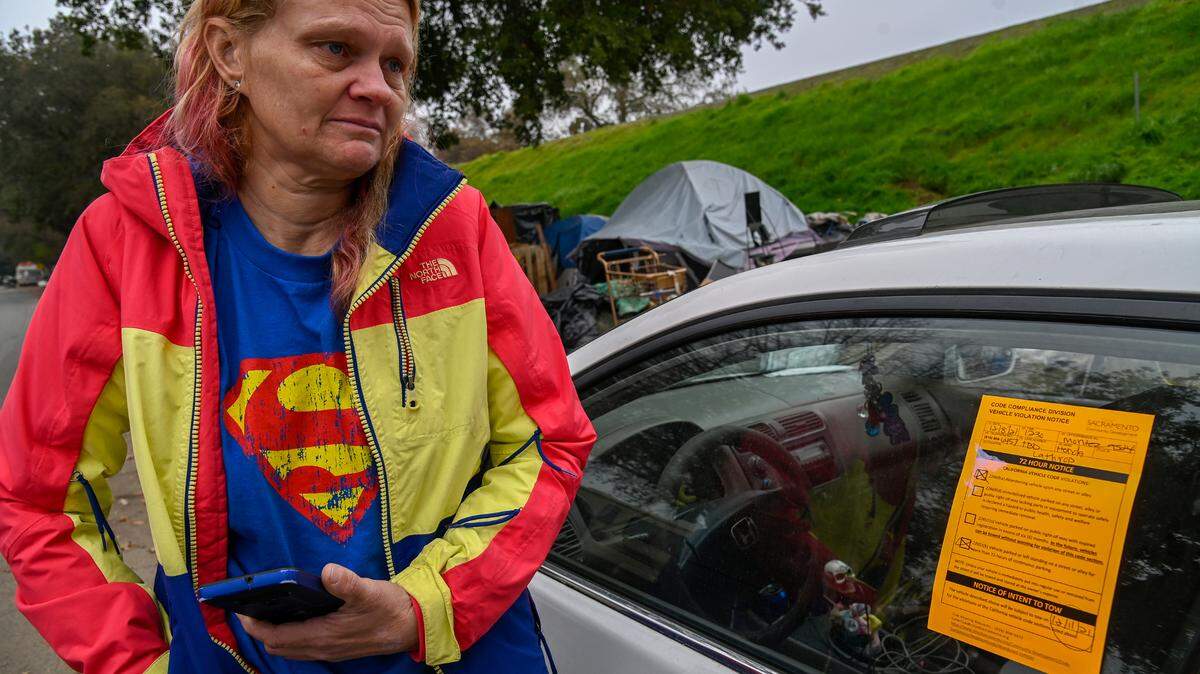
The Commerce Circle sweep was not a routine crackdown. It was a breaking point for Sacramento.
It was a symptom of the council-manager system that voters wrongly decided to preserve last year, keeping the mayor weak. It was a sign of frustration among citizens seeing little progress and limitations on how local authorities can enforce the law.
The human pathos that had consumed Commerce Circle during the pandemic is more subdued now. Backed up to the American River Parkway, Johnston Business Park had become less known for wholesalers, industrial shops and the radio home of the Kings than for unwillingly hosting one of Sacramento’s most entrenched urban homeless encampments.
By Wednesday, there were about a dozen parked vehicles and several tents still being inhabited, but the indigence that once lined Lathrop Way had been dramatically reduced. A legal escape hatch under the controversial Martin v. Boise ruling — which mandates shelter as a prerequisite for camp evictions — allows Sacramento officials to clear camps without offering housing when public rights-of-way (like streets) are blocked.
So they did. Last week, as many as 160 RVs, trailers and cars were ordered to vacate. With no shelter or housing available, that meant the people who lived in those vehicles had to go somewhere else. On Monday, 18 vehicles were towed away, including at least one family. And on Wednesday another seven that remained were ordered to move by the weekend.
While much of the community was outraged by what happened at Commerce Circle, many in Sacramento were glad to finally see something — anything — resembling a cleanup after all this time. Even if officials simply moved the unhoused residents from one spot where they were unwelcome to another, this was a victory for some.
We have to contend with that truth if we want public policies built around consensus.
The debut of this new enforcement posture has surfaced a rift between City Council members and city departments designed — or at least intended — to be responsive to citizen complaints. More broadly, it was an outburst by a quietly exasperated faction of public officials and community members.
It’s hard to say exactly how large this pro-enforcement contingent is, but it doesn’t follow an ideological line. Many are bleeding-heart liberals who are fed up that Sacramento policymakers — city, county and state — collectively pour hundreds of millions of dollars into a poverty issue so complex that, despite relentless attention, it only seems to get worse.
We know these people. They are not inherently evil or heartless. They are our family, friends, coworkers and neighbors. They are business owners and property managers. When homelessness comes up in conversation, they express apolitical aggravation that nothing seems to work.
Every California city has a constituency for evicting homeless camps outright. A new poll of Los Angeles County residents found that 39% believe local authorities should prioritize clearing encampments from neighborhoods and parks. In a region where 7 of 10 voters backed Gov. Gavin Newsom twice in three years, such sweeps have bipartisan support. Sacramento is likely to be similar.
Councilman Jeff Harris, whose district includes Commerce Circle, said he hears from affected business owners daily. When I asked him about a silent minority that was relieved at the sweep, he stopped me, submitting that “it’s a major majority.”
“It is somewhat silent, but I represent 66,000 people, and the bulk of them want enforcement,” Harris said. “They want Commerce Circle action. It’s not a silent minority. They’re not as vocal as advocates, but they’re more realistic about the impacts of homelessness.”
Those impacts do warrant consideration. At least 50 complaints had been filed against the business park encampment since July, citing a familiar gamut of drug use, fires, human waste, trash and environmental harm. Many of the unhoused people who slept on Commerce Circle were undeniably in dire straits, but there was also a surge of emergency calls and complaints about break-ins, thefts, prostitution and property damage, Harris said.
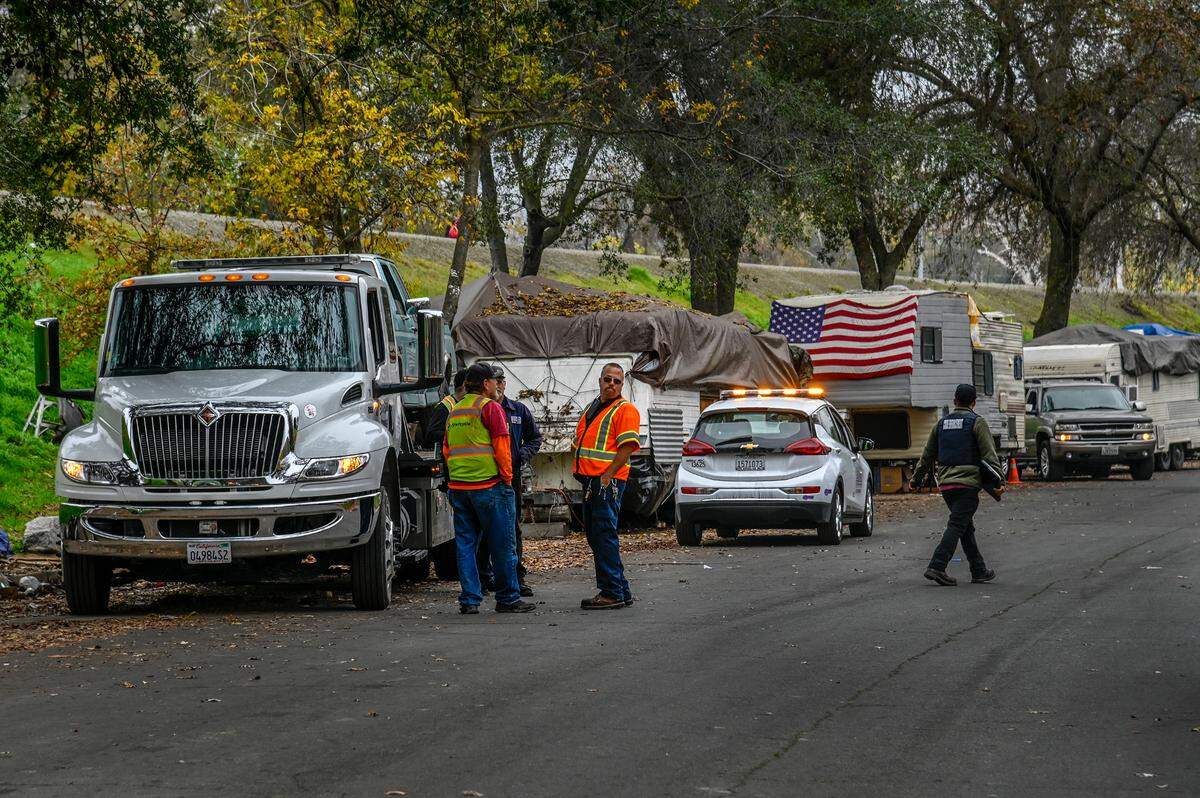
But if Sacramento authorities have wanted to clear the area since public health rules were rolled back in June, then they should have done it sooner. Now the unhoused people who stayed at the business park have been uprooted as frigid winter rains pass through Sacramento. There is never a good time to clear a camp, but this was truly the worst. An invitation to a warming center this weekend won’t change that.
If the city of Sacramento were a person, it just fell on its face. The city’s head and body are misaligned, and the gulf between council policy and law enforcement is unnavigable.
The question now is how to clean up the mess while the public is splintered and mistrust spreads through the unhoused community. How does this sweep make the job of the city’s Department of Community Response, the civilian team that responds to homelessness, any easier?
If the goal of this enforcement was to send a message, all the community received was a signal of how fractured Sacramento area governments remain. Sacramento County has supposedly become a better partner for the city, but multiple officials said the county didn’t even know about the Commerce Circle action until it was carried out. So much for the growing connective tissue with the region’s largest human services provider.
Mayor Darrell Steinberg’s comprehensive siting plan for homeless residents has been bogged down by a combination of legal challenges, outside agencies and construction holdups, delaying all 20 of the safe grounds approved in August. In the meantime, city authorities have identified 3,000 illegally parked vehicles that could face a fate similar to Commerce Circle’s.
With no new shelters, housing or safe ground sites — and the inaugural W-X location shutting down this month — all Sacramento has the capacity for now is enforcement. Without a breakthrough, that tactic is only going to become more popular.