Feeling sad lately? You’re not the only one. Depression, doomerism widespread in the U.S.
There’s a crack in my windshield. Every time I get in my car, I see it out of the corner of my eye. I never seem to have the gumption to move it up on my list of things to do, so the crack just sits there, a constant, nagging reminder of ineptitude.
Except I’m not actually inept. I’m a functioning adult. A crack in the windshield, while annoying (and somewhat illegal), doesn’t rank as high as paying the bills on time. And I manage to do that, if not with alacrity then at least relative timeliness.
What a perfect metaphor for life in 2022.
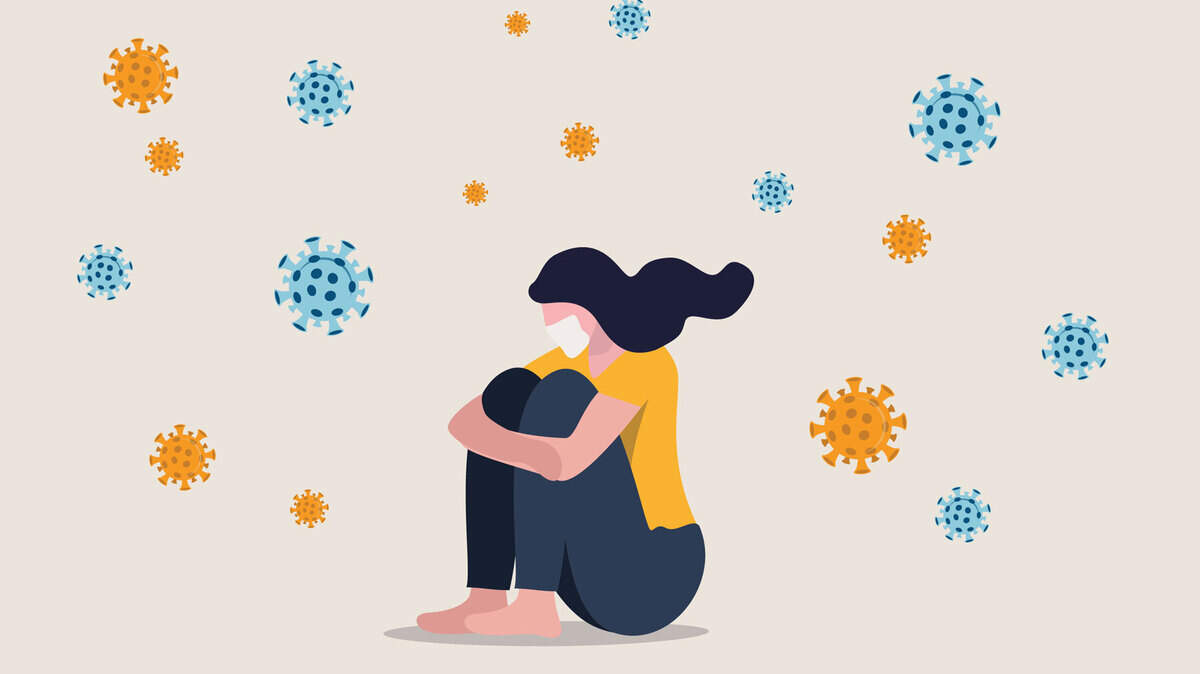
Once-routine tasks are now an incessant reminder of failure. Many of us escape to social media, which can present distorted pictures of lives that can seem perfect on the screen and inspire a sense of melancholy. I’m hardly alone in feeling sadder: Researchers have found increased levels of anxiety and self-loathing since the onset of the pandemic not only in teens but also in adults.
This is depression, I hear you say, and you’re right. Depression is more common than ever in America since the pandemic began. I was diagnosed with depression and anxiety in 2018, though truthfully, I struggled with it long before then. I’ve been on antidepressants — or my “anti-sads,” as I like to call them — ever since.
The more I talk about my mental health struggles, the more I find other people willing to talk to me about theirs. Even now, when everything can feel lonely and overwhelming, we can make a rare connection through shared experiences. It’s scary to talk about this on such a public scale, but I hope that if you’re reading this right now, you feel a little less alone, too. (And if you do, then it was worth it.)
Personally, I find comfort in knowing I’m not the only one feeling sad. One study found that the rate of depression in American adults is three times higher than before the pandemic began. More than 2.5 million youths in the U.S. struggle with severe depression, and youths of color are at greatest risk: More than 10% of American children have severe, major depression, but the rate of severe depression was highest, 14.5%, among youths who identified as more than one race.
To young adults like me, it seems that every day we hear of a worsening climate, politicians playing performative games to avoid responsibility, a pandemic nearing 1 million deaths, and ongoing racial and class inequalities that are never fully addressed no matter how we plead or fight. There are so many wrongs in the world, and it’s too easy to believe we will never recover. So why bother trying?
Except we have to keep trying.
At least I do. I recognize that I have incredible privileges, but I also know depression doesn’t care about that. My mom, who struggled with food insecurity as a child, used to say it doesn’t matter if the glass is half empty or half full; she was happy the glass had anything in it at all. I try to remember her optimism, and most often at night, when I lie awake in bed and everything rushes at me, I hear her voice telling me to go to bed, that everything looks better in the light of day, and she’s almost always right.
Ultimately, hope looks different for everyone, but it’s imperative to find something to avoid Doomerism.
This is a term popularized on the internet in the last decade to describe the anxiety brought on by climate change and the threat it poses to our environment and our lives. The definition of Doomerism expanded to include the existential threat of COVID-19.
“We are facing a national mental health crisis that could yield serious health and social consequences for years to come,” reported the American Psychological Association. The Stress in America poll, conducted every year by the association and the Harris Poll since 2007, reports that in 2021, our stress and decision-making skills have been radically affected by the pandemic.
One in three Americans said sometimes they are so stressed about the pandemic that they struggle to make even basic decisions about what to wear, what to eat or what to do with their day. Millennials and Gen Z adults are particularly likely to struggle with this type of depression when compared with their counterparts, Gen Xers and Boomers, and are less likely to report resiliency or a feeling of hopefulness.
I feel my own sense of Doomerism during my search to own a home. Last week, before I could even put an offer in on a home in my old neighborhood of North Highlands, I was outbid in cash by $55,000, by an investor who wanted the home as-is — and that was really saying something, considering the state of the house. It’s an already anxiety-triggering process made worse by the constant rejection and feelings of inadequacy, both financial and personal.
For my own mental health, I try to focus on the microcosm: Helping one or just a few people is better than helping none. I can’t stop a pandemic, but I can do my part by getting vaccinated and encouraging those I love to do the same. I can’t solve homelessness, but I can get to know the unhoused community of Sacramento and help lift it up.
So if anyone knows the name of a good windshield replacement company, I’d be grateful.