
On the issues: Karina Talamantes and Michael Lynch, candidates for District 3 city council
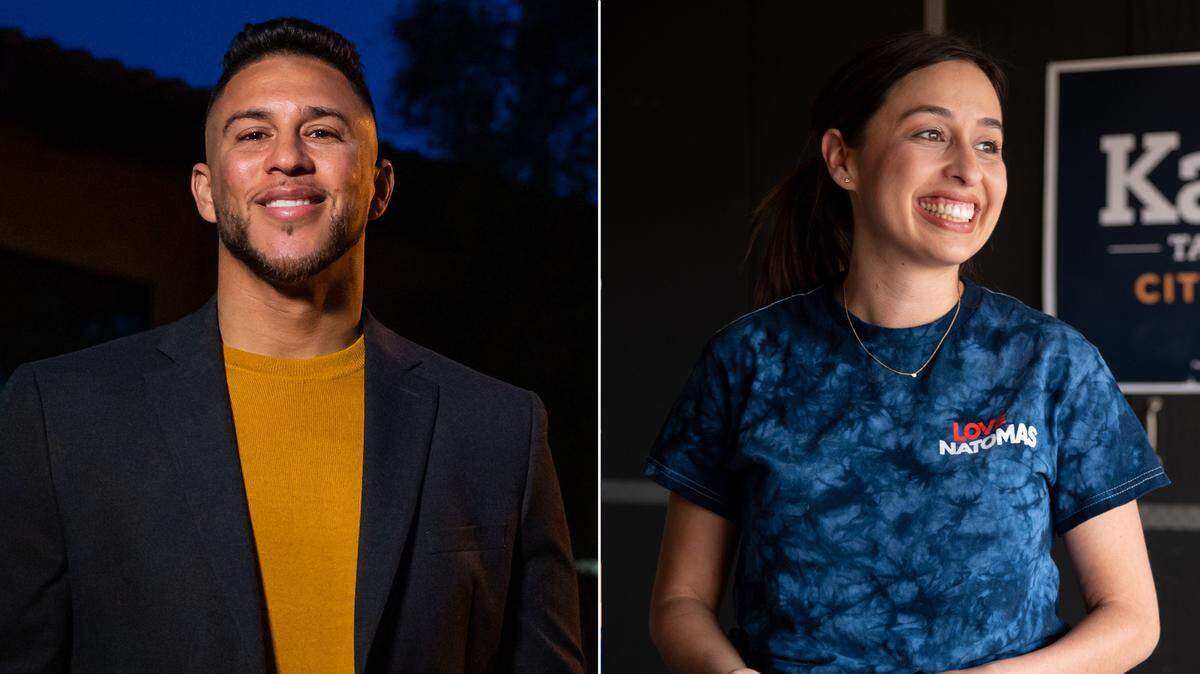
The following interview was conducted by members of The Sacramento Bee Editorial Board and the two leading candidates for the District 3 Sacramento City Council seat, Improve Your Tomorrow CEO and founder Michael Lynch and Sacramento County Board of Education President Karina Talamantes. It has been edited for length and clarity.
The Sacramento Bee: Tell us about yourself and why you wanted to run.
Talamantes: This new district is in a unique position to finally be one community of interest and to be a strong voice at the dais at city hall. I’m originally from Willows, California, a small country town two hours north of here. My mom worked in the olive canneries and fruit canneries all her life on the graveyard ship to be able to be there during the day to take care of me my siblings. My father passed away in the workplace. He worked in an almond orchard and worked in the fields for 12 years. When I was 19, at UC Davis, he passed away because of unsafe working conditions. And that’s a big part of my life, because I had to grow up fast and had to make sure that I was there to help take care of my mom, take care of my own mental health and my siblings. Thankfully, because of a program called Educational Talent Search, which is a program that helps low-income kids, it’s been around for 50 years, I was able to get to UC Davis.
At UC Davis, I was involved with a lot of college access programs, helping and mentoring young kids in Sacramento. I graduated in 2011 and went to Washington, D.C. to work with the White House Initiative on Educational Excellence for Hispanics under President Obama. Afterwards, I came home and I worked in special ed, helping kids with IDPs from three years to 24 years old. Then, I worked at Yuba Community College and UC Davis – again working in education at education talent search, the same program that helped me get to where I’m at today. I wanted to make sure that I gave back. I have a total of eight years of working in education.
Afterwards, I worked in the private sector, connecting people to jobs in Fortune 500 companies. Then, after Donald Trump got elected, I got involved with a political party in Sacramento. I joined the Democratic Party, and I was involved for about a year when, in 2018, I got asked to run for office by a former city board member. I ran a grassroots campaign in 2018 and won my election. I’m currently serving as president of the Sacramento County Board of Education. I’m also chief of staff to Vice Mayor Angelique Ashby, one of the most tenured people on the dais today. I have absorbed so much institutional knowledge and background. I’m a small business owner. I am excited and motivated to help my community. I will be focused on public safety, police and fire; making sure we invest in our parks; our bike trails; our road resurfacing. I’ll make sure I work on homelessness — unhoused Sacramentans are Sacramentans and we’ve got to do better.
Lynch: I’m from Sacramento, and went to Valley High School in South Sac, a community that was talent rich, but not rich in opportunity. I quickly realized the resource deferential that exists between communities. You can imagine Center Parkway was not a haven for internships and economic development opportunities for young people. I went to school with some phenomenal individuals who were passionate, intelligent and hardworking, but the opportunities weren’t there for all of us to truly excel. I was fortunate. Although I grew up in a single parent home — sometimes we had enough, sometimes we didn’t — I had a phenomenal dad. My dad was my baseball coach, basketball coach, football coach, he even dressed up as Santa Claus at my elementary school every year.
Playing football was my pathway to college. But my freshman year in college, my life changed. I got a phone call that said one of my friends was shot and killed. For me, that was a moment where I was sad I had lost a friend, I felt guilty away from my neighborhood and community, and I knew the same stuff was going to happen over and over again. That was my pathway to service. At 17, I decided something had to be done because the status quo was not working. I graduated from college, got a master’s degree from Sac State and came back to my community to be able to work in the state Capitol where I served six years as a senior advisor, hoping to craft public policy that directly affects the lives of 40 million people.
In 2013, what I continued to recognize was that this cycle of college opportunity gaps for young men of color was persistent, prevalent and growing. I decided to do something about it. I created an organization called Improve Your Tomorrow, dedicated to closing the college opportunity gap for young men of color. Seventeen young people showed up on April 6, 2013 at Valley High School. Today, we serve 3,000 young men of color across five counties and over 50 schools and we have closed the college opportunity gap — 99% of our young men graduate high school on time and 82% attend college. We have a $9 million budget, we employ 130 people — 50 right in District 3.
The most frustrating thing for me as a non-profit leader is taking my young brothers back home to their community. What I see is the same thing: They’re living in dilapidated housing, their community is unsafe and the parents are struggling to make ends meet. I kept expecting somebody else to come along and solve the problem. I kept thinking the next elected person will come in and see what was going on, but that wasn’t happening, so I decided to run for elected office.
The Sacramento Bee: I want to start with statements from you both about the recent mass shooting in Downtown Sacramento. What sort of actions or policy do you feel like city leaders should be pursuing at this moment?
Lynch: My pathway to service began with my friend being shot and killed. The community that I lived in was unsafe — I was often fearful to go out at night and walk to the store. I lived in communities that were saturated with gang violence. Violence is nothing new to me, but it saddens me that we continue to have the same problems. A few weeks ago, we just had three little girls taken because of gun violence. Now, we have 18 people — 12 who are injured, and six who are dead — because of gun violence. We have to do more to get guns off the street.
I support the effort to attract high-quality, diverse candidates within Sac PD, but we have to do more on the prevention side. We have to do more to make sure that we are investing in officer violence prevention and programs like the Peacemaker Fellowship and Brother to Brother. We have to do more to make sure that we are building relationships between Sac PD and communities of color, especially our Black community, which has a high degree of distrust. What would it look like if an office got outside and walked down the street instead of driving down it? A community-based policing model is more effective.
In order for us to build a safe community, we have to tackle urban blight. When was the last time you walked down Northgate and saw the status of the community? In Philadelphia, there’s a basic assistance repair program where they tackle urban blight, and crime dropped 20%. We’re not tackling the symptoms.
Talamantes: Today and the day after the church incident in the Arden-Arcade area was really heavy — really heavy on us, our community and our city. As someone that’s working in public service now, it’s tough. It’s tough to respond to these issues. But it’s important to invest in our community, invest in our youth, build community relationships and a community response team that can work directly with our police department and help respond to these issues.
We need to figure out how to help families with funeral costs. Funerals are expensive — $40,000, minimum. When something like this happens, where do you find those dollars? When I was 19, we buried my father. Because he passed away in a workplace accident, we had the funeral costs covered. But had he not, I don’t know where we would have found that money. In my job capacity, I helped the mother impacted by the church shooting bury her daughters in privacy — away from people, away from the media, away from people trying to use a horrible incident for political opportunities. We have to help families with next steps, and that means emotional support, family support, financial support and calling and checking in.
This is the second tragic thing in Sacramento, and it’s unacceptable. We need community-based policing, we have to invest in our neighborhoods, we have to invest in security and our businesses to ensure that Sacramento can thrive and recover. But at the end of the day, we have to make sure people feel safe. Public safety is important. It’s important you feel safe walking downtown. It’s important that we invest in traffic lights going to Northgate — there’s three different traffic lights on Northgate where cars speed 50 miles per hour and three schools are facing the road. These projects have had funding, but we haven’t done enough to put these traffic lights in place.
The Sacramento Bee: If you’re a member of the Sacramento City Council in the fall, what, specifically, would you do to invest in youth?
Talamantes: First off, the Sacramento Public Library needs more investment. The community center in South Natomas, has a phase 2, but that phase hasn’t happened. We need more parks. South Natomas needs more parks, the communities of Northgate and Gardenland need more parks. We need more activities on the ground. I see kids doing pick-up soccer in Chuckwagon Park, the park closest to me. My own family set up a kickball tournament and we utilized the park. The parks are safe spaces, especially for families of low socioeconomic status — the families that can’t afford to go to a museum or travel to San Francisco or Disneyland. We’ve got to invest in our bike trails.
Niños Parkway was also the site of a recent shooting. The day before, I was out there with Sac Republic and GreenHouse doing soccer activities for two hours. The next day, there was a shooting in that area. What do we need to do? We have to invest in our community. We have to make sure we have more programs where kids can sign up for soccer or baseball or tournaments at our parks. We gotta make sure our community centers are open for longer hours. We have to make sure we’re investing in programs like Stanford Settlement in District 3 and GreenHouse and all the incredible organizations that are doing groundwork in District 3. We have to make sure that prevention is always the key and one of the solutions.
I’m a firm believer that government works. And that government can work, so long as we make it inclusive, accessible and we meet people where they’re at. We gotta do better in government, and that’s my goal here — to become a liaison between the hardworking people of District 3 who are working three jobs trying to make sure they have a roof over their head and food for their families. They don’t have time to come to the City Council to wait on item 20 to do public comment for two minutes and wait there for six hours. I want to be that trusted voice — I have experience, I’m qualified and I’m excited. I have a lot of community support because I’ve been on the ground listening — listening is the most important thing we can do as elected officials right now.
Lynch: One of the most frustrating parts of my job as a non-profit leader is standing in front of the dais asking City Council members to invest in youth. Because time and time again, they have failed me. I was a part of the Measure G campaign and we were trying to get the city to allocate a certain percentage of funds to young people and programs, and they failed us. I’m standing in front of the dais saying, “Here’s an effective program, here’s what works,” and they fall silent on investing in young people. The future of our city will be determined by our investments in young people. That 24-year-old who may have burglarized a home, at one point they were a 12-year-old who may have needed a little more additional support and love.
There’s a couple of things you can do to really expand and scale investments in young people. We need a clear career pathway in Sacramento. We have thousands of seniors graduating every year who don’t understand or know the power of a college degree. The city needs to act as a convener to establish a model where a 17- or 18-year-old has options for what they want to do. I think about the power of place-based initiatives. We’re an AmeriCorps program — AmeriCorps is a $1.2 billion federal program that invests in cities and localities. There’s no reason why we can’t do what we did in Stockton a few years ago and have AmeriCorps invest $12 million in the city of Sacramento and bring AmeriCorps members who will serve 15,000 kids over the course of a year. You couple that with scholarships and career pathways, what you get is opportunity. Why can’t Sacramento have a promise program in which it leverages philanthropic resources with city resources to build a scholarship for young people to pursue vocational education or college?
I think about scaling up effective programs like Landscape and Learning — a phenomenal program that employs young people to go and fix up parks. You walk across District 3, what you see along the eastside is trash. That same program needs to be scaled up to employ young people to help and make sure their neighborhoods are clean.
The Sacramento Bee: Michael, you mentioned you were involved in the campaign supporting Measure G, which was a measure that came before voters and — if it passed — it would have required the city to set aside 2.5% of the city’s unrestricted revenues to invest in youth. The Sacramento Bee Editorial Board endorsed Measure G, it was supported in more impoverished neighborhoods and opposed in more wealthy neighborhoods. Karina, Angelique Ashby, your boss, your mentor, led the charge against Measure G. Did you agree with her?
Talamantes: I did not take a stand on this position because it’s an area where I conduct business. I am president of the Sacramento County Board of Education, I see first-hand a lot of the challenges we see in education and how we partner as government institutions and agencies to support one another. We need to do a better job working with our schools, our libraries and making sure our Sacramento Public Library isn’t competing for funding against other non-profit agencies. This is a leg of the city of Sacramento, so for me that’s an area of concern when it came to this measure. But I didn’t take a stand.
Lynch: That’s one of the concerns I had as a nonprofit leader — knowing how important it is to invest in young people, and we have city leaders not being an advocate for it. Outside of a couple of council members, there has not been a champion for young people outside of Jay Schenirer. Jay is supporting my campaign because I am the youth person. I have dedicated my life to solving the opportunity gap, I have scaled an effective organization that is serving California. The frustration is that the city inherently does not invest enough of its resources to make sure that all young people and all communities can thrive.
The Sacramento Bee: Climate change is one of the most important issues of our time. It has a variety of impacts in our area, from smoke pollution to the drought to flooding. What is the city council’s role in addressing climate change? What policies, specifically, would you pursue to help Sacramento eliminate carbon emissions?
Talamantes: Climate change is something our youth has been leading the way on. This is an area of concern because we’re not in a sustainable place as a country and as the planet — we need to take care of what we’re going to leave behind for generations to come. So I support the city of Sacramento’s climate change plan. And I think we need to do more with green transportation, which means we need to pursue active transportation grants, we need to invest in electric buses, we need to make sure we’re promoting the use of zero-emission vehicles and we have to make sure they’re affordable, because right now traffic makes up 56% of greenhouse gas emissions, I believe. At the end of the day, we have to grow our reliance on bicycling and urban trailers and making sure we have connectors.
We can do an incredible job together as both the state, the county and the local level to work on these goals. That means looking at plastics, building capacity and looking at infrastructure, preparing for natural disasters like flooding, wildfires and heat waves. We have to work with government agencies to help us combat these issues — SMUD, SACOG, the Sunrise Movement, which I’m proud to be endorsed by. This is a coalition of young people ready to fight for change. These are the people doing the groundwork. And I am proud to have been the vice president of the Sacramento Democrat’s environmental club. We published different advocacy recommendations, we worked with local- and state-level politicians to help see what we can do to promote sustainability and help environmental causes.
In Natomas, we had The Natomas Basin Conservancy. We’ve got to make sure that as we’re planning and developing that we’re still setting aside land for open spaces to protect natural habitats and species and promote the tree canopy. There’s a lot we’re doing as the city of Sacramento to help with climate change and I’m happy to support it all and I’m proud to have the endorsements of people like former mayor Heather Fargo and Ray Tretheway who have been fighting for climate change and sustainability for over 30 years.
Lynch: Climate change is our biggest challenge — not just because everyone will feel its effects over the next few generations, but because it’s a racial justice issue. Who bears the greatest impact of an unjust climate? It’s the brown and Black communities in Sacramento. The Climate Action Plan does set us on the right path, but we need bolder action now to be able to have an effect within the city around transportation and residential and commercial energy use.
Here’s a story about climate injustice I’ve experienced. I grew up in communities surrounded by freeways, and most of my friends had asthma. For me, there is urgency to act now. The Climate Action Plan sets us on the right path, but we need to build out a zero-emission infrastructure much quicker where we are building enough EV charging stations to prepare for a lot more electric vehicles, and we need to concentrate those EV stations not just in Curtis Park or Land Park, but also in South Natomas and Gardenland. We have to make sure we expand public light rail. We’ve been talking about a light rail that connects South Natomas to downtown and to the rest of the city since before I was born. That’s an important part of what we have to do.
Our neighborhoods are structured in a way where they’re not walkable, they’re not bikeable. The past couple of days, I’ve been walking down Northgate and through Gardenland and you have bike lanes about three feet wide, you don’t have walkable streets. We have to think differently about how we’re building neighborhoods and about infill development, which has to be a priority and a strategy. We need to create communities where jobs, housing and retail located together so we don’t have to drive 30 minutes down the road to get to our job.
I think about the urban tree canopy and about Curtis Park and Land Park where you have these huge trees that trap carbon and also provide cooling during the summer. Those trees have to be expanded in District 3 and all across the city. We have to act bold, we have to be quick and we have to make sure we have collaborative leadership in place.
The Sacramento Bee: South Natomas has been heavily impacted by homelessness, especially along Garden Highway. Over the last year, the city has invested public dollars and political capital in establishing safe grounds and sanctioned campsites where services can be offered. But the city has largely failed to deliver on those plans. Given the scale of this crisis and this deficit of shelter, would you welcome safe grounds in South Natomas or pursue a different policy?
Lynch: We have to do our part to make sure we’re leveraging city resources. The reason why I got into this race was because in November, my mom became homeless. There were 112 different services, 63 different entry points within the city, but I couldn’t navigate them to be able to get my mom housing. Growing up, I was homeless both in eighth and ninth grade. It’s going to take collaborative leadership to be able to solve this issue and bring people together.
That’s what I’ve spent my career doing. If you could imagine running a non-profit that has $9 million, employs 130 people and serves 3,000 young people across five counties, that takes a great amount of work bringing people together, expressing a clear vision and moving forward. It’s not just temporary housing strategies we need. We need a stronger coordinated service entry model. When you have 112 different services and 63 different entry points, you get chaos — an inability to effectuate change because you don’t have a good service entry model. We need to work with the county to be able to expand a Roomkey type program. We have to work with the county to be able to do more of that, because it’s a whole lot cheaper.
We need to invest and expand mental health and substance abuse services. I like the idea of the governor’s CARE Court, and the ability to have a system dedicated to those folks, there’s promise there. But when I think about the siting plan, I think about finger pointing — policymakers saying, “Hey, it’s your problem.” That’s not my style of leadership. I built an organization, I have solved problems in that organization, I know what it’s like to balance a budget, I know what it’s like when people depend on you. As a leader, the worst thing you can do is finger point. So for me, it’s about tangible change, bringing people together and that’s what I’ve done my entire career.
Talamantes: I work in City Hall now and I have a hard time triaging families that come to us. Now we have the Department of Community Response, and Bridgette Dean is amazing but she doesn’t have the team she needs or the programs to help us really truly help people and meet people where they’re at. People suffer from homelessness for a variety of reasons, sometimes it’s rent, sometimes it’s mental health, domestic violence or substance abuse. Every single family or person has a unique story, so there will never be a one-size-fits-all approach. I can think of a mother who has six children and was looking for shelter. There’s a program council members have put in place where people would also have to share one communal restroom. That doesn’t work. The railyards, that doesn’t work for that mom either. There’s a lot of different unique situations, and as we address homelessness we need to understand that one size doesn’t fit all.
So in District 3, we have the Staybridge Hotel, which will hopefully be opened this spring. That will house approximately 300 families, and there’s going to be 10 to 20 units for emergency shelter. We have to make sure we can take women and men suffering from domestic violence that call our police department, we have to make sure we have somewhere to take them. Right now, there’s a proposal for Joshua’s House, in front of Garden Valley Elementary. Do I support the idea? Yes. Do I think that’s the best location for it? Maybe not. I think there’s better places. How do we work together as county agencies to really streamline this process? I can tell you right now I work at city hall right now and it’s tough. I’m sick of lip service, I think we all are. We need to get to work and cut through the red tape. Enough is enough. We’re all sick of the problem, we’re all dealing with the issue and everyone in my district wants to see a small win, and that means housing our unhoused.
The Sacramento Bee: You’ve both addressed some of the finger pointing that’s been going on between the city and the county. What’s the solution to that?
Talamantes: I have good relationships with Supervisors Phil Serna and Patrick Kennedy, who have both endorsed me. It’s my understanding that we have a new way of having the ability to bill MediCal to get more beds for our county. Through the Sacramento County Office of Education, we’re currently working with the county to get social workers in all of our schools. We currently have hired 20. For me, it’s going to take leadership, and I am ready and committed to helping solve this crisis. It’s complex. We have to do more. We have to have more conversations. When we set up the Staybridge Hotel conversion, we had a town hall of 400 people. We told them what the project was, what the concept was and we didn’t have any pushback because we did the legwork beforehand. There is a lot of NIMBYism. To combat that, you build trust. And you give people an advanced notice of what your idea is, where you plan to take it and secure funding sources. Enough with the lip service, we have to get to work.
Lynch: Bold decision making and bold collaborative leadership means that you’re going to have a whole bunch of people who disagree with you. Sacramento County is the capital of Black student suspensions. We created a campaign called the 1300 campaign which brings a philanthropic business and K-12 leaders together to talk about the problems of suspension and underachievement. We brought everyone together and we expressed a clear goal. The 1300 campaign in October of last year got Natomas to ban suspension for willful defiance only. First school district in the region to be able to do it. But that wasn’t done by me, that was done by an idea bringing people together — despite all the other people who thought it wasn’t a good idea — and we got consensus on the vision of what we wanted to do. We were stubborn with the vision and flexible with the path. It’s the same thing with collaborative leadership.
In Sacramento County, we have to express a clear vision of where we want to go. What’s the number of homeless people we want to provide shelter for? Let’s bring the community along and put the resources and time that’s needed in, but red tape and finger-pointing isn’t how you get stuff done.
The Sacramento Bee: The mayor has proposed an ordinance creating a legally enforceable right to housing, and there may be a similar proposal on the ballot this fall. This would mean that the city would be legally obligated to provide housing or shelter for all its residents, and that people could sue if shelter isn’t available. It would also come with an enforceable obligation to accept shelter for individuals offered it. Do you support this policy? Why or why not? And if not, what’s a more effective approach?
Lynch: One of the reasons I decided to run for City Council is because I felt like they weren’t making enough progress on homelessness. When my mom was experiencing homelessness and I was trying to get her services, it took five months. That, to me, is a critical issue. Mayor Steinberg has brought in more resources than any other mayor in Sacramento’s history to be able to move homelessness forward, but the City Council has not moved swiftly to be able to do that.
Unfortunately, I can’t support — as written — the mayor’s right to housing proposal. There are too many unintended consequences, like the liability, the right to action for homeless people to sue the city government. That could cripple and hurt our ability to deliver effective services. On the other hand, I see some promise and possibility with the homeless ballot initiative. It’s going to require city government to do a whole lot more than what it’s doing now, but I see that as a potential path forward. What we see right now is inaction. The siting plan is just sitting there. The homeless ballot initiative will provide a framework to allow city leaders to move forward. I see the initiative as — possibly — a better avenue to get city leaders to move quickly on this issue rather than the infighting and political finger pointing taking place right now in city hall.
Talamantes: District 3 is feeling the impacts of homelessness quite a bit — it’s the No. 1 thing people want to talk about when I’m knocking on doors. People are very compassionate, people understand the underlying issues of people experiencing homelessness. I think our community is ready to support programs in District 3 so long that there’s a real plan of implementation.
A vision is just a vision unless it has a framework and implementation of success and a funding line. I’ve heard the proponents in the city of Sacramento are working to bring these proposals together, but I haven’t seen it yet so I do look forward to seeing that and taking a stance on that.
At the end of the day, we must do more on housing for our unhoused. And that means getting creative. That means safe spaces for people to camp, safe parking lots for people to place their RVs, converting hotels, more Section 8 vouchers — we just have to get creative and look at every opportunity that comes across our lap to get a program up and going. Enough is enough. We feel the impacts and we really just have to get to work.
The No. 1 thing I care about is making sure we have wraparound services that go with the housing we’re able to provide families. Wraparound services will be the key to success — to helping our unhoused become sheltered, get a job and move on in life. I’m open to suggestions in terms of safe places to camp, securing sites and I will work with every community leader in District 3 to vet the sites and make sure we have a community advisory board to ensure accountability.
The Sacramento Bee: Your candidacies are part of an ongoing generational shift in the city council, with millennials assuming larger leadership roles. For better or worse, voters are skeptical of young candidates and politicians. What’s your message to voters who may be reluctant to back candidates like yourselves?
Talamantes: I am 33, I am a small business owner, trustee is my ballot designation. My brother and I have a food truck. I have been serving this community that I hope to represent for the last four years as trustee on the Sacramento Board of Education. I ran a vaccination clinic at Natomas High School where I helped vaccinate over 30,000 people in this community. I canvassed these communities, saying, “Hey, come out here.” Every Tuesday, we did equity in action. We set up a hotline that had 15 different people speaking different languages the Monday before the clinics were opened to the general public to make sure people with technology or language barriers also had access to vaccinations.
I passed a $172 million school bond, helping this community with school infrastructure. I’m involved with different community organizations. With our food truck, we go to Stanford Settlement, we go to GreenHouse, we go to different events the community hosts and we’re at the schools, sometimes at school fundraisers where 15% of our profit goes to the schools. People know me, they have seen my face. They saw me in 2018 when I knocked on their doors. They saw me helping with digital broadband access, working with the different digital providers in the different apartment complexes to make sure kids were connected to their devices. Because of my leadership in the pandemic, my colleagues allowed me to be president of the board of education this year. That says a lot.
I was on the ground, helping our community, being consistent with my messaging, telling them I didn’t know the answers to their questions when I didn’t know. Because the worst thing we can do as politicians is say we have the answers to all the problems in our city. We don’t. But we’re leaders, and we have to accept when we’re wrong and when we fail and then move on and try again. And build trust and admit when we’re wrong. I’m not scared to ask for help, and I’m thankful to have the endorsements and support I have. Because I have hotlines to institutional knowledge, like former mayor Heather Fargo. Natomas is one of the most diverse zip codes in our country, we have over 15 languages spoken and inclusionary housing is what makes Natomas what it is today.
Lynch: I can’t tell you how many times I’ve knocked on doors for people to say, “How old are you?” Same as Karina, I’m 33 years old, I’m raising a family in the district, IYT headquarters are in Northgate, and my daughter goes to school about 50 feet from where I’m at off Northgate.
I talk about my connection to the district. Since 2016, we’ve served over 1,000 families right in Natomas through our programs. My favorite experience is when I knock on the door and say, “Hey, I’m Michael Lynch,” and then we start talking somebody says, “Oh, you’re the CEO of IYT, my son went through IYT.” I knocked on a door in South Natomas and the mom who answered the door said, “Mike, I know who you are. My son is at Clark Atlanta because of you.”
My message to the voters is: I am a qualified, community-based CEO who works with young people and families. I’ve been doing this work for nine years and have built a successful organization with 130 people. I’m raising a family here. My roots are connected here. Since we serve 2,000 or so young people in Sacramento County, all I have to do is communicate the work. I am not a politician, I am not a part of the status quo because the status quo has not worked. I am a new leader with a new vision who is not new to the district. I was connected with the community before the campaign and will be connected to this community — because my wife won’t allow me to move — after this campaign.
The Sacramento Bee: We have a new police chief. There’s been a lot of discussion about the police department having strained relations with the Black community in particular. If you’re on the City Council, would you be in favor of increasing the size of the police department or would you be in favor of diverting resources away from the police department?
Talamantes: I think it depends on what the line item is. If there’s positions where police officers are getting paid for work civilians can do, I’m open to switching that, and that means decreasing the budget. Does that mean touching their pension? No. Because a promise is a promise and a promise made is a promise kept. If that means looking at alternatives to how much it costs to store the body cam footage? Yes. Because right now we’re paying a lot of money in our budget to help store the videos that our police officers have to wear day in and day out, and the police officers behind the desk that have to view those videos.
I think it’s important to pass legislation to increase accountability and transparency where you’re responding to a call, making sure it could be a community resource officer and not a police officer that responds to a call the next day, after an incident happens. We need our officers to be present when it’s a 911 call. When someone calls in for domestic violence and needs help, we need our officers to be able to respond and have the equipment and support to help the victim. But do I think there are ways we can find reductions? Yes, and I’m happy to work with the city manager and (police union) leadership to make sure we can make those changes because the community is asking for it. In District 3, when I’m knocking on doors, people are asking for public safety. It is supporting our fire department and police department, but it’s also prevention — working with our community members and people who respond to the scenes that know first-hand what it’s like for families going through trauma and provide comfort and support. We need to do a better job of making sure we can respond to crises together.
Lynch: I’m a Black male whose family has been severely impacted by the war on drugs, the school-to-prison pipeline and the criminal justice system in every aspect. If you’re Black, you feel like you do not get equal treatment under the law. You feel that you are othered. My first interaction with police was when I was 7-years-old. I was put in the back of a police car when my brother was arrested after he threw a rock and it hit the tire of the car. A police officer came and arrested my brother and put me in the back.
There is a mistrust. Part of a safe community is building that trust. When it comes to public safety, I am for investing in officers if that’s the strategy that’s needed. We need to invest in Sac PD and retain high-quality officers that represent the community. We have to think differently about policing. The policing model, as it is, does not work. If a group of citizens doesn’t feel safe around an officer, we have a tragic issue.
Community-based policing has to be a part of our model. What would it look like instead of driving down the street if officers got out and walked down the street, had conversations and built relationships? When I was a kid, I played in the police athletic league football team. We need to put young people and police together to build positive relationships. We also need to expand the Department of Community Response for non-emergency 911 calls. Instead of a cop coming out there and putting me in the back of a police car when I was 7-years-old, maybe a social worker or counselor could have come out and said, “Hey, I heard you threw a rock, why did you do that?” To expand the community response, I think about trusted programs like the Peacemaker Fellowship and like Brother to Brother. We have to think differently about police and police accountability, and that’s why I chose not to take police money. This is an issue of safety within our community, and there are times it can be hard to hold people accountable but we need to keep from receiving a check from them.
Talamantes: My opponent mentioned police money, and for the record I do want to say that I have accepted police contributions. My opponent also interviewed for that endorsement and tried really hard to get it and was not successful.
Lynch: They called me 24 hours before the interview, so out of respect, I showed up. You can imagine how much thought they had for me — to call someone 24 hours before an interview is to tell someone you don’t care. I want to transform communities and transform policing, that’s why they don’t want me at City Hall.