
‘I’m the owner of the sidewalk’: Sacramento’s homeless ordinance is in their interest, too
Sacramento’s homeless outreach team had a message for folks living under the bridge near Alhambra Boulevard and Highway 99 on Wednesday morning: Under a new city ordinance that’s just gone into effect, they’re going to have to start keeping at least four feet of the sidewalk clear for pedestrians.
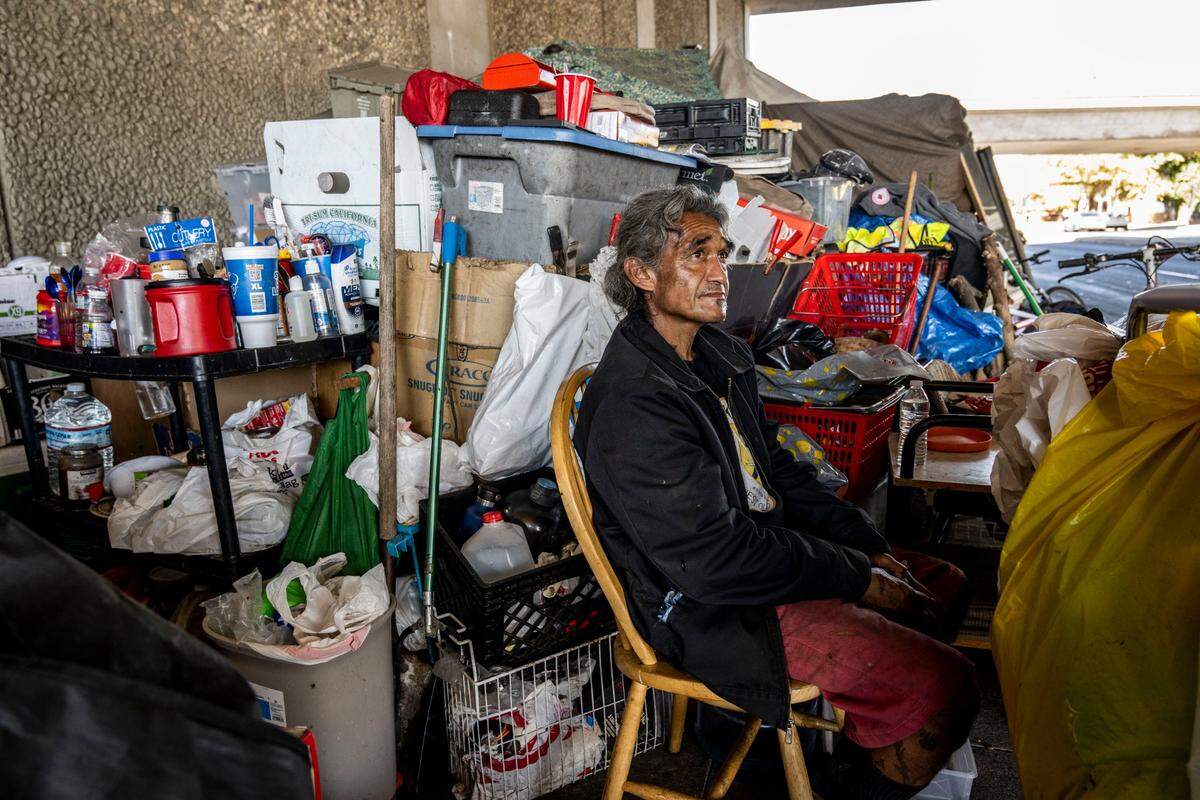
“Wheelchairs do need to get through,” Jawid Sharifi, who works for the Department of Community Response, tells a man sitting outside his tent amid a pile of stuff that includes a plastic baby pool and red toy wagon.
Only, that man and others have a message for the city, too. “I’m the owner of the sidewalk, the gutter and the street,” he answers. And no, he says, he will not be OK with any cops coming around and stealing his stuff.
The team’s goal is to help those living on the streets and sidewalks see that it’s in their interest to make room, to stop forcing people to walk out in the street to get around them, and not least, to avoid involvement with law enforcement.
“Let’s put you in the driver’s seat,” the Department of Community Response’s Hezekiah Allen says, and the self-described owner of the street starts to soften. “Let’s get it done, my man.”
By the end of the conversation, he has agreed to let a city crew come in and haul away what he doesn’t need.
But even this “education” — the precursor to the enforcement that’s coming in a few weeks — is emotional for people living under this bridge and across the city. In August, the City Council voted unanimously that starting in late September, people could be cleared from sidewalks if they did not leave four feet of space between their belongings and the street. To be moved outright, though, they would have to be given another place to go.
Another man, who goes by the name “Spanky,” has a lot to say to the outreach team, very little of which can be printed in the newspaper: “Y’all don’t give a f---. Who gives a f---? You say you do. You don’t. Who’s right and who’s wrong? Oh, we’re doing bad? I had a motherf---er up here in a wheelchair, he died. HE DIED, and did you care? I got to deal with RATS, and did you care?”
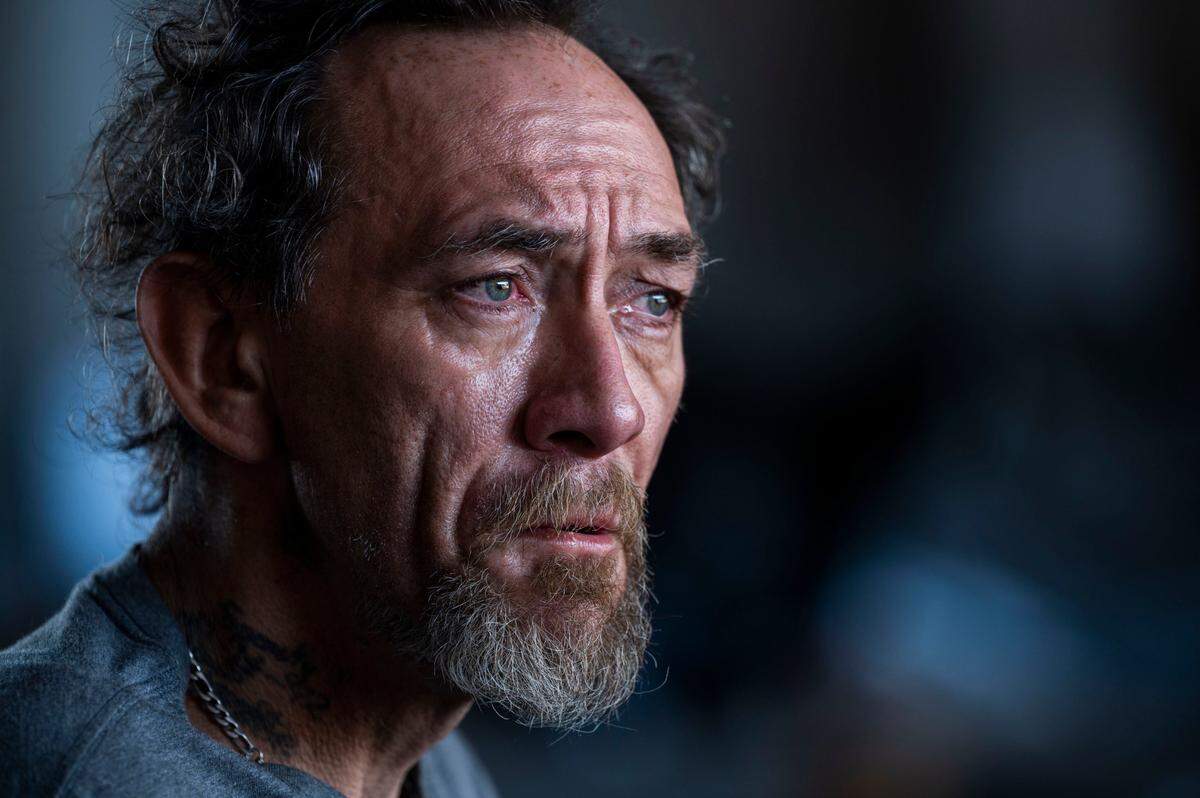
He starts crying while talking about a homeless friend — a military veteran named Robert Lee — who died right on this block, of a stroke, while fighting over the benefits he was owed. Where’s his memorial, Spanky wants to know. “He deserves that, because he was fighting for his f---ing country. There’s got to be something in his name because he lived here.”
Encroachments on the little that homeless people have are no less threatening than home invasions are to any of the rest of us.
But that does not mean that the only way to get people living on the street to comply with the new sidewalk ordinance will be to come in with a bulldozer, or with sirens and lights.
Hezekiah knew Robert Lee. “I agree, he was a good man,” he tells Spanky, and offers to help him find some grief counseling to deal with that loss, as well as with the recent death of a homeless cousin lost to a fentanyl overdose. He’s also going to get him some rat traps.
But he pushes back on Spanky’s position that there’s already four feet clear on his side of the street. “I don’t agree. You think a wheelchair could get through here?”
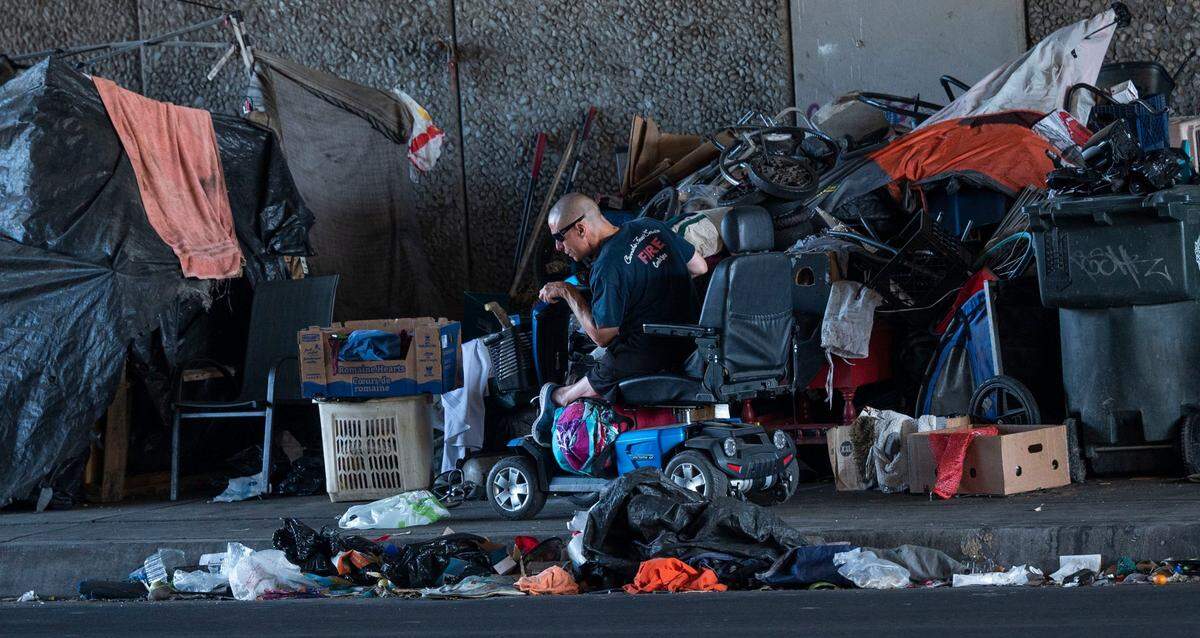
It couldn’t, not even close.
Spanky has been living out here for the two years since he was released from prison, because a shelter, he says, would feel too much like incarceration. He’s too angry — at his father, most of all — to be rational, arguing that he has every right to stand in the street, because “I have the right of way.”
Still, he does seem to want to be reasoned with. And after Hezekiah tells him, “I know it seems like nobody cares, but people are concerned for your safety,” he, too, agrees that the city can haul away some of his trash.
Clearing walking space on Sacramento sidewalks is going to be difficult, but it does have to be done. And it really is in Spanky’s interest, since less trash will mean fewer rats, fewer complaints, and fewer interactions with police.
“We’re not defacing nothing,” says Spanky, who’s eating a chocolate chip cookie and throwing pieces of it in the street. From graffiti on the walls — “addicted 2 pain,” it says — to sacks of trash and food tossed in the gutter, that’s not completely true.
But Spanky also says, “we try to abide by regulations.” For this new ordinance to work, he and others are going to have to be convinced to try harder.
This story was originally published October 6, 2022 at 5:30 AM.