
On toxic Sacramento homeless site with a toxic history, the city is at odds with itself
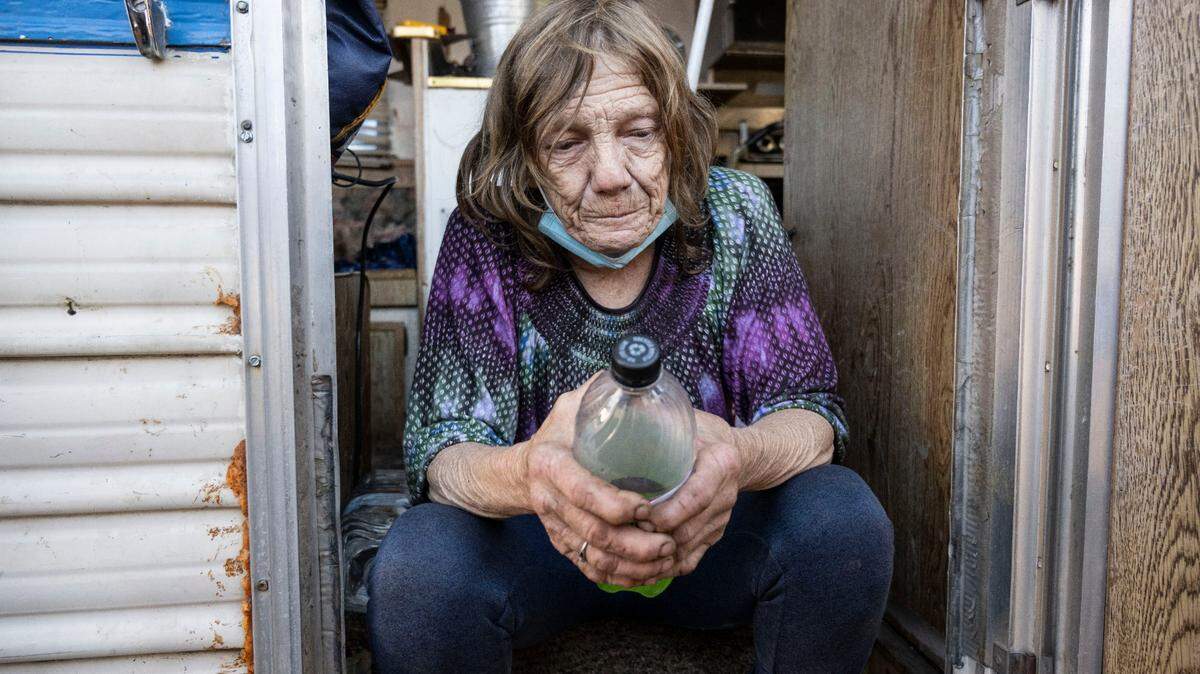
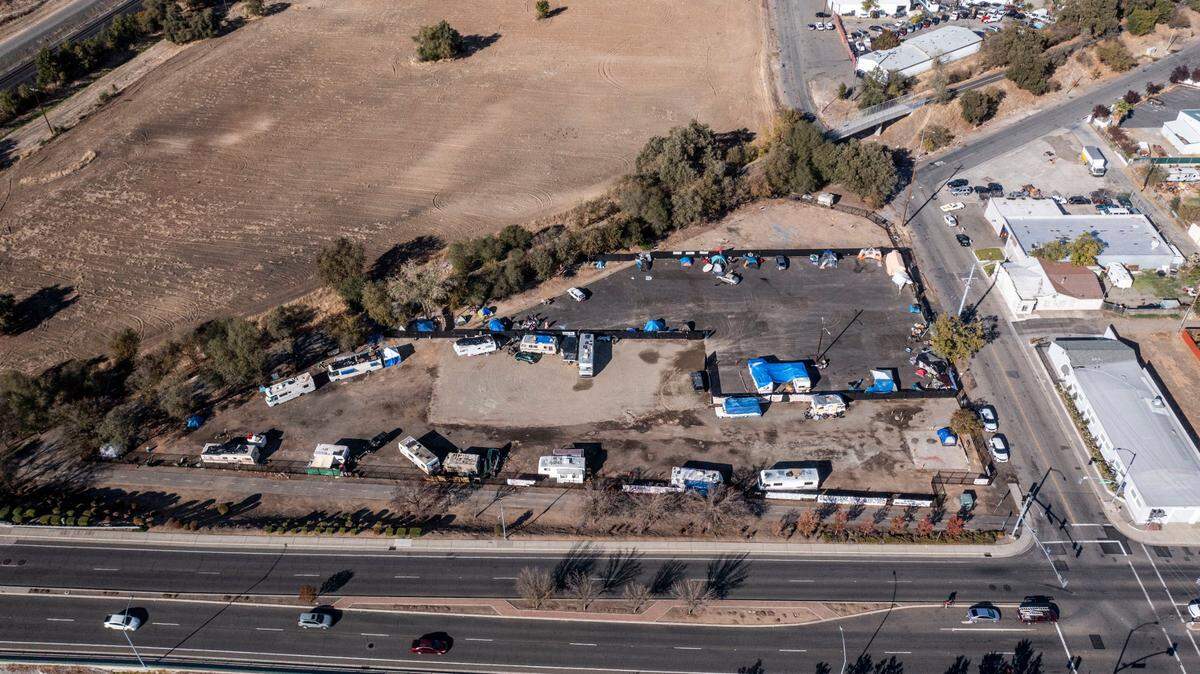
On Thursday, city outreach workers visited a North Sacramento homeless encampment at the corner of Colfax Street and the Arden-Garden Connector and asked those living there how they could help. They also told people, not for the first time, that they were soon going to have to move because contaminants in the soil make the site dangerous. But no decision had been made yet, they told me, on how to proceed or when.
By Friday, Sacramento police had tagged every tent and RV on the lot, posting signs that said everyone had to be gone by Nov. 11 — Veterans Day, which would have made that day extra special for the veterans living there. (After this column ran online, officers came back out on Monday and posted new notices giving people a few extra days, until the 16th.)
On Thursday, an outreach worker “looked me right in the face and said they don’t work with enforcement,” scoffed Shonn Adams, who uses an oxygen tank and lives in a mobile home on the site. She has been moved from place to place many times, each time losing belongings, money she can’t afford to spend on towing, and a little bit more of her health, which was fragile already since she is HIV positive, has congestive heart failure and COPD.
Outreach workers with the city’s Department of Community Response really don’t work with enforcement, but when cops show up within hours of DCR’s friendlier visits, that’s not how it looks.
“They come out here and offer us help — promise us this and promise us that — and then tell us to leave? They all work for the city,” Adams said, and so are obviously in on some kind of disingenuous good cop-bad cop routine.
I see it more as the city being at odds with itself — and in the process undercutting its own efforts to address the homeless crisis. But though less Machiavellian, that internal conflict makes even less sense.
City outreach workers work full-time building the trust that it takes to move people off the street. They do a lot of good. Then city enforcement comes in behind them with sweeps that solve no problems for either the unhoused or the larger community, but are very effective at undermining those hard-earned relationships.
With nowhere else to go, homeless people will keep coming back, but trust will not.
Holly Porter, who is quadriplegic and is someone I’ve written about before, lives in a tent at the Colfax site. “They came right after you left,” she told me. “Same s---, different day.”
Porter only recently moved back here, to get off the river and avoid being flooded out again. So where will she go now? “Maybe back down there,” where two women were shot recently in separate incidents. “They’re pushing us all back where it’s about to flood.” Which is a victory for whom, exactly?
The Colfax site really is toxic, though for understandable reasons, no one living here believes that.
“Look honey, if it were hazardous, wouldn’t they be out here with hazmat?” Sharon Foster, a 63-year-old former cab driver living in a wrecked Ford camper, asked me on Thursday. On Sunday morning, she was taken to the hospital in an ambulance after an asthma attack.
“It sounded like an excuse, so no one paid much mind,” said 40-year-old resident Casey Walsh.
“There’s no toxic stuff; that’s a lie,” said 70-year-old Mark Yates, who recently suffered a stroke. He came out here trying to save his homeless daughter and now is afraid he’ll sink while trying to keep her from drowning.
But the history of homeless people living on and being moved off this yard is toxic, too.

Homeless people and advocates ‘feel lied to’
Originally, tiny homes were supposed to go on this city-owned lot, which was correctly seen as the perfect spot to build them. Then, after some city officials balked, it was going to be a safe parking site, with half of the area paved and half used for showers and other amenities.
In January, the city got a letter from the state’s Central Valley Regional Water Quality Control Board explaining that the site was too toxic for anyone to live on, which meant that the showers couldn’t go in as planned. The city had applied for a variance, but the condition put on the exception to the regulation was this: The whole lot would have to be paved if it was to be used at all. Only, that made the project so expensive that it no longer made any sense to go forward.
In April, the 106 people who were then living on the property were pushed out by the city. They say they were told they could come back in a couple of weeks, after the site had been paved. But then, after the city had already spent more than $600,000 to pave only half the lot, the project was scuttled, and none of those who’d been told they could come back ever heard from the city again.
In the months that I’ve been going out with city outreach workers, I’ve heard them say more than once how sorry they are that the trust they’d worked so hard to build had been undermined when the city had no choice but to back out of that deal.
“We were gearing up to operate a safe parking that’s desperately needed,” the Department of Community Response’s Hezekiah Allen said, “and this could have been that place. It was very damaging to our rapport” with homeless folks when that didn’t happen.
Those folks and their advocates believe they were misled, even after the city knew the project was going to be scrapped.
“At this point, people feel lied to,” Niki Jones, of the Sacramento Homeless Organizing Committee, told city outreach workers on Thursday. “They send you all out first, to check a box before a sweep: We’ve offered services, so now we can move forward with displacement.”
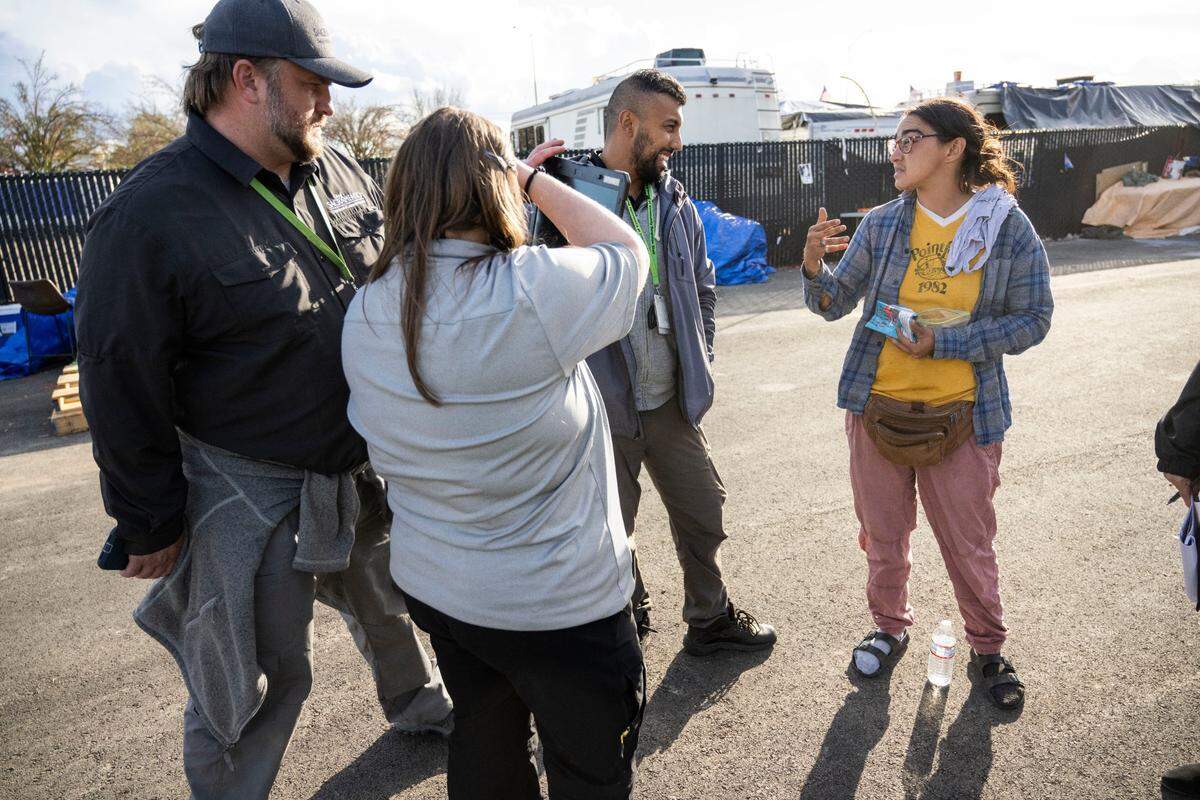
Since the sweep happened the very next morning, no one can say she was wrong.
But Gregg Fishman, spokesman for the Department of Community Response, denies that the city is divided in its approach: “DCR has been visiting Colfax since it was illegally occupied in October. We and our contractors have been there more than a dozen times offering to help when and where we can, but our conversations with the occupants have also always included that they were illegally occupying a place known to be contaminated with toxic substances, and at some point they would have to leave.”
I understand that, but also get why homeless people, endlessly shuffled from place to place, do not.
And the bottom line is not which city official knew what when, but where this whole push-and-pull, up-and-back effort is headed.
Who do homeless sweeps help?
In Carmichael, where I live, my neighbors are outraged that homeless people who were only recently moved off a nearby stretch of the American River Parkway have migrated right back. Of course they have, because sweeps don’t work, even for those who support them; instead, they only raise expectations that then can’t possibly be met, and who does that help?
In early October, advocates for the homeless called a news conference to announce that they were moving back in to occupy the Colfax yard site. They posted banners that say, “This is public land, and we are the public,” and “Sweeps kill.”
The city answered by informing them that they were trespassing.
Now, since the residents were told they’d have to be out by Nov. 11, they’ve responded with a new banner inviting the mayor and city manager to “come and talk to us like human beings.”
Until that happens, says Sharon Jones, who lives at the site, “we’re going to stand our ground. If they helped people on that list” who were promised in April that they could come back after a couple of weeks, “we’d all be happy.”
Meanwhile, she said, all the city is offering is bus passes, “and we can’t live on the bus.”
“The city manager is over all of them,” police and code enforcement and outreach workers, says the advocate Niki Jones, so why are they working at cross purposes? City Manager Howard Chan’s response must be to the city council’s liking, since it recently gave him a raise. He is now making more than $400,000 a year.
Chan’s spokesman, Tim Swanson, said he couldn’t comment on the record on a Sunday.
But on any day of the week, I’m ready to hear how the city thinks its efforts to drive homeless people from A to B to C to A to B all over again are getting us anywhere.
This story was originally published November 7, 2022 at 5:30 AM.