
Do neighbors of Sacramento’s new homeless center have a right to be unhappy?
Say a homeless man had run into your yard with a machete, yelling that he was going to kill you. To chase him away, “I helped him over the fence with my shovel,” said Ron Jellison, a 73-year-old former special education teacher who grew up just behind Sacramento’s Del Paso Regional Park and lives there still. This wasn’t a one-time thing, either. “I’ve been attacked three times on my property.”
Or say a different man in a psychotic episode had broken into your barn across from that same park one winter morning, brutally attacking one of your beloved rescue horses with a claw hammer and killing your rooster, chickens and ducks. There is no morning, Dennis James says, when he doesn’t remember that awful day, and no morning when he doesn’t feel a fresh wave of apprehension as he reaches for the latch to let the ducks out.
Or imagine that as you walked through the park one day, moving slowly on your cane, a man living in his car had come at you in a rage, then pulled a “baseball bat-sized limb” from a tree and started beating you with it. “It split my head open,” said 70-year-old John Mayfield, requiring 7 stitches and causing significant hearing loss.
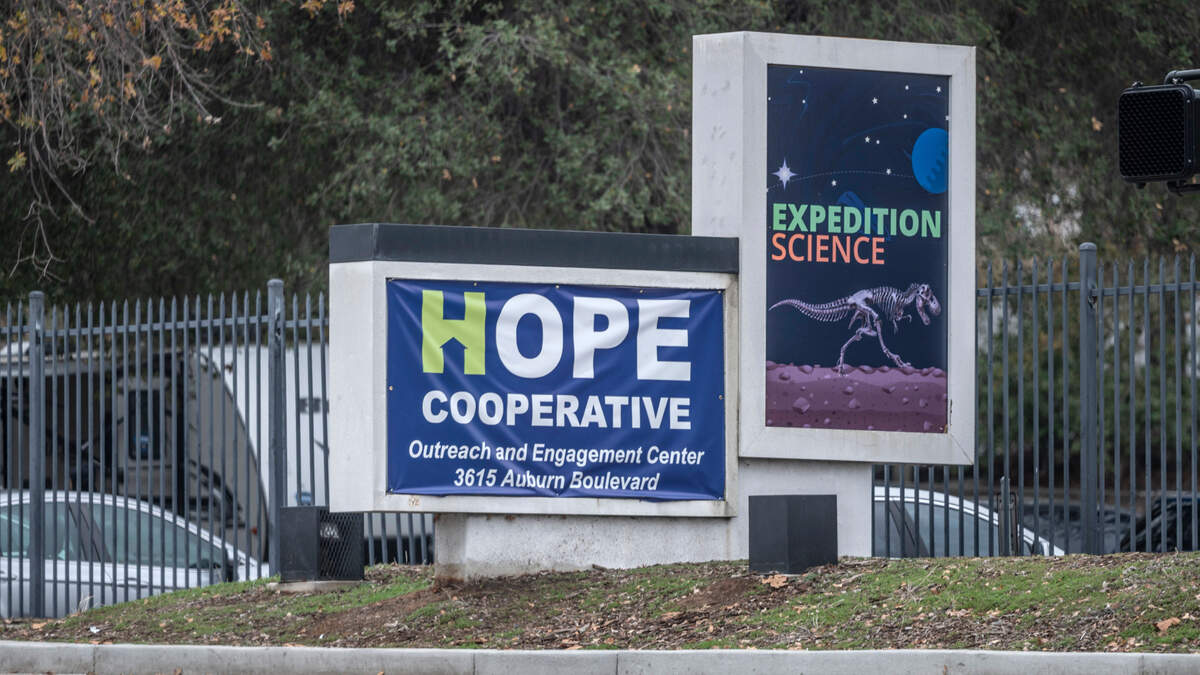
All of these attacks happened in the area just behind Sacramento’s new Outreach and Engagement Center on Auburn Boulevard, which since it opened in late September has been offering assessment and placement services, a shower and a sleeping mat to as many as 50 homeless people at a time.
None of these incidents occurred since September, though. And it’s hard to say whether things have really gotten worse since then, or whether preexisting problems in the area are easy to pin on a program that neighbors never wanted and can’t help seeing as a magnet for more trouble.
Either way, I’m in no position to tell someone whose head was bashed in or whose horse was nearly beaten to death how he ought to feel.
“We’ve not had anything catastrophic happen since they moved in,” said another neighbor, Charles Duckworth, which doesn’t mean that “90 days or 1 year or 5 years from now, somebody is not going to come out of there and do something in the neighborhood.”
A few years back, said Duckworth, who is 72, “I had my front door kicked in by a homeless guy -- a drunk guy looking for somebody. The city has ignored the park for 40 years.”
Jellison, who is one of the leaders of neighborhood opposition to the center, does not pretend that his concerns are new. “This is a generational fight,” in part over the city’s cyclical neglect of the park since way back when “a criminal element took over in the 50s. The drug culture, the human trafficking, the gangs were all here, and the homeless were just another layer on top of that.”
Still, there have been “many more complaints” to the city from neighbors since the center opened, according to Hezekiah Allen, of Sacramento’s Department of Community Response.
Why? For one thing, neighbors seem to expect the center to be doing more to get homeless people already living nearby off the street. But since the program is voluntary and referral-only, that’s not how it was set up to work.
People camping in tents on the creek downstream from the center have nothing to do with the program, which does not take walk-ins except during extreme weather. But those living in the encampments clearly are responsible for the trash and needles and waste in the water. “They use it as their personal bathroom and wastebasket,” says Duckworth. Which can’t help but color how residents see the center.
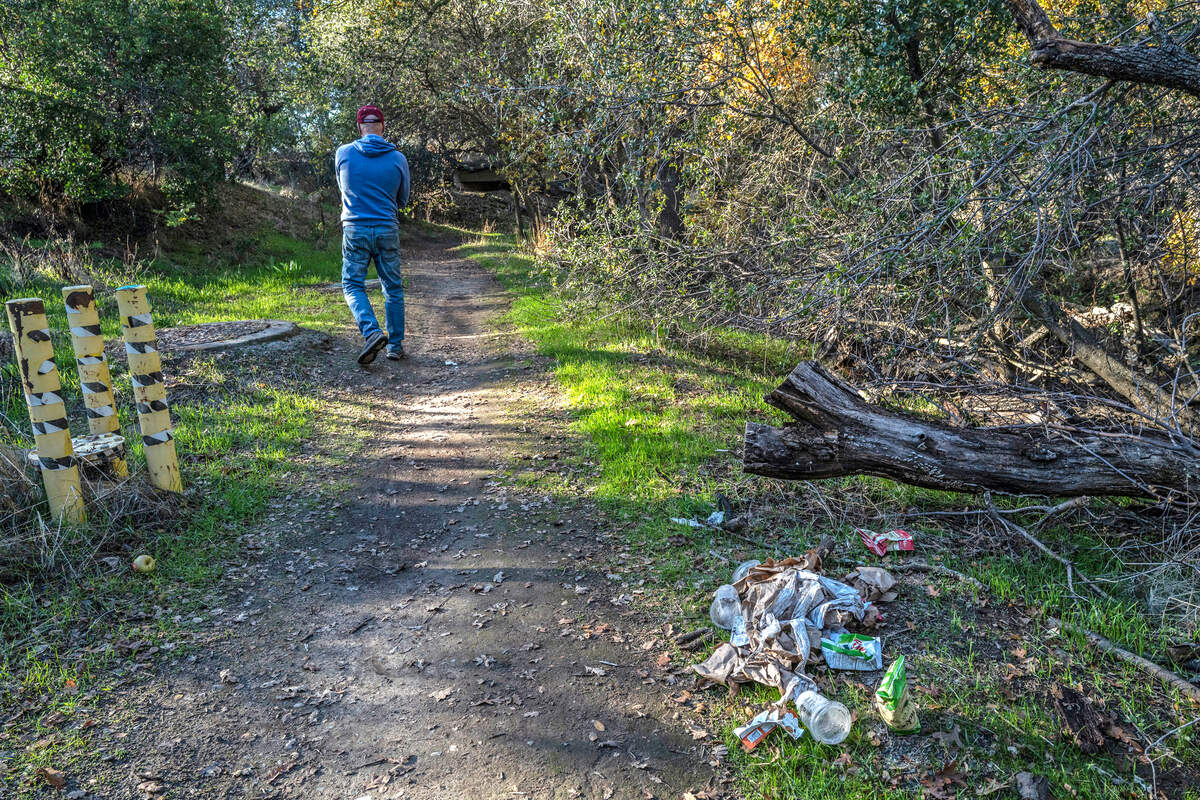
On one of the neighborhood tours Jellison took me on, we interrupted a man whose legs were sticking out of the open passenger side door of the truck where he was parked with a young girl at the end of a residential street in the middle of the day.
Trafficking in the neighborhood is nothing new. Neither are many of the other affronts to the sense of security of those who live here: The attack on Cindy and Dennis James’s animals was in January of this year. The attack on Mayfield was in February of 2020. The man with the machete ran into Jellison’s yard years ago.
But anyone who’d had the experiences that these Sacramento County residents have had would have been scarred by them.
And just as many homeless people are where they are as the result of some serious past trauma, so too have these particular opponents of the Auburn Boulevard homeless center been traumatized.
Mayfield, who used to be a neighborhood ambassador for the park, mostly avoids it now.
Dennis James is a lot more wary in general: “Every time I see someone walking down the street, if I don’t know who they are, I think, ‘Why are they here?’ I wasn’t that way before.”
His wife, Cindy James, says her reaction to the new center is simple: “I think we should all chip in funds, buy a really nice tent and put it in front of the mayor’s house.”
These are not uncaring people. “My best friend is 40 years sober,” says Duckworth, while someone else he was close to, whose addiction went untreated, died on the street.
Yet the clash between these neighbors and the desperately needed center, run by other compassionate people, is the kind of conflict that continues to keep programs across the country from ever opening at all.
So somehow, we have to figure out how to make situations like this work. Which is what neighbors and officials from Hope Cooperative, which operates the city-owned center, are in theory going to try to do at a community Zoom meeting on Dec. 13.
Erin Johansen, CEO of Hope, said she hasn’t heard any serious complaints about those staying at the center: “So far, those stories have not risen to me.” A “hermit” living in the park, about whom she has heard complaints, isn’t someone who wants any help beyond being left alone. The seriously ill people who have done real damage in the area in the past, Johansen said, need the residential treatment that’s in such short supply. “They can’t be treated in a respite center by shelter workers.”
And she does not believe that the people who neighbors say are smoking pot and leaving trash in the park playground next door have anything to do with her program: “How do they even know they come from us? What I believe the issue is, is they were promised a refurbishment of the park, and they got a homeless program instead.”
So what would help neighbors accept the program?
Mostly, steps that the center itself is in no position to take.
Essentially, the city would have to honor its promises to keep the area clean, and would maybe even have to make it safer than it was before the program moved in.
That would require a quicker response to 311 calls and from the city’s park rangers, who some residents say seem to have completely abandoned the park. The new mobile city and county behavioral health teams visiting encampments should put this area high on their list.
Here’s an easy one: The park parking lot is supposed to be locked at night but isn’t. This is a lot more difficult: Ultimately, neighbors have to feel the city is working with them, though they live just outside Sacramento.
Maybe, given the problems that predate the center, nothing would win over the neighborhood. But if this program is going to be the model that it could and should be, the city has to try harder to do that.
This story was originally published December 13, 2022 at 6:00 AM.