
Sacramento County tiny homes sitting empty while homeless people live nearby | Opinion
If you’re among those of us who wonder how California could have spent so much to solve the problem of homelessness and yet have so little to show for it, the sight of the 100 tiny homes that have been sitting, unused — guarded around the clock and behind a security fence — sums it up as well as any one snapshot could.
This “Safe Stay Community,” which was approved in June of 2022, is on a vacant lot where there used to be a grocery store at the corner of Florin and Power Inn roads in Sacramento County. But so far, the county has done more to keep the huts on that lot safe from homeless people than it has done to keep the unhoused people living just beyond the perimeter of the security fence safe.
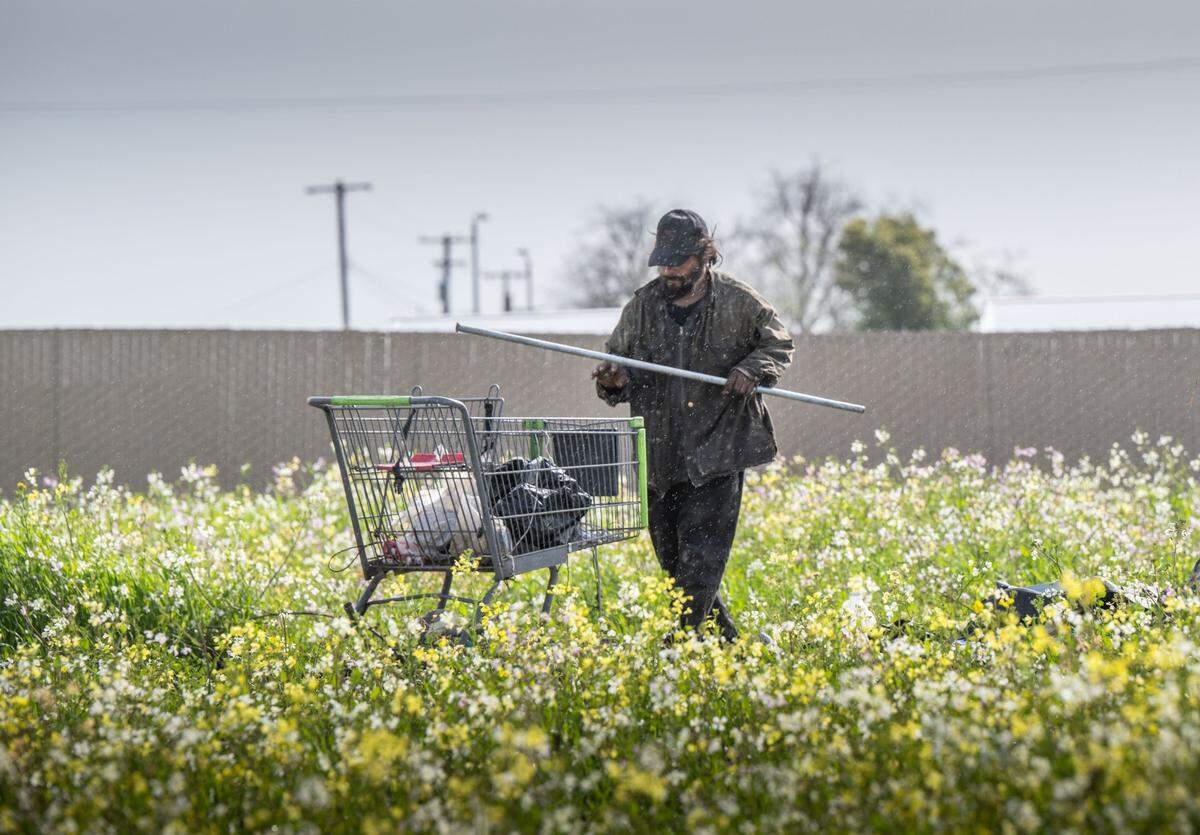
Initially, there was some neighborhood opposition to the project. But now, the neighbors don’t understand what’s taking so long, either. “There’s some frustration from the community that it hasn’t opened yet,” said county spokeswoman Janna Haynes.
It only took a week last summer for the Sacramento Regional Conservation Corps to assemble the simple, mostly prefabricated huts. The sheds are built to last just five or 10 years, so by the time a single person spends a single night in one of them, 10% to 20% of their usefulness will have been wasted.
They have been there since July and were supposed to be ready to be occupied in November, and then in March.
In mid-March, Haynes said the county hoped to welcome people by late spring. Now, that’s been pushed back yet again. “We’re thinking June at this point,” she said. “I only know what they tell me, but I’m pretty confident. Getting the actual work done will be a pretty quick process.” The infrastructure is going in any time now, in the project’s “homestretch,” she said.
Though I certainly believe that, as Haynes says, she’s as anxious as anyone to see that happen, no one will be surprised if it doesn’t, because Sacramento County’s deadlines just don’t seem all that serious.
There is, however, a serious human cost to this lack of urgency. Almost 200 homeless people died in Sacramento County last year, so all that could go wrong in the meantime is more needless loss of life.
The homeless people who sleep every night just beyond the new security fence definitely do not understand the delays.
And why should people who have to figure out how to do all sorts of things just to stay alive day after day be at all understanding about why our community leaders can’t figure out how to get this job done as if lives depended on it?
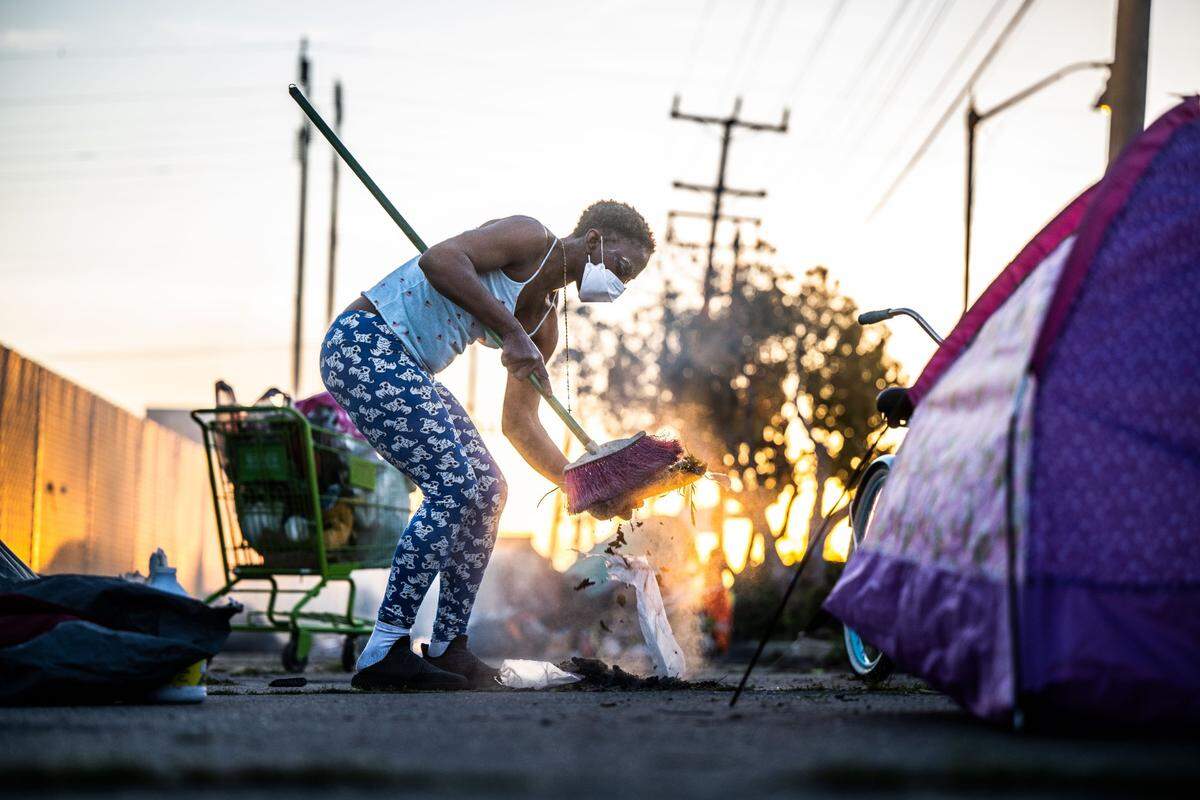
Homeless people outside looking in
Though Sacramento County does have reasons — supply chain issues and problems lining up contractors — these don’t seem reason enough to keep the 125 people who could be living in these tiny homes outside instead, through storm after storm this winter.
Those who think the homeless deserve the bare minimum from the rest of us will not be able to claim that these units offer too many frills.
The place looks like a prison camp to me, but it looks like safety to those who can only peek inside from outside the fence.
So what were the holdups, exactly?
A couple of fence contractors fell through, Haynes said. Only, the fence has been up for two months. Erecting it was a big improvement, she says, because it has cut down on the number of people coming by to ask when oh when the place is going to open.
They will soon be running in electricity, putting in a sewage system for communal bathrooms and then bringing in the trailers that will be used as communal eating areas and for storage.
There’s not yet a list of those who will get to move in because “we don’t want to get people on a list too soon,” Haynes said.
I’m not trying to be glib or ghoulish when I say that given the dangers of living outside, some of those who’d like to be on that list won’t still be with us then.
Eventually, the homeless folks living in the immediate area will be prioritized for housing on the other side of the fence.

One of them, Andrew Shroeder, wraps himself in a blanket and then in plastic he pokes a hole in so he can sleep on the grass outside the “Safe Stay Community” and still stay dry.
Another, Debbie Kafka, who stays in a tent with her boyfriend just outside the lot, says, “I would love to be in one” of those tiny homes “instead of being blown away by the windstorms, but they won’t even let us look.”
A third, Chantal Hader, just had the car she’d been living in for three years towed away. She’s grieving the recent death of her dog and doesn’t even have a tent or anything else to protect her from the elements, so has been counting on other homeless people to help her until she figures something else out.
The night before I spoke to her, she’d stayed with Debbie. That next night, she said, she didn’t know where she’d be, and every evening, she is afraid for her safety in a way that she wasn’t in her car.
While I was talking to Hader, a small, clearly unwell woman none of the others knew came up and started hitting my arms and back.
Hader and the others told her to leave and not come back, but if this is what happens in the middle of a sunny afternoon, how safe can people feel here at night?
And of course, the woman who had no idea why she was hitting me is at risk, too, and is in desperate need of the services that the “Safe Stay Community” is supposed to offer.
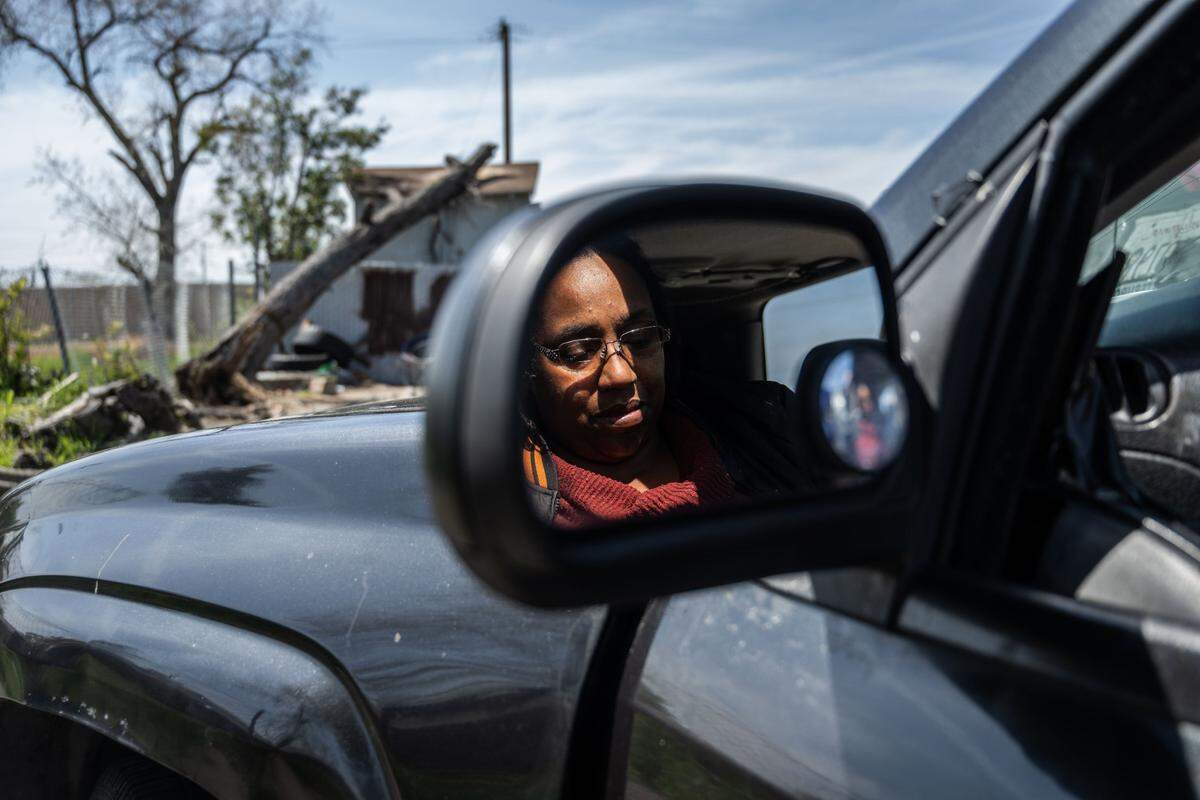
‘All I want is to be safe’
Hader, like others, is both critical of the tiny homes and wishing she could move into one.
“They said these would be little houses,” and with no bathroom or place to either warm food or keep it cold, the tiny homes aren’t really that, she said. But they would offer more protection from violence as well as from the weather.
“I’ve almost been raped out here, and it’s scary,” Hader said. “All I want is to be safe. I can’t even remember the last time I took a real shower” and “can’t go looking for a job” without a place to clean up.
Are they ever going to open this place to homeless people, she wonders.
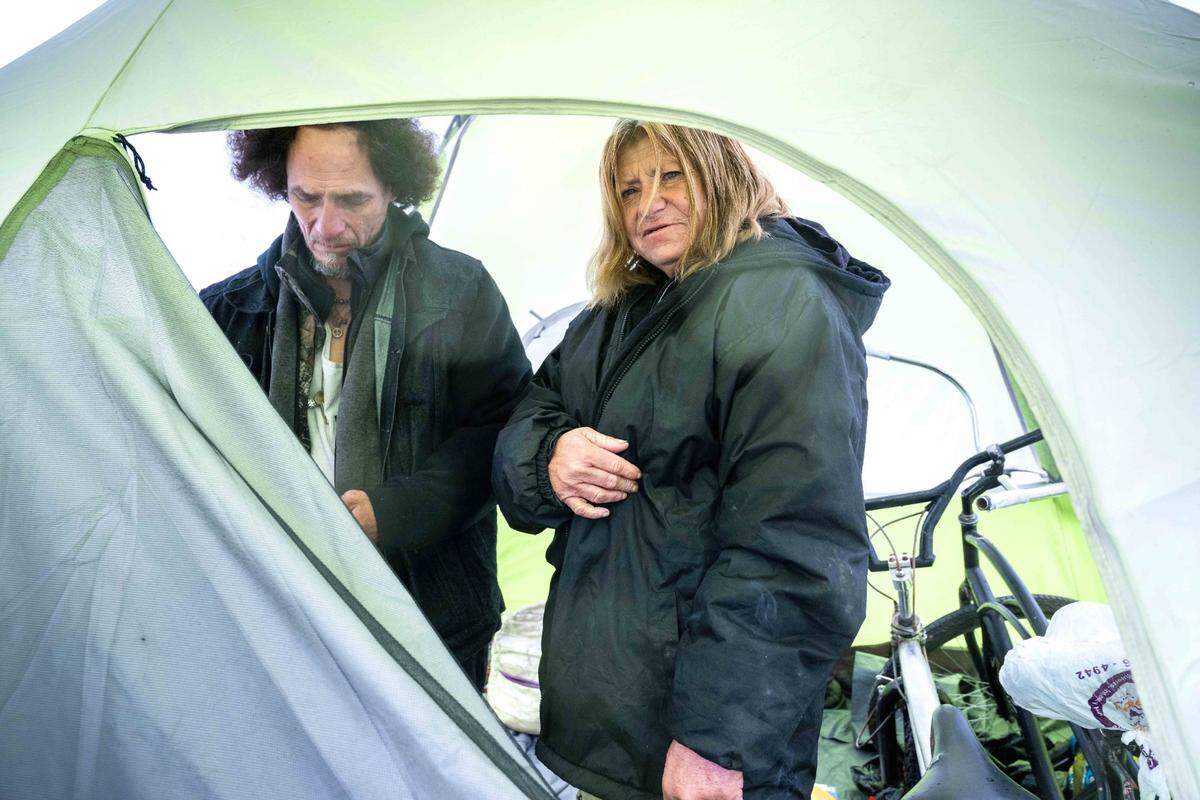
“They said November, and then they said March” and while the sheds still sit unused, “look at how much they’ve spent on security” to keep anyone from going in.
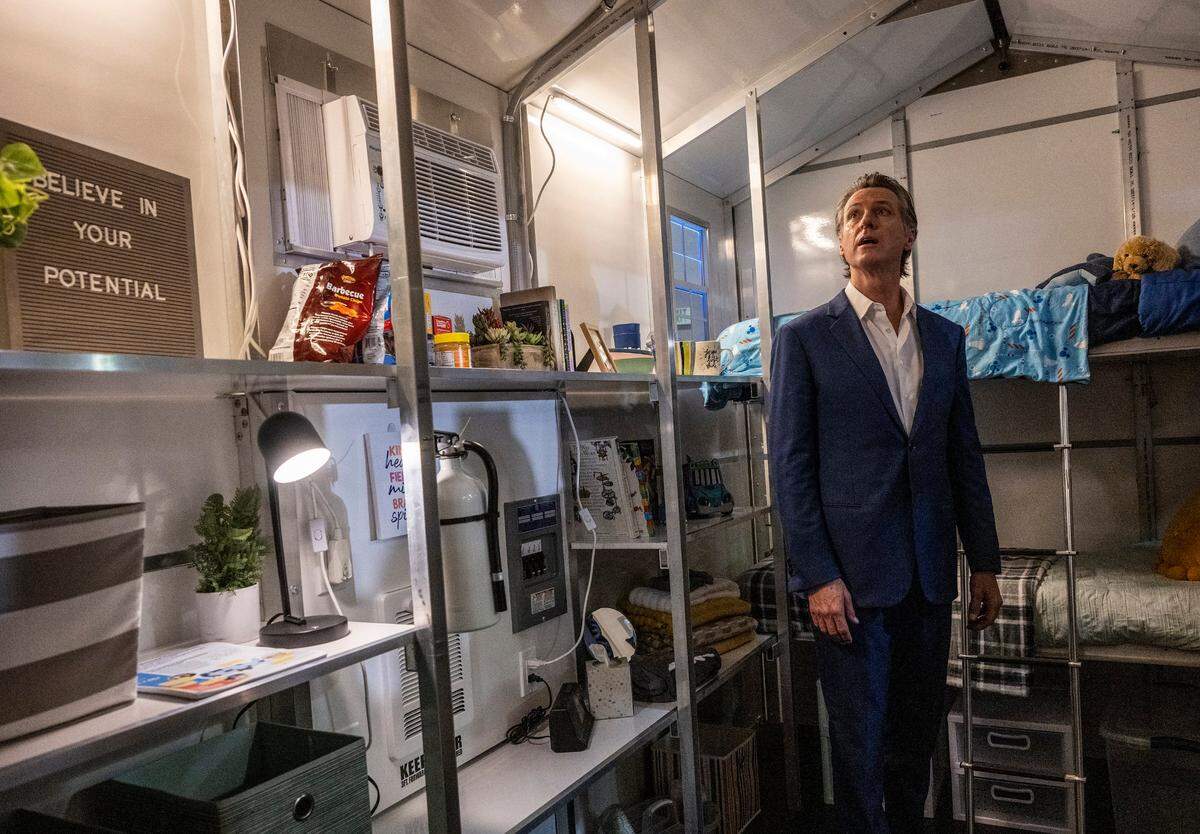
Each unit has a narrow bed suspended from the wall, a low-wattage power source, a tiny air conditioner and heating unit.
The cabins are arranged in rows, all facing the front instead of in circles, which is what other tiny home communities have found facilitates real community. But while that design shows a lack of empathy, it’s not a today problem.
Recently, the place got the permits it needed, Haynes said, and now, “we know which contractors to hire.”
The county has learned a lot through this process, she said, so that subsequent tiny home communities will be put together far faster.
So what’s been the biggest thing the county has learned that will help things go better next time?
“The hardest thing is managing expectations and explaining the complexity” of what looks so simple, Haynes said. Everyone in the community, “just wants to see change, and we do, too.” Because the fence was see-through until the more secure version went up, she said, people could see inside and thought they would surely be able to move in soon.
I hope the lesson wasn’t to put the fence up first, so that no one would know what was happening on the other side of the barrier.
Recently, California Gov. Gavin Newsom said the state would make sure there were soon 350 more new tiny homes for unhoused residents in Sacramento.
“We need to focus more energy and precision on addressing encampments,” he said.
We do, of course, because it’s been hard to locate much energy or any precision at all. There are tiny home communities around the country that have worked well. Yet so far, this Sacramento County site is not a model, but a cautionary tale.
This story was originally published April 9, 2023 at 5:00 AM.