Stop speculating on the genitalia of Olympic athletes like Imane Khelif, you weirdos | Opinion
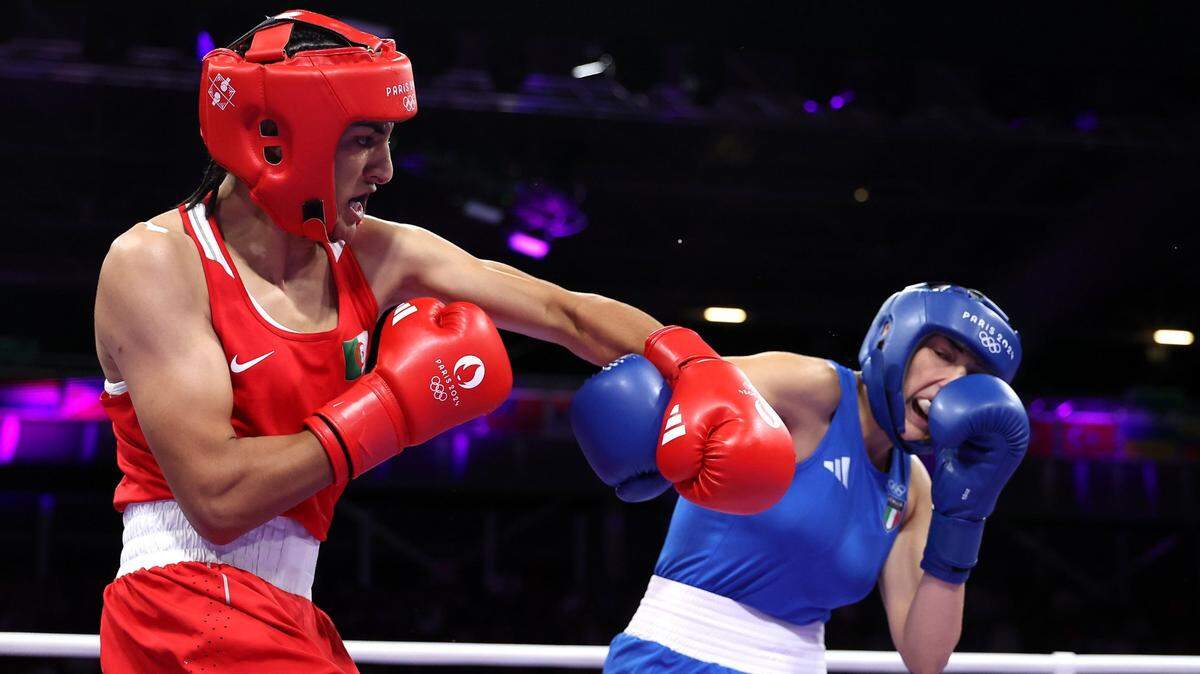
Let’s get this clear: Algerian boxer and soon-to-be Olympic medalist Imane Khelif is a woman, despite whatever internet rabbit hole that suggests the opposite.
Khelif, 25, was born a woman. She was raised as a woman. She has competed for many years in women’s sports. Her passport marks her as a woman, and no transgender women are competing in the 2024 Olympics. Moreover, being transgender in the hyper-conservative, Islamic country of Algeria is illegal; so they definitely did not send a transgender woman to represent them in Paris.
These facts alone should be enough to stop any unfounded rumors that she is a transgender woman competing in women’s sports with any perceived advantage.
Unfortunately, right-wing blowhards, evangelical bullies and gender-critical zealots in the U.S and Europe have decided that they know better. That group (unsurprisingly) includes former President Donald Trump, U.S. Senator J.D Vance, author J.K. Rowling and news personality Piers Morgan. Noted British bigot, Rowling, denounced the “new men’s rights movement” and misgendered Khelif as “a male who’s [sic] knows he’s protected by a misogynist sporting establishment enjoying the distress of a woman he’s just punched in the head.”
Khelif, through no fault of her own, has been at the center of an internet firestorm caused by extremists who decided to bully a woman for not looking womanly enough and for punching harder than her opponent in a punching contest.
That these claims are being made the same year the Olympics finally achieved full gender parity among male and female athletes is no coincidence. Women’s sports have always been controversial because there are misguided, misogynistic people in this world who believe women cannot compete in physical sports. Unfortunately, they far too often feel the need to enforce their small-mindedness on the rest of us.
It is a testament to Khelif’s skill and talent that she has managed to withstand the intense, international scrutiny to clinch a place in the semi-finals and will now be an Olympic medalist no matter the outcome of her next match, scheduled for Tuesday.
“I address my message to all the people of the world to adhere to the Olympic principles, according to the Olympic Charter, and to avoid bullying all athletes, because this has a great impact and is capable of destroying people, killing people’s thinking and minds, and dividing people,” Khelif told Algerian broadcaster, SNTV.
The emotional strength it must take for Khelif to publicly call for an end to her repeated harassment — while competing at the world’s largest sporting event and a pinnacle of her career — is only matched by her strength in the boxing ring.
Gender essentialism hurts everyone
In arguing that Khelif is a man, it is clear that this is not for the benefit of “real women” as some claim, but rather to enforce a strict gender binary that has no room for any woman who does not conform to their close-minded ideals of femininity.
It would also ensure that any woman who does not “look” like a woman or “behave” like a woman, whatever that means, would be suspected of being transgender. (And that’s not even a crime to start with.)
“Women can be strong,” said U.S. Women’s Rugby player Illona Maher, in a tearful video posted not long before she helped her team win a bronze medal, the first ever for American women in rugby. Despite this triumph, Maher has been bullied repeatedly online for her strength.
“(Women) can have broad shoulders and they can take up space and be big. I’m getting emotional about this because I feel passionate about it,” Maher said in her video.
Misogynist arguments on repeat
As a woman of color, Khelif is subject to racially-motivated misogyny, not unlike the career of tennis legend Serena Williams who endured racist and sexist scrutiny and undeserved penalties from judges as well as from the media. Or take the career of basketball player Brittney Griner who was imprisoned in Russia for nearly a year. She suffered in a foreign jail cell while accusations laden with racism, sexism and homophobia took precedence for Americans over the far more important matter of her release.
These arguments matter. The hate and suspicion currently aimed at transgender women will not stop with them, but will ultimately spread toward any woman who does not “perform femininity” well enough for these gender essentialists.
Rights too new to be taken lightly
American women’s political and societal gains are still too new to be set in stone, and I, for one, will not go back to the strict rules of gender performance that plagued and hindered my foremothers.
There has still yet to be an all-female Supreme Court, nor an all-female presidential ticket, nor an entirely womanned space shuttle crew. And despite making up 50.1% of the U.S. population, women make up just 10.4% of CEOs at Fortune 500 companies.
Title IX, the landmark Supreme Court case that prohibited sex-based gender discrimination in schools, was passed a mere 17 years before I was born, and my grandmother was not allowed to have a personal checking account until she was 35. My great-grandmother was alive before women were given the right to vote.
Once thought untouchable, Roe vs. Wade has been all but demolished in nearly half of U.S. states; who is to say that our current, conservative court could not reverse all of these unimpeachable rights for women in the same way?
The contrived controversy around Khelif is but a sign and symptom of America’s — and much of the world’s — deeply gendered bigotry and hate toward any woman who does not perform femininity.
I very much fear where we are headed if gender essentialists are allowed to enforce what a man and woman must look like, how they must act and what is acceptable activities for each gender to do.
This story was originally published August 6, 2024 at 10:37 AM.