Arson is not equal to murder: California Supreme Court should overturn death row verdict | Opinion
Nearly 20 years ago, Raymond Lee Oyler was sentenced to death for starting a Southern California wildfire that burned more than 40,000 acres and killed five firefighters when winds turned and the blaze swept over their location as they attempted to save a home.
Oyler has always denied setting the Esperanza Fire, but was the only person charged in that 2006 blaze that started near Cabazon in Riverside County. He was ultimately found guilty by a jury on five counts of first-degree murder (for the deaths of the firefighters), 20 counts of arson and 17 counts of using an incendiary device to start fires between May and October of 2006. Oyler has since spent more than a decade sitting on Death Row at San Quentin State Prison
But a 2018 law, Senate Bill 1437, amended the requirements of a murder conviction: Someone must be the “actual killer,” have the intent to help the actual killer, or have been a major participant in the murder and acted with reckless indifference to human life.
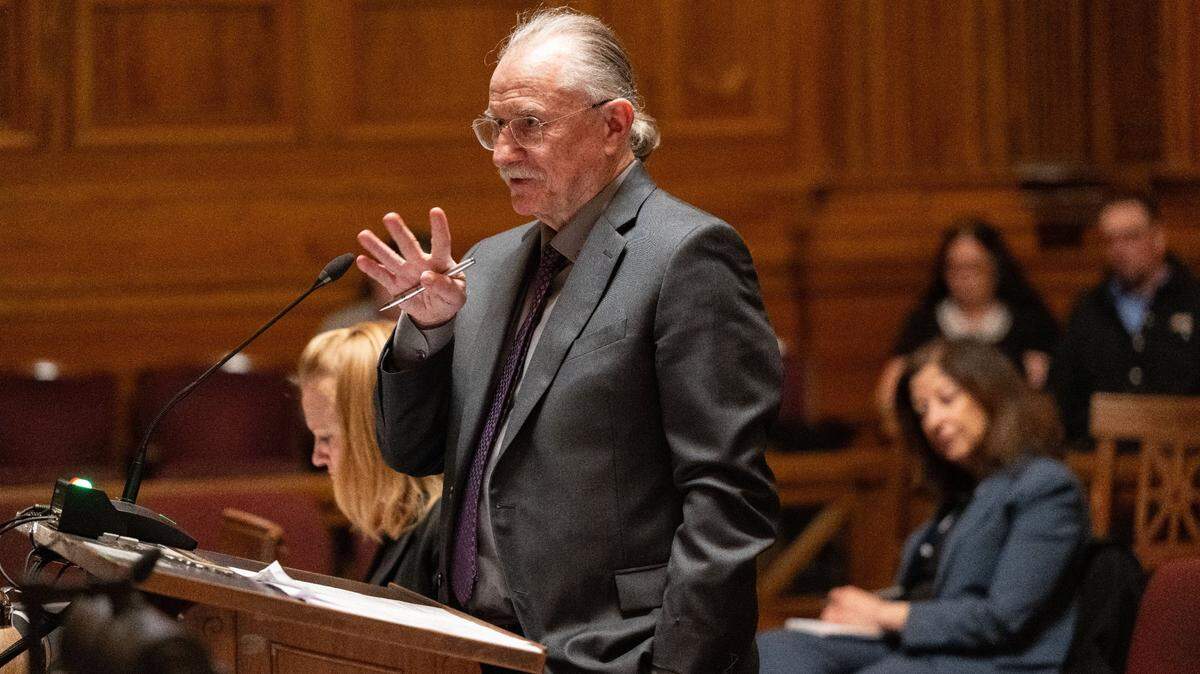
“If the person who started the Esperanza Fire was not the actual killer, then who was?” asked Chief Justice Patricia Guerrero while hearing arguments in Oyler’s case last week.
Let me answer her with another question: If President Donald Trump’s order to release water in the state’s Central Valley had flooded over levees and drowned someone — a real possibility — would the president have been considered a murderer? Would the dam and levee operators have been accomplices in that crime?
If your answer is “no,” then how can we as a society sentence a man to death over a similar crime with fire?
Seeking the death penalty is a costly waste
I don’t claim to understand why arsonists do what they do. But I do know that the state of California wastes millions of dollars pursuing the death penalty when there will probably never be an execution.
“Since reinstating the death penalty in 1978, California taxpayers have spent roughly $4 billion to fund a dysfunctional death penalty system that has carried out no more than 13 executions,” wrote Judge Arthur L. Alarcon and Professor Paula M. Mitchell of Loyola Marymount University in a 2011 study. “Studies reveal that if the current system is maintained, Californians will spend an additional $5 billion to $7 billion over the cost of (life in prison without the possibility of parole) to fund the broken system between 2011 and 2050.”
“In that time, roughly 740 more inmates will be added to death row, an additional fourteen executions will be carried out, and more than five hundred death-row inmates will die of old age or other causes before the state executes them,” their study states.
The California Supreme Court has an opportunity now to stop state prosecutors from pursuing the death penalty.
“The court should overturn Mr. Oyler’s death sentence and send a message that it is time to fix this broken system,” wrote Mike Farrell, president of Death Penalty Focus, a capital punishment abolitionist group based in California.
“Mr. Oyler’s case is a textbook example of how our state’s death penalty is broken, in this case particularly so, because of geographic disparity. Riverside is one of California’s top death-sentencing counties,” Farrell wrote in a statement to The Bee. Out of a total of three new Death Row inmates in the state last year, two of them came from cases tried in Riverside County, according to the Death Penalty Information Center.
For much of the world, death is neither a just nor necessary retribution for any crime, even the crime of murder. The U.S. is one of the few so-called “developed nations” that has continued the practice. Other countries with the death penalty include Japan, North Korea, Bangladesh, Ethiopia and Saudi Arabia.
Moreover, California has not executed a death row inmate for nearly 20 years, so it amounts to nothing but a costly and wasteful process that serves only to traumatize everyone involved and brings no justice or closure.
Criminals deserve punishment and correction, but murder of any kind is wrong, even when it’s in retribution. Oyler should spend the rest of his life in prison. But Californians can and must end this charade of sentencing criminals to death purely for the performance of the process.