Social media is eroding journalism: As a Gen Zer, I believe in protecting it | Opinion
When I first told my father I want to be a journalist, his eyes bugged out of his head. “The only job you’re getting is at Walmart if you don’t get your math grades up” was the response he could muster. Throughout my life, I’ve heard that journalism is a dying industry. As a member of the social media generation, where everyone is a part-time online influencer, what could possibly have induced me to pursue journalism?
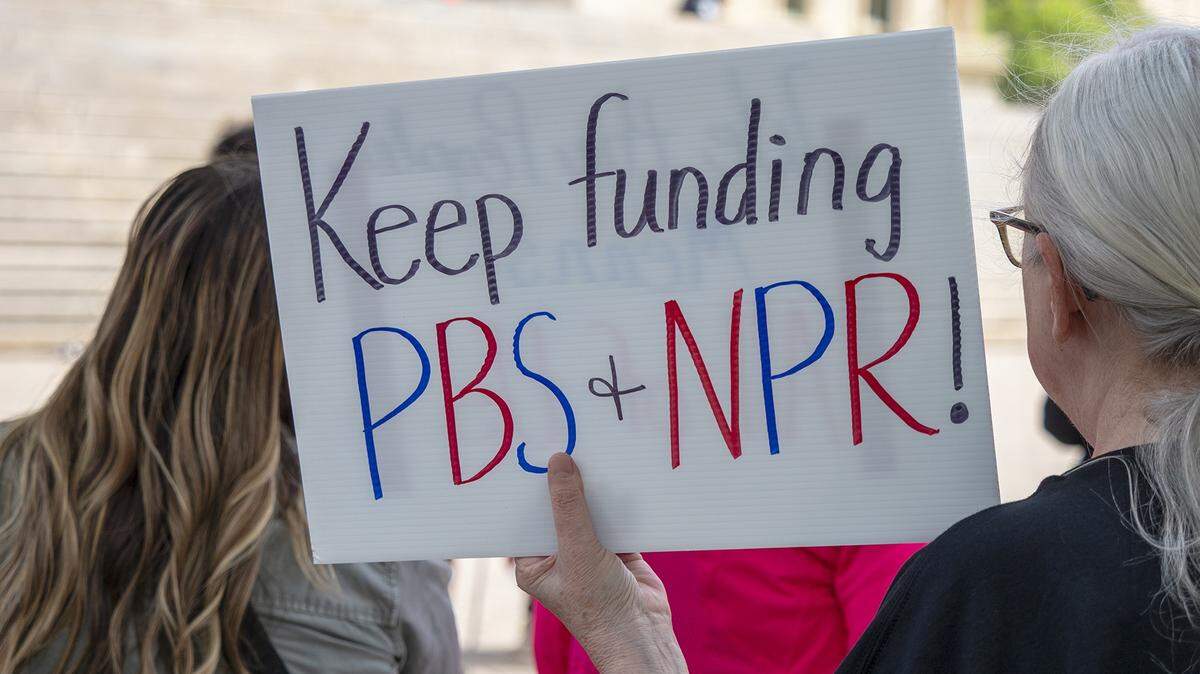
The Corporation for Public Broadcasting announced that they will be closing following Congressional approval to cut $1.1 billion in funding. This past month, The New York Times announced they will reassign their culture desk critics to “new roles.”
Today, journalism is under threat by everything from AI to the federal government. Social media has “democratized” the media so everyone has a voice — so who needs to read newspapers or listen to public radio? I didn’t grow up watching Sesame Street, and physical newspapers were never a breakfast table staple in my house. But I still found a path to journalism, and I steadfastly believe in the sanctity of the free press.
Social media and misinformation
As a Gen Zer, I believe nothing can truly replace the important service journalists provide. Because I’ve seen first-hand how social media can spread misinformation and fuel polarized political discourse. The past two decades have witnessed the closure of many local daily newspapers, creating news deserts across the nation. According to a 2023 Pew Research Center article, the estimated total daily newspaper circulation was 20.9 million, down 8% and 10% respectively from 2021. A 2024 study found that 54% of Americans get their news from social media and 27% from podcasts.
The shift from getting our news from reputable sources to social media has had severe political implications. A study conducted by New York University’s Center for Social Media and Politics found that users with extreme political views are more likely to encounter and believe false news. Another study by the American Psychological Association found that exposure to misinformation leads to a higher likelihood that it will spread.
And it doesn’t end with conspiracies. There has been a significant rise in “ragebait” content, or online content specifically designed to provoke anger. For example, videos by the media company Jubilee frequently pit conservatives against liberals in discussing relevant political topics. I watched a Jubilee video recently, and was stunned to see contestants barely let one another get a word in the conversation — it wasn’t about having constructive discourse, but “winning” a loud and unproductive argument.
In defense of the written word
In his piece “In Defense of the Traditional Review,” the New Yorker’s film critic Richard Brody defends one of the most endangered forms of journalism: the art review.
“With perspective on the history of an art form and an awareness of its current state — an awareness developed by the immersive diligence of writing reviews on a wide range of recent events — critics see in new works their implications, their promise, the possibilities that they expand, the vistas that they open,” Brody wrote.
In a world where everyone has a boombox, many have lost sight of how journalism serves us. The art review especially illustrates this dilemna. But what we forget is that journalism doesn’t have stakes in selling products and winning elections, it holds institutions that seek to profit off of consumerism and attention accountable.
When I was 12 years old, fresh off the high of my first John Green novel, I felt the itch to write for the very first time. I didn’t have a computer or a typewriter, but I did have an iPad with a detachable keyboard, and that would have to do. The ceaseless work of journalism, the relentless rollout of each daily newspaper, fingers pounding furiously on keyboards, is itself a democratic pursuit. Journalists are intermediaries between institutions and the people. This is what we stand to lose.
This story was originally published August 8, 2025 at 1:14 PM.