California Democrats don’t solve homelessness — they only campaign on it | Opinion
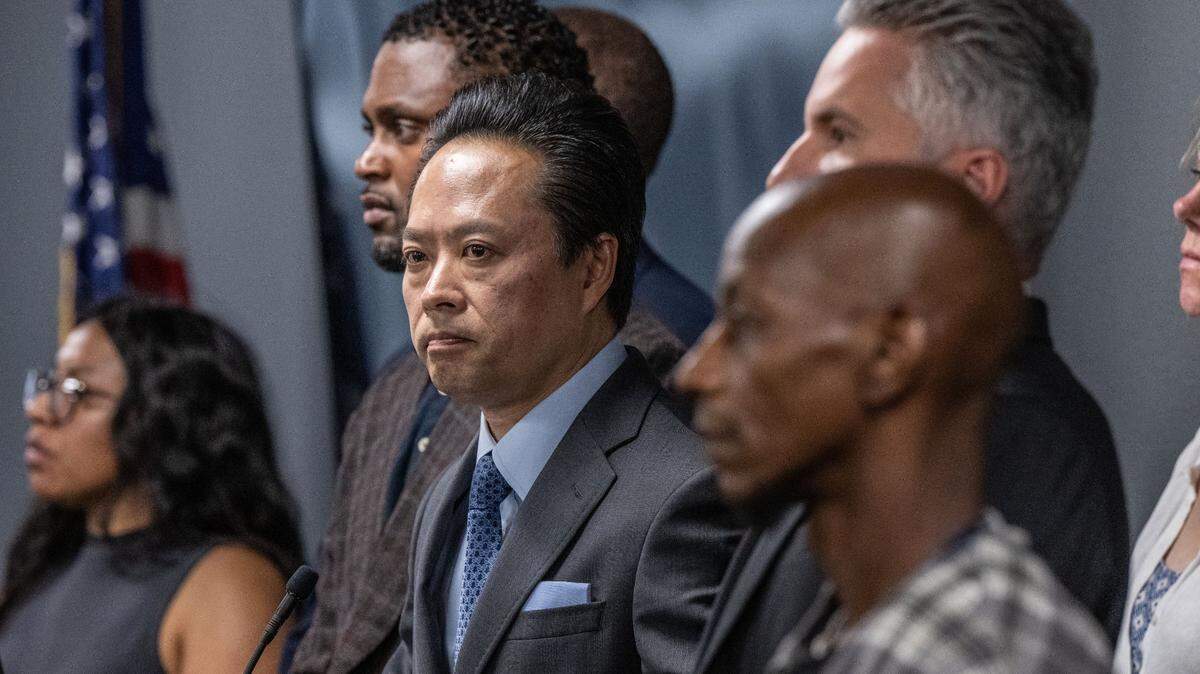
Last week, at a city-led meeting to discuss a plan to build 40 tiny homes on a vacant, city-owned lot in West Natomas, Brian Pedro, Director of the city of Sacramento’s Department of Community Response, addressed the audience.
“This is not what you have in mind as an emergency shelter,” Pedro said, “with a bunch of crazy people that are on drugs and that are criminals.”
It was, if not the latest, then at least the most local entry in the public debate over something much larger and much, much older than homelessness. That is, the public perception that there are two distinct categories of those seeking public assistance: The “deserving” poor and the “undeserving” poor.
A history of Haves and Have-Nots
Sacramento’s Pedro is hardly the first to make the distinction (though it’s jarring to hear it said publicly by the city’s own homelessness czar). Humans, historically, love to pit ourselves against each other in contests of “Us” versus “Them.”
In ancient times, the Roman theologian and philosopher, St. Augustine of Hippo, encouraged giving money and comfort to the poor, but not to the unworthy poor such as gladiators, sex workers or actresses. Medieval-era church leaders made a careful distinction between giving aid to peasants who were forced out of work by plague or famine and those who were merely lazy. And in the Victorian era, public assistance was reserved only for poor people who were visibly unable to care for themselves. Workers deemed able-bodied were institutionalized in workhouses.
More than a century later, the Sacramento City Council has announced several new tiny home communities, including one specifically for homeless seniors. None of these tiny homes will include a private bathroom or kitchen. And, in a serious break from the way similar sites are managed across the nation, Sacramento will charge the residents up to 30% of whatever income they lay claim to, or be kicked out after 90 days.
So when Pedro made his comment to the crowd in Natomas, what he was really implying was something more like: “Don’t worry, this money is going toward the kind of poor people who actually deserve our help.”
(Pedro, via the City of Sacramento’s public relations team, did not return multiple requests for comment to clarify his remarks — mainly, I suspect, because I declined to submit my questions in advance.)
The city’s Director of the Department of Community Response (a deeply Orwellian title) was blatantly playing to the crowd’s fears and complaints in an attempt to gain their support of the project. Indeed, at a similar meeting earlier this week, Natomas resident Michele Gray was quoted by The Bee saying: “Just because this (site) was identified as a potential site doesn’t mean it’s the right site. I’m worried about my property values.”
The self-interest within Gray’s remark is not reserved for the citizens of Natomas. Hers was the type of argument that many people make when opposing public assistance facilities planned in their neighborhoods. Presumably, with his comment, Pedro was trying to assuage those very fears.
Pandering to our worst instincts
If you close your eyes and listen to the language that people in Sacramento often use to describe homelessness, you might wonder if you really live in the deep-blue, liberal community our city and state is purported to be. There’s often not much daylight between the rhetoric used by Democrats and Republicans on this divisive issue. But Democrats are particularly adept at turning the blade on themselves.
When Sacramento County District Attorney Thien Ho, a Democrat, wanted to gain some political points, he sued the city and former mayor (and fellow Democrat) Darrell Steinberg. Ho threatened to charge a misdemeanor every day if the city did not address the “public nuisance” created by encampments. That lawsuit is still ongoing.
When Flo Cofer, a left-of-center mayoral candidate in the 2024 election, suggested the city look at vacant lots slated for parks and already had water and power infrastructure installed, she was slammed by then-Democratic Assemblyman Kevin McCarty and his supporters for suggesting Sacramento house homeless communities on top of children’s playgrounds. McCarty is now Mayor McCarty.
And when Sacramento City Councilman Eric Guerra launched a campaign for the county’s 10th District Assembly seat in 2022, his opponent was Stephanie Nguyen, a fellow Democrat and at that point, an Elk Grove City Council member.
Nguyen targeted Guerra with attack ad mailers that depicted Elk Grove as a beautiful place to live, and Sacramento as a stark and desolate hellhole, filled to the brim with homeless people — all supposedly thanks to Guerra’s policies.
The mailers made a striking point: Vote for Nguyen and you will live in peace and harmony away from homeless encampments. Vote for Guerra, and your neighborhood will be overrun by dangerous, lazy, poor people.
Nguyen won that election by about 9,000 votes. Clearly, her choice to focus on the horrors of living too near homelessness — note that I didn’t say the horror of homelessness itself — was a beneficial tactic for her campaign.
(Ironically, Assemblywoman Nguyen’s negative ads that year were the brainchild of Andrew Acosta, a public relations consultant who until very recently was the right-hand man of Mayor McCarty; the very same politician who is now asking Sacramentans to trust his expensive vision of new tiny home communities across the city.)
Again and again, California’s housing crisis is exacerbated by Democrats at the local level, finding any excuse to block desperately needed affordable housing and programs.
Homelessness and the housing crisis won’t be solved in California by drawing a line between those who deserve public assistance and those who don’t. It won’t be solved by putting poor people at the edges of cities or with promised projects that take years to build and may or may not ever open.
Simply put, everyone deserves public assistance, regardless of their mental health or legal history. Everyone deserves food and a safe place to sleep at night. Property values are an unconscionable excuse to turn our back on neighbors in need.
The sooner we understand that, the less susceptible we will be to pandering politicians who use the dual crises of poverty and homelessness as a pain point for their own advancement.
Yet this is the reality of California, where the enemy of getting people off the streets and into safe lodging isn’t our state’s inability to do so, but rather, our deep-seated financial self-interest and antipathy for the poor, wrapped neatly in a veneer of bogus liberalism.
This story was originally published September 26, 2025 at 5:00 AM.