
Mayor who? Sacramento’s McCarty is taking a quiet approach to leadership | Opinion
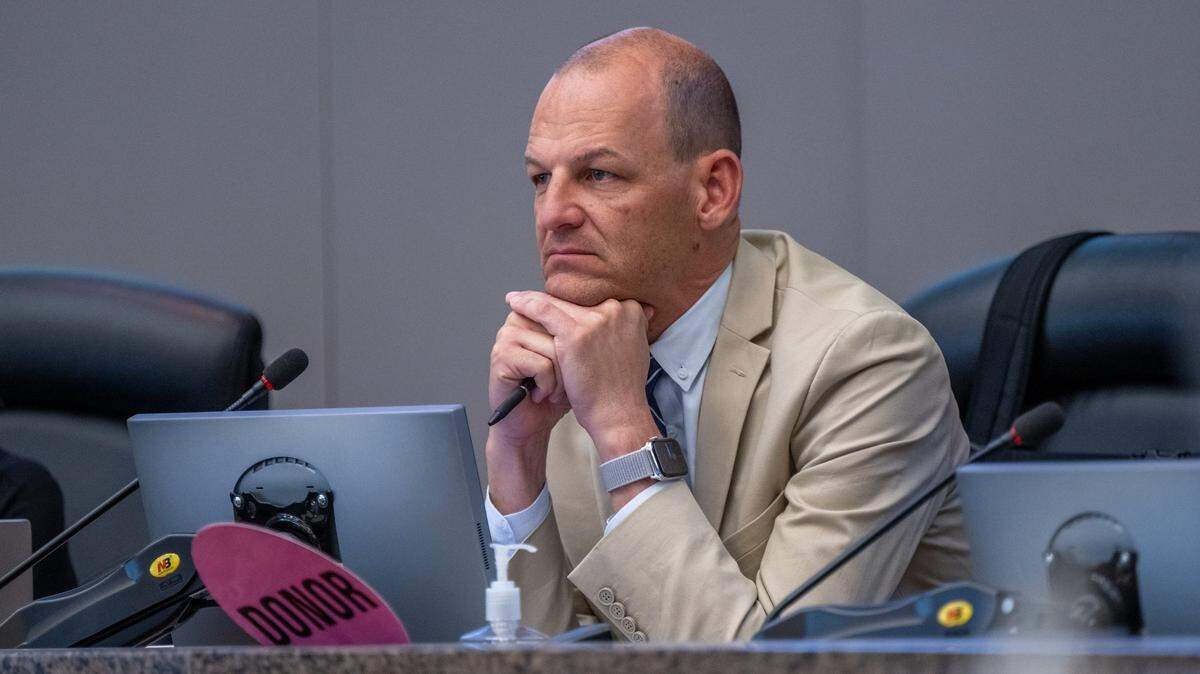
For sixteen years, Sacramento mayors have chased the spotlight, pushing to expand the office’s power and profile. But Kevin McCarty, on any given day, quietly likes Sacramento City Hall just the way it is.
It requires a civic recalibration of sorts to judge a mayor who actually embraces what is coined inside government as a “weak” leadership role, one with no management authority and only one of nine votes on the Sacramento City Council. It explains why McCarty isn’t trying to get your attention every week — or even every month.
“You can be as strong as you want,” McCarty said of his job in a recent interview. “This system of government makes you work with people. You have to be a team player.”
By all outward appearances, the mayor and the city council spent much of 2025 setting the stage for a more substantive, action-loaded 2026. And along the way, it has become clear that the mayor is trying to lead more from behind than from a press conference podium.
There are mixed outward signals about how cohesive a team McCarty is assembling with his council, one with inner relationships of various strengths and strains. It will take every ounce of diplomacy in McCarty and his fellow councilmembers to forge a functioning majority in 2026.
Sacramento County Supervisor Rich Desmond said working with McCarty has “been a very positive experience.”
“I’ll get a text from him or a call from him. He’s not trying to get (public) attention. He doesn’t want people to necessarily know about it, but he’s putting the work in.”
Responding to homelessness, and critics
McCarty ran for mayor with promises to manage homelessness stronger and better than his predecessors. His signature achievement in 2025 was an ordinance banning homeless individuals from sleeping around City Hall.
“It’s been helpful to make sure the place of public business remains safe and clean 24 hours a day,” McCarty said.
As a nearby downtown resident, all the council appeared to do was shift and densify the unhoused population in the surrounding blocks. And McCarty apparently took private exception to Councilmember Mai Vang’s opposition to the ordinance, with private threats to shift people living in homelessness to her district.
This was not the mayor’s finest moment. But a mayorship, after all, is a marathon.
The real test will come next year, as the city attempts to establish at least three new tiny home “micro communities,” a safe camping site in the River District and a safe parking site at Regional Transit’s light rail stop at Franklin Street.
“Those are going to be met with resistance,” McCarty said.
Councilmember Lisa Kaplan, as a noted example, objects to the proposed micro-community in her Natomas district, concerned about the site’s limited services and how each unit will not have running water (the community will have centralized bathrooms and showers instead).
“There’s going to be some challenges along the way, some not-in-my backyard issues,” McCarty said.
A new tax on the 2026 ballot?
McCarty set a high bar for himself in his first State of the City address by announcing plans to place a real estate transfer tax on the 2026 ballot to boost housing opportunities for some Sacramentans. The mayor is looking for a new pot of money to help with down payments for first-time home buyers, to move more homeless into micro-communities and to assist renters on the brink of eviction.
McCarty is saying little about this proposal, intentionally, as he works behind the scenes with housing and business leaders for a tax of a certain size for certain purposes.
“We’re still in the deliberative phase,” he said.
Sensing that voters are more concerned about their own pocketbooks than unmet civic needs, county supervisors recently signaled no interest in pursuing a sales tax next year for road maintenance and other transportation needs. Any new tax proposal won’t be easy.
Yet, so far, McCarty shows no signs of backing down.
Confronting City Hall’s red ink
Sacramento’s budget is on a trajectory to spend way more money than it has, with potential deficits in the $90 million range come 2030. Something is going to have to give. This is where the council’s loyalty to public employees and their unions will come in conflict with a public that wants tough decisions to maintain services.
“All the easy tools have been used,” McCarty said. “This is now the hard stuff.”
Part of the mayor’s plan is to grow revenues by growing the city. A hard-fought effort to establish a new funding district in The Railyards, fueled by new property taxes in the district, is a case in point, something that McCarty quietly spent “a lot” of time on.
Yet these benefits are for the long term and will help future mayors. The next budget, likely the hardest in years, poses the ultimate team challenge for McCarty, this council and Sacramento’s new city manager, Maraskeshia Smith.
The upside of a mayor not seeking more power is how that quest will not dominate the city agenda, as it did for portions of the terms of McCarty’s most recent predecessors, Kevin Johnson and Darrell Steinberg.
McCarty is right in thinking he has plenty of tools and power to make a difference as mayor. But will he? The coming year is shaping up to be the revealing one. To manage the homeless crisis, an evolving downtown and upside-down finances — to mention just a few challenges — Sacramento needs to do a lot to polish this gem of a river city.
This story was originally published December 31, 2025 at 5:00 AM.