
How Sacramento supes approved the wrong solar project for a phony reason | Opinion
To legally justify chopping down thousands of oak trees to build a controversial solar farm, the Sacramento County Board of Supervisors last year relied heavily on what is now false information — that the project was needed to meet the zero-carbon emissions goal of the Sacramento Municipal Utility District.
How wrong our supervisors were.
SMUD canceled its power purchasing agreement on Monday with the so-called Coyote Creek project, which entails the loss of about 3,500 oaks on more than two square miles of land.
What’s more, a recently released SMUD document shows how its management was privately wondering about abandoning this project in exchange for other ones with DESRI, a Manhattan-based renewables development company, something that was never aired in public at a Board of Directors meeting.
SMUD’s sudden retreat from Coyote Creek has raised troubling questions that remain unanswered about its handling of this project. SMUD’s chief executive officer and general manager, Paul Lau, declines to comment, despite daily requests.
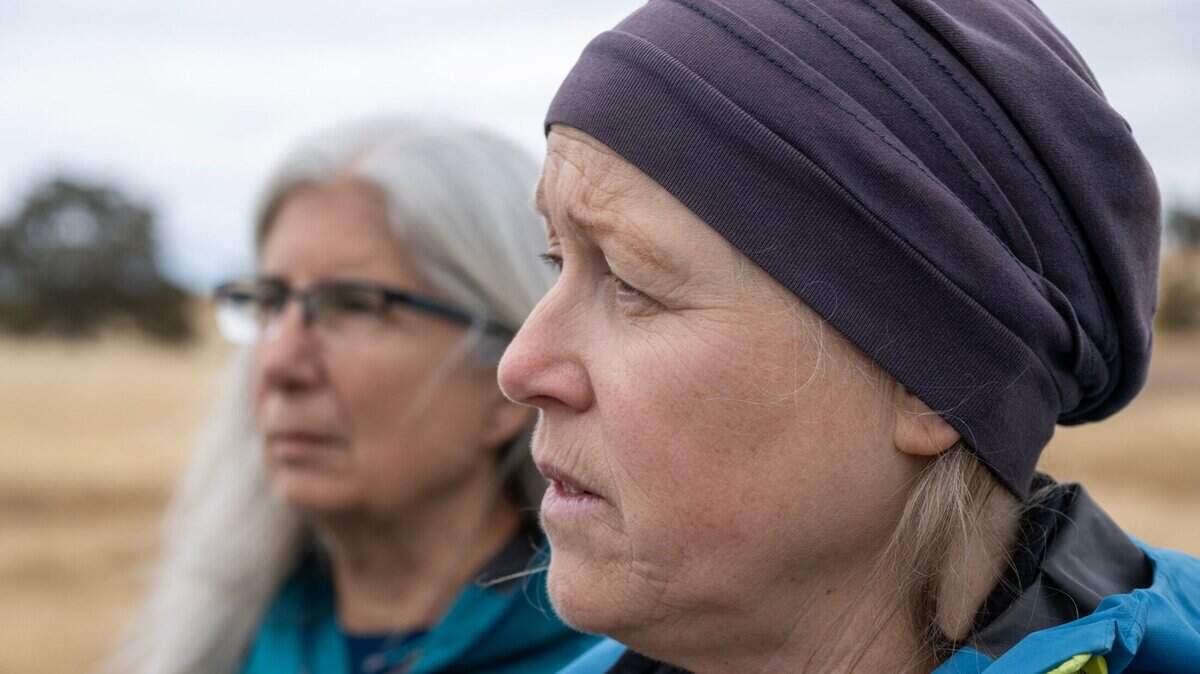
“I have a lot of suspicions,” said Kim Delfino, a long-time environmental attorney. She normally is on the side of fighting for renewable energy, but in this case, she urged SMUD for months to end this project. About 1,800 of these trees on the chopping block, she said, are at least 250 years old.
Environmental groups have since filed litigation against the county on this project, saying how its environmental review violated the California Environmental Quality Act. The Wilton Rancheria, which considers Coyote Creek part of its ancestral lands, is also suing as well, claiming a state-required consultation process was woefully inadequate.
How SMUD quietly suggested other projects
SMUD’s Board of Directors voted back in 2021 to direct Lau to proceed with the Coyote Creek project. But since then, the elected leaders have been as mum as Lau, who executed the power purchase agreement with DESRI and has kept the project out of public board meetings ever since.
This project was supposed to be operational by now. And as DESRI began to miss deadlines on the project, documents show how the company began to request extensions.
“Given the Project cost increases, tribal issues, and other challenges Seller faces, SMUD recognizes the Project may no longer be viable,” SMUD wrote to DESRI, in a September 2024 document the utility company provided to The Bee. “However, we continue to value our partnership with DESRI and wish to continue to engage regarding alternative replacement project options at other locations.”
As recently as November, it appeared as if Coyote Creek, in an eastern corner of the county, was proceeding as an essential future asset to SMUD.
The county’s false rationale
Under the California Environmental Quality Act, local government leaders like the Sacramento supervisors can approve a project that does great harm to a landscape, like these oak woodlands. The catch is that they have to a defensible rationalize why. That happens in a pivotal document known as a Statement of Overriding Considerations.
In the county official rationale, supervisors declared at least 13 times by my count that they were approving Coyote Creek to help meet SMUD’s official goal of a carbon-free electricity portfolio by 2030.
Supervisors were deprived of any opportunity to ask SMUD leaders any questions about this project. That’s because SMUD representatives were conspicuously absent at the supervisors’ Nov. 18 meeting, which was noted by Chairman Phil Serna at the time.
After the supervisors’ unanimous approval, many citing SMUD’s needs, the utterly predictable counter-attack by opponents began to unfold. Both environmental groups and Wilton promtply challenged the legal integrity of the county’s approval process.
SMUD’s official retreat from this project is no small matter. It now makes the supervisors’ Statement of Overriding Considerations a document that borders on pure fiction. This is, among other things, an embarrassment for both governments.
In his only official statement, Lau thanked Sacramento County “for all their work throughout the process” and his Board of Directors “for their leadership.”
Here is what Sacramento County spokesperson Kenneth Casparis, said: “The County is aware that SMUD announced that it has canceled its power purchase agreement to serve as an off-taker for solar power generated by the Coyote Creek Agrivoltaic Ranch project. The project applicant may continue to explore additional off-take agreements consistent with existing approvals, so the County is still assessing the impact of SMUD’s decision.”
Delfino’s job for the last 15 years has been to champion renewable projects against not-in-my-backyard local opposition, battling to prepare for climate change one procedural battle at a time. But then came SMUD’s Coyote Creek.
“This is one of the worst… projects I’ve seen,” Delfino said.
What a mess. Sacramento County is on a path to building a giant solar farm for somebody other than SMUD. Are we about to sacrifice some of the county’s best remaining old-growth oak woodlands to produce electricity for neighboring Pacific Gas & Electric? When will SMUD begin to explain itself?