SMUD’s exit is welcome — but it doesn’t end the fight for Coyote Creek | Opinion
If you’ve been celebrating the news that the Sacramento Municipal Utility District (SMUD) won’t buy power from a controversial project opposed by environmentalists, Native American communities and others, maybe hold off on popping the champagne.
One of SMUD’s biggest public relations disasters in decades is far from solved by their retreat on Tuesday from the Coyote Creek solar project, which threatened 3,500 oak trees in one of California’s last known woodlands. The trees are still in danger even though SMUD’s purchasing deal with New York-based energy developer D.E. Shaw Renewable Investments (DESRI) is off.
SMUD’s Board of Directors made an obvious mistake in 2021 when it agreed to buy power from DESRI without fully understanding the environmental implications of the decision. The Sacramento County Board of Supervisors compounded the mistake by signing off on the project slated for development in the southeastern edge of the county in November.
The Bee reported that the Environmental Council of Sacramento filed a joint lawsuit against Sacramento County in late December for approving the project. The group argues that the project fails to meet CEQA requirements and that its approval was rushed without fully analyzing the negative impacts to oak woodlands, sensitive species and groundwater.
The choice of site for the proposed 200 megawatt solar facility at Barton Ranch was poorly chosen and apparently unreviewed by SMUD before the agreement was made.
SMUD claimed that because Coyote Creek was being developed by a third-party (DESRI), it is simply a power purchaser that is federally required to provide interconnection access to any qualifying renewable projects that seek to connect to its power grid.
Environmental groups disagree that Coyote Creek is a qualifying project, and it is in direct contradiction to the county’s General Plan.
“We all want and need appropriately planned clean energy for our county, but … SMUD is already on track to fulfill its 2030 Zero Net Carbon Plan,” said Luz Lim, a policy analyst at the Environmental Council of Sacramento, in a press release at the time. “Instead, and ironically, we’re potentially destroying thousands of oaks, which are one of nature’s most powerful tools to trap and sequester carbon.”
So SMUD’s Monday announcement was not only welcome news for California’s environmental community, but a sound business decision by the local utility to stay out of what’s turning into a surely messy legal battle.
“This is a massive victory for Mother Nature and everyone who has been fighting to protect old growth trees in California,” wrote Jesse Dickson, a botanist who runs a popular social media page, SacramentoFoodForest. “SMUD backed out because we stood up.”
Unfortunately, that doesn’t mean the Coyote Creek project is dead.
“As far as we’re concerned, this project is still alive, even if SMUD isn’t the one purchasing the power from DESRI,” Lim said in an interview with The Bee’s Chaewon Chung.
“DESRI can still construct it, (it) will just be much more expensive because this would be taking energy from the SMUD grid, so anybody else who would be purchasing that energy would also have to pay SMUD,” Lim said.
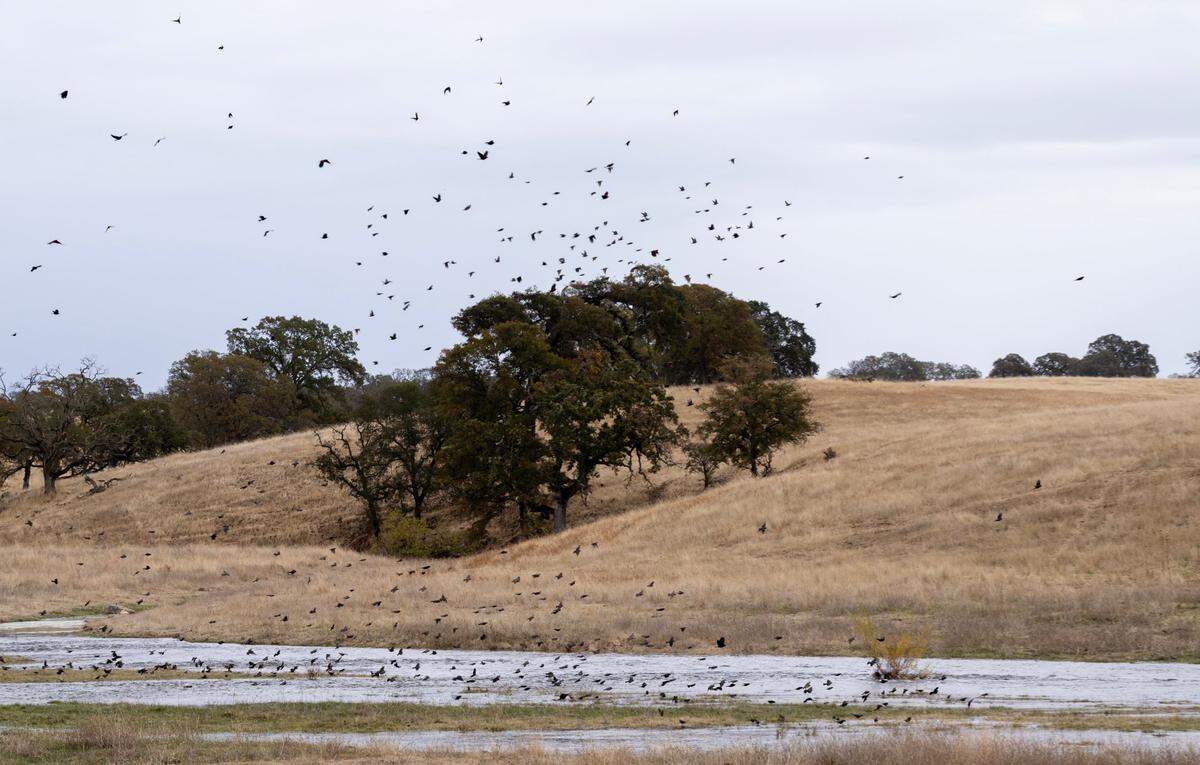
The messy legal battle will certainly set back the project, but it hasn’t totally killed it. More than 1,400 acres and 3,700 native oak trees in Sacramento County are still at risk of destruction thanks to DESRI, and any other power purchaser who decides the risk of litigation is worth it.
That list of potential power purchasers could include any statewide utility like PG&E or the Southern California Edison Company. Or, more likely, it will be nearby municipal utilities like Silicon Valley Power, which is currently facing a major bottleneck in power supply to run AI data centers in Santa Clara, which demand massive (and ever-growing) amounts of electricity.
“The battle to save this native land is not over,” Dickson wrote. “We must make sure no other companies like PG&E swoop in and develop this habitat. And make sure Coyote Creek is safe and intact for all future generations of both humans and native wildlife.”
Sacramentans can be grateful that SMUD backed out of this ecologically disastrous project for our county. We now need DESRI to understand that Sacramentans don’t want this project and anyone who gets into bed with DESRI to purchase power from Coyote Creek will face the same litigation and public backlash.
Coyote Creek is a project that never should have been approved. Thankfully, there’s still time for the right conclusion to this story.