
Why underestimating the cost of the new I Street Bridge hurts Sacramento | Opinion
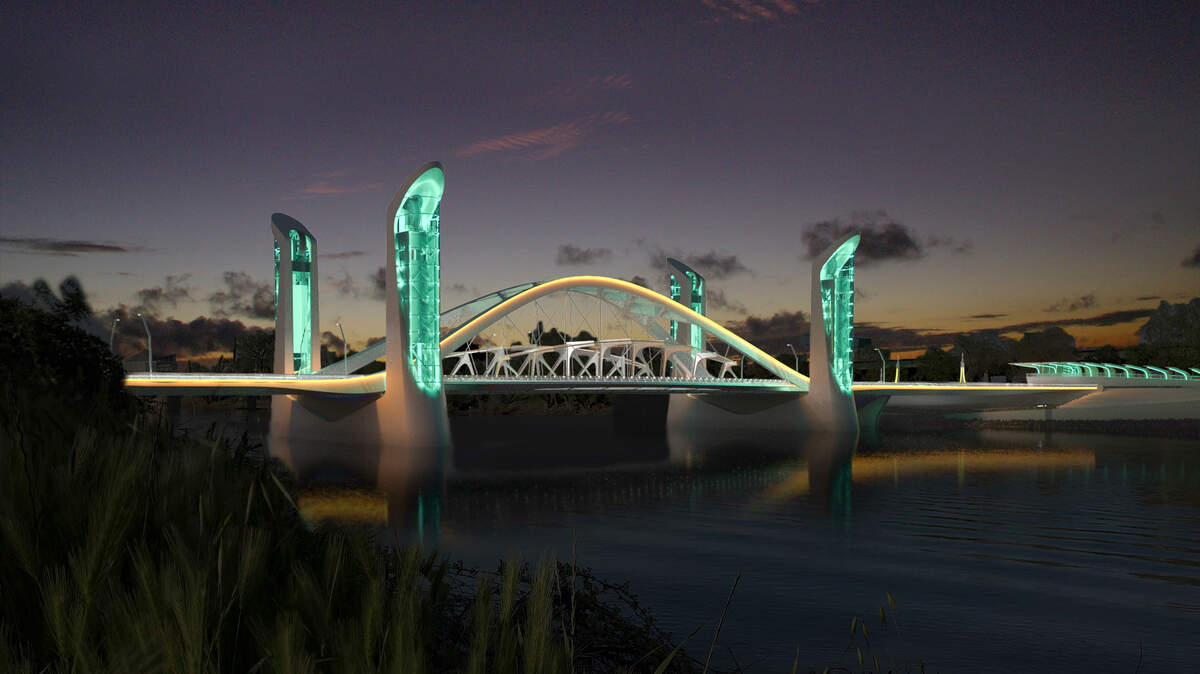
The city of Sacramento wildly underestimated the cost to replace the I Street Bridge, missing the proverbial broad side of the barn by more than 50%.
This is a gut blow to plans for construction to start this year and to civic hopes for maintaining the momentum of the renaissance now underway in Sacramento’s Railyards.”
Normally when a big infrastructure project relying mostly on state and federal funds ends up costing more than expected, everyone pitches in to fill the gap. This may not be the case this time. That’s why botching the cost estimate could be a really big deal.
The California Department of Transportation traditionally a funder of about 90% of the costs of a project like this, has vowed to provide $250 million for this new bridge and not a penny more. Now the project costs about $400 million based on the lowest bid.
How this bridge will get fully funded is as clear as the murky Sacramento River itself. Sacramento has a structural budget deficit. And its partner on the other side of the river, West Sacramento, doesn’t exactly have that kind of money hanging around.
“We’re disappointed, but not giving up hope,” said Mayor Kevin McCarty. “The project is literally a bridge to our economic future.”
McCarty and the Sacramento City Council shouldn’t simply shrug their shoulders because something went really wrong here.
The city estimated the construction cost for this bridge at $260 million. Yet the low bid, from Flatiron Dragados Constructors of Concord, was $398,514,792.85. The high bid, by Traylor Brothers Inc. of Long Beach, was $516,936,258.45.
But here’s what’s really suspicious. The city listed 248 construction firms that were prospective bidders for this project. Only three firms actually offered to build it.
Questions abound. Why did 245 qualified companies decline the chance to bid? Is the city going to talk to them? Do we have a deeper problem with this project, a design problem? Does the city have a competency problem at estimating costs? Or were we simply a little unlucky, with firms skittish about how to price a project like this because of the economic uncertainties thanks to you-know-who back in Washington?
A city spokesperson told The Bee’s Ishani Desai that the council is expected to formally reject these bids so that the firms can be interviewed about why they bid as they did and to “explore additional funding opportunities.”
Opportunities? A city project costing 50% more than expected does not create an opportunity. It creates one huge problem. An independent review of this mess by the city auditor seems in order.
Caltrans is being stingy with Sacramento because it is over its head in costs as well. Its Highway Bridge Program, the source of money for the I Street project, has more bridge needs than money.
Throwing more money at this project would mean that another bridge project doesn’t happen.
Sacramento, like most cities, doesn’t have enough money to care for the infrastructure that it already has. The city has an estimated $1.4 billion in deferred maintenance needs. Or the way the city officially looks at it, Sacramento has $1.4 billion in “opportunities.”
This project is too important, failure is not an option. McCarty and West Sacramento Mayor Martha Guerrero have a legacy-shaping challenge on their hands. So does Caltrans. The I Street Bridge, a workhorse for more than a century, isn’t the wider span needed for the future. It’s a moment for our leaders to roll up their sleeves and figure out what the heck just happened to get this project back on track.