
While teacher pay and benefits kept rising, Sacramento City schools went broke | Opinion
Imagine what would happen to Sacramento’s real estate market if prospective homebuyers had no idea whether the neighborhood school would close because of financial stress that could last for years.
This is not some remote scenario. This, according to the state’s top fiscal watchdog, is what now faces a Sacramento City Unified School District that is on the brink of insolvency.
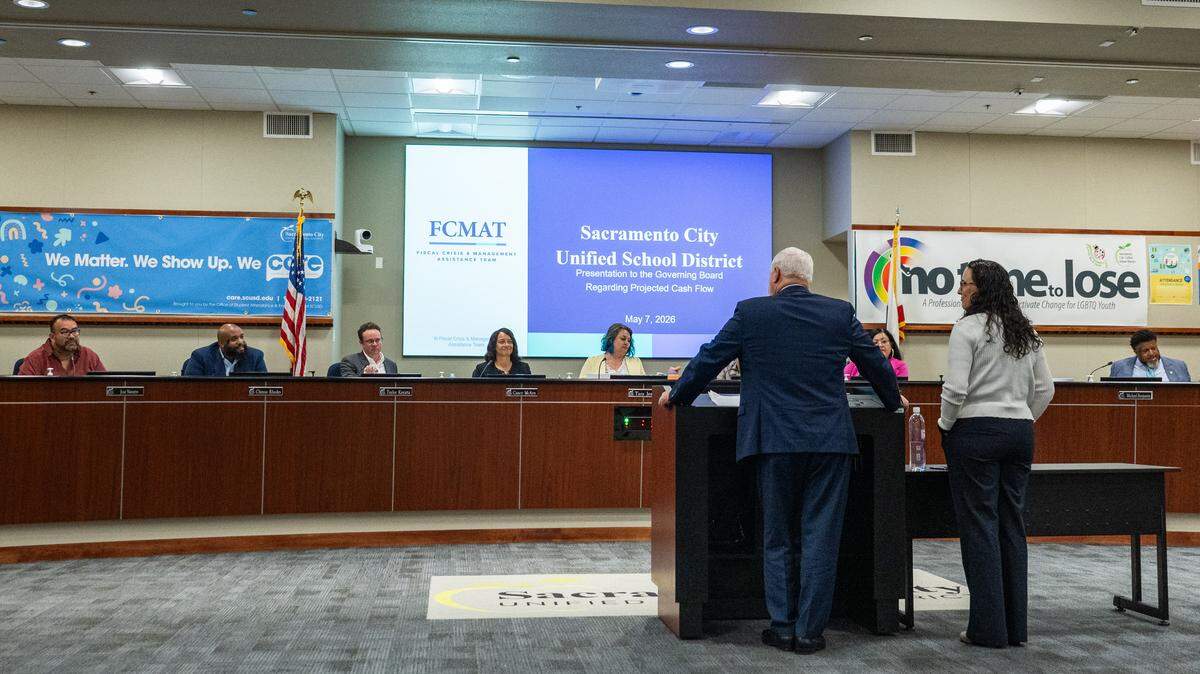
Outside auditors charged with assisting schools with fiscal challenges now say it is time for Sacramento’s 36,000-student district to prepare to seek a large loan from the California Legislature. Taking the money would force the school board and superintendent to surrender control until the district’s finances were stabilized.
How long would that take? The last school district to go through this saga, in the Bay Area city of Richmond, didn’t regain full control for more than two decades.
A case study of two parallel universes
Yet district leaders for resisting the outside advice. When it comes to its finances, Sacramento City Unified is a case study of two parallel universes.
There is an ominous finding of looming insolvency coming next year from the Fiscal Crisis and Management Assistance Team (FCMAT), created by legislators to help prevent local school districts from running out of money.
Yet the seven-member Sac City board says FCMAT may have gotten its numbers wrong and that other borrowing options have not been exhausted.
“We know there is fear and uncertainty for our families, community, and valued staff,” Board President Tara Jeane recently wrote in a community statement. “The process is difficult and painful and necessary.”
It’s a huge red flag at this late stage that there are fundamental disagreements about whose numbers are right. Everyone’s primary concern should be keeping these schools running and avoiding any possibility of the district running out of money. If board members ultimately lose their power, that is the long-accepted price of a state bailout when everything else has failed.
As reported by The Bee’s Jennah Pendleton, based on the district’s own numbers, board members must find $144 million in cuts between July and April to stay afloat. This is on top of $83 million in cuts (many were one-time savings as opposed to permanent reductions) the board has already identified.
Put another way, this is akin to cutting nearly 20% of an annual general fund budget that is roughly $800 million.
Salaries of faculty and staff consume about 94% of the district’s budget. Yet as this insolvency saga has unfolded, salaries have continued to rise.
In September, the board granted teachers 2% raises for two years (plus pay for eight extra days), adding $22 million in costs to the coming fiscal year.
The primary labor representative for staff, the Service Employees International Union (SEIU), now has a draft agreement for the same raises, excluding pay for the extra eight days.
Sac City makes no bones about how it spends its money. “We offer the best salary and benefits in the Sacramento Valley,” the district proudly says on its website.
Put another way: Sac City, with its unaffordable compensation packages, has been granting raises and benefits to teachers that it can’t afford. Now, with steadily declining enrollment, higher costs to fix a much-maligned special education program, and a bunch of partially vacant schools costing money to keep open, the bills are coming due.
All seven board members won their seats with financial support from the Sacramento City Teachers Association, the union that represents instructors. All seven have acted more like subsidiaries of the union than fiduciaries on behalf of the public to protect the district’s long-term financial health.
The clock is ticking
There is no other plausible explanation for how this board has not asked any union to voluntarily amend a labor agreement to help prevent insolvency. So much for shared sacrifice.
In her public statement, Jeane holds out hope that things are not as bad as the state believes. FCMAT, she claims, did not take into account how an improving state budget climate may provide Sac City with as much as $51 million in additional one-time funds. “Further, there are internal borrowing options that may provide more runway for us to course correct,” she said
Yet the clock is ticking. FCMAT’s Michael Fine recently told the board it would have to secure a state loan this legislative session, which ends in August, to have funds in hand should insolvency occur next winter. As for the additional $51 million that appears to be coming, Fine told The Bee’s Chaewon Chang that this amount of money would merely delay the inevitable insolvency by a matter of weeks.
The district would need to notify the state that a loan may be necessary to trigger the legislative process. That is a no-regret action: ask a local lawmaker to introduce the bill if needed before the session ends. It may be too late to accomplish that if Sac City continues to sit on its hands and fails to make the devastating budget cuts needed to avoid insolvency.
No board wants to lose its authorities. Under state law, that would happen if the district took the loan, triggering the county schools superintendent, Dave Gordon, to appoint a new administrator to run the district during the loan repayment period.
Today’s financial quagmire is the result of decisions by many boards over many years, not just this one. But it falls to this board to do the right thing.
It is time for Sacramento schools to prepare for a state bailout and to collaborate with state and county partners, so the eventual course of action is obvious to all.