
The societal shift behind canceled Southwest flights and clogged California ports
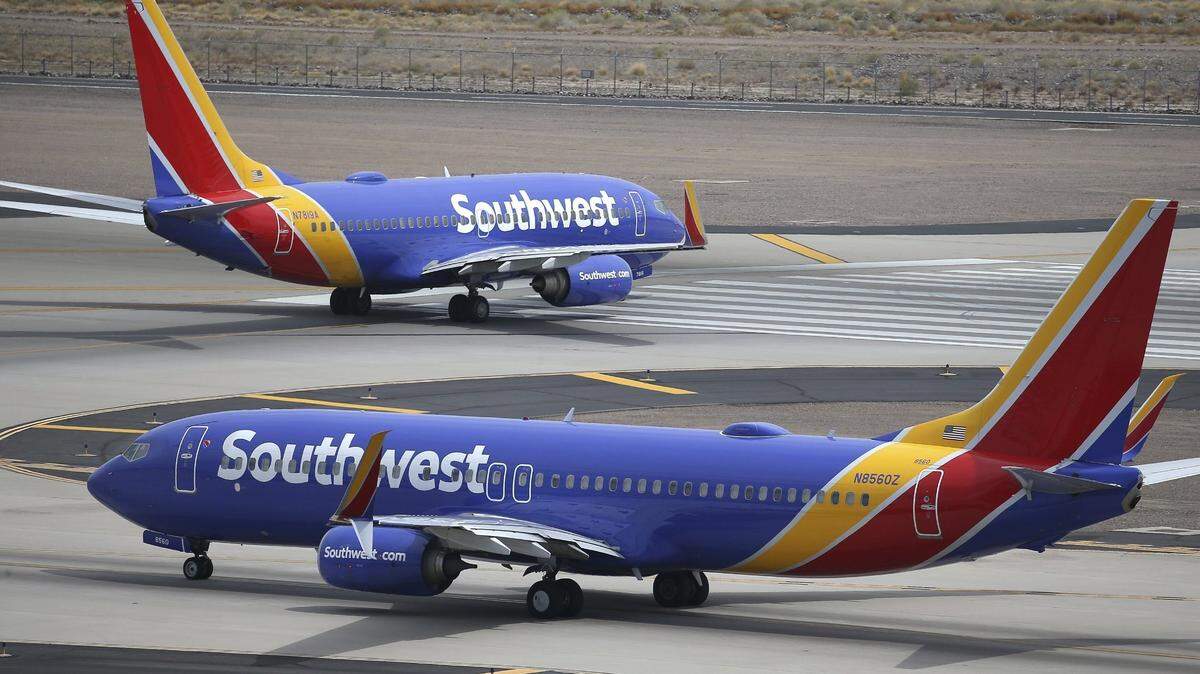
Southwest Airlines canceled thousands of flights around the recent holiday weekend, including at least 19 at Sacramento International. Texas Sen. Ted Cruz and others with no particular knowledge or involvement were ready with a politically convenient explanation: It was a surreptitious sick-out to protest corporate and federal vaccine mandates affecting airline employees and air traffic controllers. Never mind that the company’s executives and pilots’ union, who haven’t hesitated to differ with each other, agreed with the Federal Aviation Administration that the vaccine mandate had provoked no such job action.
The more credible consensus attributed the delays to a combination of inclement weather, flight network complexity and understaffing. And the first two problems are not unrelated to the third: An adequately staffed airline or government agency would be able to endure logistical and meteorological complications.
As labor representatives have noted, pandemic-era understaffing leaves airlines more vulnerable to disruption, irritating travelers who in turn often take out their frustrations on airline employees and the businesses and agencies that support them. Throw in airports full of people being told by the likes of Cruz that they shouldn’t have to wear masks or do anything else they don’t want to — or who just can’t get a beer or a cup of coffee because of understaffed airport concessions — and it’s a recipe for still more misdirected rage and attrition from increasingly miserable jobs.
As Capt. Casey Murray, the head of the Southwest pilots’ union, told National Public Radio last week, “staffing ... in the macro environment across the nation is a challenge.” Indeed, compared with the pre-pandemic workforce, over 4 million American workers are still “missing” — even if they’re not exactly missing the jobs they left. About that many Americans quit their jobs in August alone, according to a federal survey, the highest figure recorded in the two decades the government has collected the data.
The repercussions are far-reaching. Just as Southwest’s lurch toward old-normal holiday traffic ran aground on still-abnormal employment, reviving consumer demand has overwhelmed depleted trucking, warehouse and factory workforces that serve as indispensable links in the global supply chain. As President Biden got involved in trying to clear the backlog at the Southern California ports, Teamsters President Jimmy P. Hoffa blamed a dearth of port truckers who “are not paid a living wage and are largely treated as indentured servants.”
He wasn’t alone in his grim assessment of prevailing labor conditions. Kaiser Permanente, Hollywood productions and the University of California system are all facing strike threats.
Vaccine mandates weren’t the only unsupported hypothesis for the great resignation seized upon by those who would rather not acknowledge the obvious. Maybe Americans are simply losing their good old-fashioned work ethic, some argued, or having it buried under mountains of overly generous supplemental unemployment insurance.
But the end of that assistance last month has yet to show signs of easing labor shortages. More likely, too many American employees are paid so poorly and treated so shabbily that any cost-benefit assessment of their jobs was a close call even before the pandemic. Add COVID-era stresses such as ill or lost loved ones, home instruction and child care, and the risk to one’s health and family of just showing up at a workplace, and it’s not so close anymore.
Fortunately, companies have the option, if not always the inclination, to improve compensation and conditions. More important, governments can require livable wages and enforce overtime rules, fund child care and early education, and require paid sick and family leave. A bill recently vetoed by Gov. Gavin Newsom attempted to make leave feasible for more Californians, and the “Build Back Better” legislation being blocked by Republicans and a few Democrats in Congress would ease child care and other pressures on the workforce nationwide. Such measures would meaningfully tip the balance in favor of work. Outlandish theories won’t.
BEHIND THE STORY
MOREWhat are editorials, and who writes them?
Editorials represent the collective opinion of The Sacramento Bee Editorial Board.
They do not reflect the individual opinions of board members or the views of Bee reporters in the news section. Bee reporters do not participate in editorial board deliberations or weigh in on board decisions. The same rules apply to our sister publications, The Modesto Bee, Fresno Bee, Merced Sun-Star and San Luis Obispo Tribune.
In Sacramento, our board includes Bee Executive Editor Colleen McCain Nelson, McClatchy California Opinion Editor Marcos Breton, opinion writers Robin Epley, Tom Philp, LeBron Antonio Hill and op-ed editor Hannah Holzer.
In Fresno and Merced, the board includes Central Valley Executive Editor Don Blount, Senior Editor Christopher Kirkpatrick, Opinion Editor Juan Esparza Loera, and opinion writer Tad Weber.
In Modesto, the board includes Senior Editor Carlos Virgen and in San Luis Obispo, it includes Opinion Editor Stephanie Finucane.
We base our opinions on reporting by our colleagues in the news section, and our own reporting and interviews. Our members attend public meetings, call people and follow-up on story ideas from readers just as news reporters do. Unlike objective reporters, we share our judgments and state clearly what we think should happen based on our knowledge.
Read more by clicking the arrow in the upper right.
Tell us what you think
You may or may not agree with our perspective. We believe disagreement is healthy and necessary for a functioning democracy. If you would like to share your own views on events important to the Sacramento region, you may write a letter to the editor (150 words or less) using this form, or email an op-ed (650-750 words) to opinion@sacbee.com. Due to a high volume of submissions, we are not able to publish everything we receive.
Support The Sacramento Bee
These conversations are important for our community. Keep the conversation going by supporting The Sacramento Bee. Subscribe here.