
A little rain won’t end California’s drought. Neither will fines for hosing down driveways
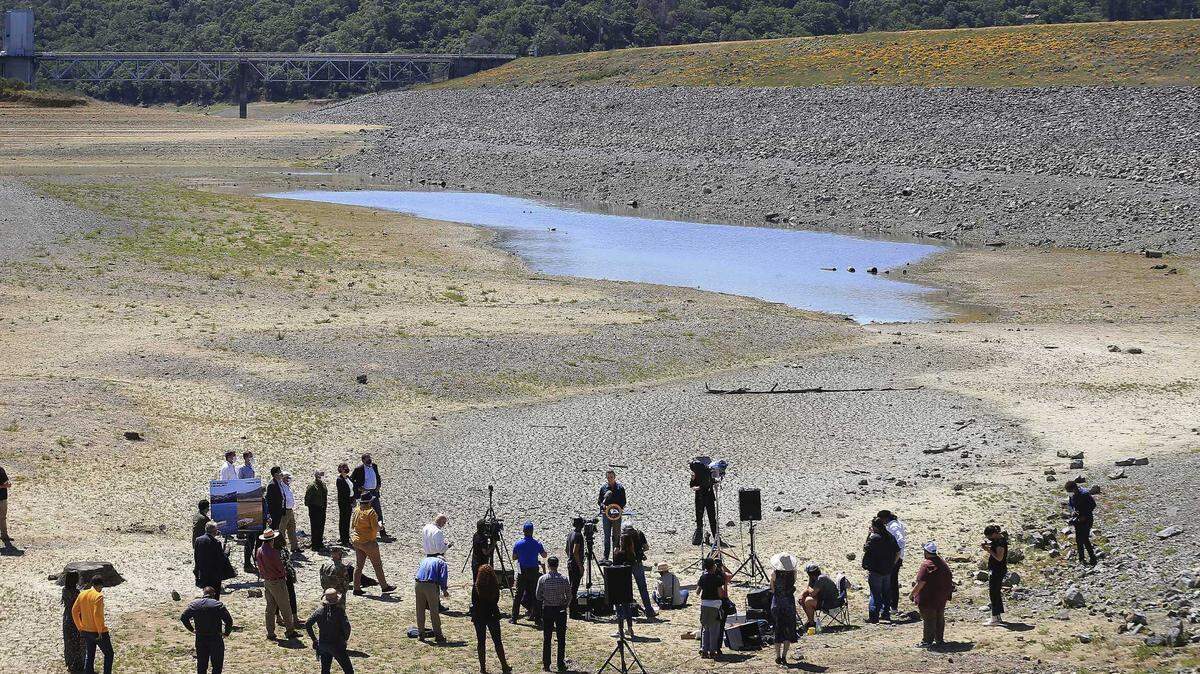
The latest sign of the severity of California’s drought is an indicator that literally can’t get worse: The State Water Project expects to provide urban and agricultural water users with approximately 0% of what they requested from the network of reservoirs and other water infrastructure. It’s the first time the project, anchored by startlingly empty Lake Oroville, kicked off the water year by offering just about nothing.
Not to worry: California officials have taken stock of this unprecedented state of affairs — and decided it might be time to stop using our dwindling water supplies to hose off driveways.
To be fair, that and other proposed rules against egregious wastes of water are only part of California’s response to the drought. But they are emblematic of a conservation policy that has consistently lagged the depth of the crisis.
The regulations, which could take effect early in the new year, would impose fines for using potable water for purposes as questionable as washing pavement or buildings, filling decorative fountains or ponds that don’t recirculate, or irrigating lawns and landscapes to the extent of creating substantial runoff. The rules would have little effect in Sacramento and several other cities that already have similar restrictions in place from previous droughts.
In contrast to the mandatory statewide conservation measures then-Gov. Jerry Brown imposed during the previous drought, which ended in 2017, Gov. Gavin Newsom’s administration has relied on voluntary conservation goals that residents have roundly ignored. While the governor urged users to reduce water consumption by 15%, the latest available data showed Californians used just 3.9% less water in September than they did a year earlier, conserving less than they had in August. Sacramento area residents saved even less, using 2% less water than in 2020.
On the agricultural front, state water officials are requiring three San Joaquin Valley water districts to improve their plans to protect groundwater supplies “in light of the historic and variable climate conditions we are experiencing” and amid furious pumping to replace disappearing supplies in anticipation of new legal restrictions. They also warned that urban users could face mandatory conservation next year given another dry winter.
But there’s no need to wait for evidence to support more urgent measures. With Lake Oroville more than two-thirds empty, salmon and other species facing dire environmental conditions, and officials considering relaxing Delta water quality standards, the State Water Project predicted that it could provide only minimal supplies for health and safety unless the situation improves. The starting 0% allocation follows a year when the project provided just 5% of what was requested.
Despite the historic storm that hit Northern California in late October and the return of moderately damp weather this week, neither the intervening month nor long-term forecasts promise the sort of abundance of rain and snow that would end the drought.
The entirety of California has been under drought conditions for nearly seven months, according to the latest report of the U.S. Drought Monitor. Eighty percent of the state, including the Sacramento region, continues to suffer from extreme drought, the second-driest classification, or worse.
Mounting evidence suggests that this is less an ephemeral circumstance than a long-term consequence of the altered climate. A recently published study by researchers at Lawrence Berkeley Laboratory predicts that the Sierra Nevada snowpack, the foundation of the state’s water supplies, could vanish for years at a time starting in the 2040s.
Grappling with that reality implicates policies across the board from managing groundwater and reservoirs to protecting the rural communities and sensitive environments most at risk of the worst consequences of water scarcity. It’s time to relegate voluntary conservation, along with watering driveways, to the past.
BEHIND THE STORY
MOREWhat are editorials, and who writes them?
Editorials represent the collective opinion of The Sacramento Bee Editorial Board.
They do not reflect the individual opinions of board members or the views of Bee reporters in the news section. Bee reporters do not participate in editorial board deliberations or weigh in on board decisions. The same rules apply to our sister publications, The Modesto Bee, Fresno Bee, Merced Sun-Star and San Luis Obispo Tribune.
In Sacramento, our board includes Bee Executive Editor Colleen McCain Nelson, McClatchy California Opinion Editor Marcos Breton, opinion writers Robin Epley, Tom Philp, LeBron Antonio Hill and op-ed editor Hannah Holzer.
In Fresno and Merced, the board includes Central Valley Executive Editor Don Blount, Senior Editor Christopher Kirkpatrick, Opinion Editor Juan Esparza Loera, and opinion writer Tad Weber.
In Modesto, the board includes Senior Editor Carlos Virgen and in San Luis Obispo, it includes Opinion Editor Stephanie Finucane.
We base our opinions on reporting by our colleagues in the news section, and our own reporting and interviews. Our members attend public meetings, call people and follow-up on story ideas from readers just as news reporters do. Unlike objective reporters, we share our judgments and state clearly what we think should happen based on our knowledge.
Read more by clicking the arrow in the upper right.
Tell us what you think
You may or may not agree with our perspective. We believe disagreement is healthy and necessary for a functioning democracy. If you would like to share your own views on events important to the Sacramento region, you may write a letter to the editor (150 words or less) using this form, or email an op-ed (650-750 words) to opinion@sacbee.com. Due to a high volume of submissions, we are not able to publish everything we receive.
Support The Sacramento Bee
These conversations are important for our community. Keep the conversation going by supporting The Sacramento Bee. Subscribe here.