
California lawmakers want to help with gas prices. Here’s what’s wrong with their plans
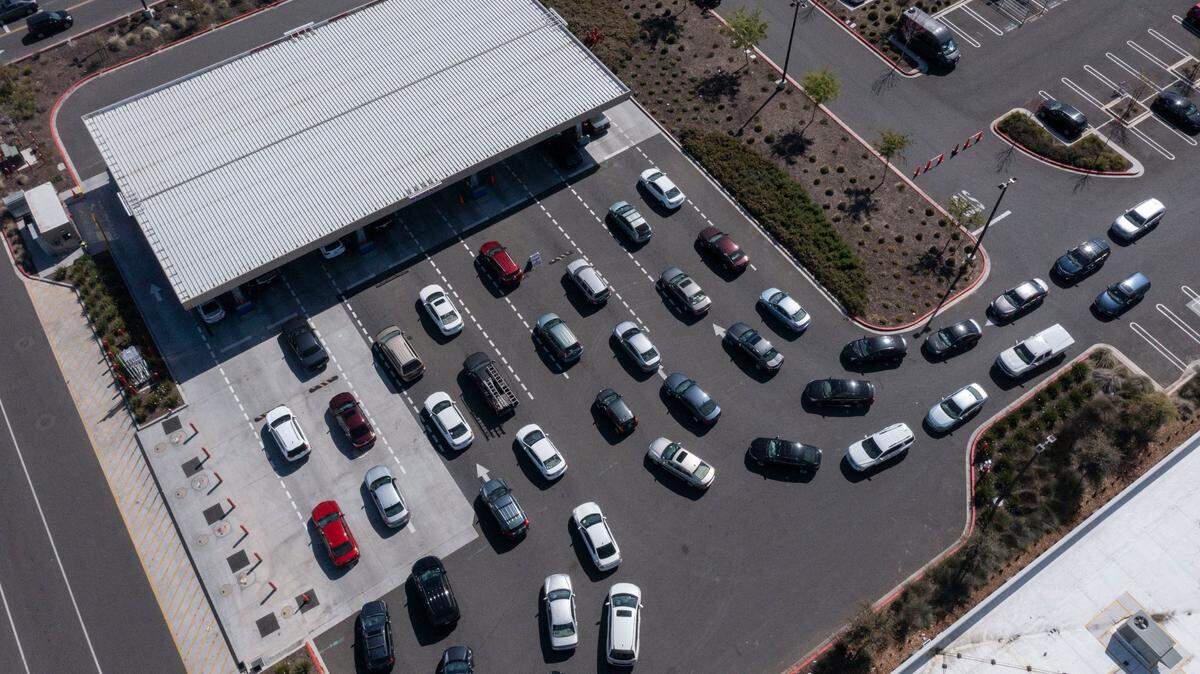
The prospect of sending everyone a check has irresistible appeal in politics, which is why it keeps coming up regardless of whether it’s the best economic, fiscal or social policy. As such, California lawmakers are considering multiple proposals to provide direct rebates to their constituents to offset rising gas and other prices, with more in the works.
Extraordinary inflation and a state budget surplus give legislators some good reasons to provide relief in a state with the nation’s highest poverty rate. They could do more with the state’s dollars — and mitigate the appearance of buying votes — by targeting the relief to those who really need it. But the plans floated so far fall short on that score.
Assemblywoman Cottie Petrie-Norris, an Orange County Democrat, led a group of more than 20 mostly Democratic lawmakers last week in backing a $400 rebate for every California taxpayer regardless of income. The underwhelming rationale for the expense is that it “would cover the current 51-cent-per-gallon gas tax for one full year of weekly fill-ups for a car with a 15-gallon gas tank.” That echoes the notion of a gas tax suspension unsuccessfully proposed by Republicans the same week, though Petrie-Norris drew the distinction that the money would also go to non-drivers and, unlike a tax holiday, would not rely on fossil fuel companies to pass on the savings.
Democratic legislative leaders floated a competing proposal to provide $200 for each taxpayer and an additional $200 per dependent for households earning up to $250,000 a year. It’s an improvement in that it acknowledges different levels of need by tying the relief to household size and disqualifying the wealthiest taxpayers. It also avoids signing on to the fallacy that gas taxes are the problem rather than a legitimate means of funding transportation infrastructure — and one that, by the way, doesn’t begin to capture the true cost of oil consumption.
Yet another proposal is expected from Gov. Gavin Newsom, who offered vague support for some form of relief in his State of the State address and has promised to provide more detail. He should go further than the existing proposals to ensure that the money goes to the families most vulnerable to inflation.
Last year, Newsom and the Legislature expanded the state’s pandemic stimulus from households earning up to $35,000 to those making as much as $75,000, which was expected to provide a check to about two-thirds of the state’s families. Raising the ceiling to $250,000 would mean extending payments to more than 90% of households in the Sacramento region and close to that share statewide.
And yet there is little evidence to suggest that households doing that well are experiencing much more hardship than they were last year; on the contrary, higher-earning households have generally fared better than most over the course of the pandemic. Moreover, direct payments are more effective in generating economic activity when they go to lower-income households, which are more likely to spend the money on goods and services.
The governor and lawmakers appear determined to use state revenue to provide relief from inflation. They shouldn’t squander it on people with more than enough means to afford higher prices.
BEHIND THE STORY
MOREWhat are editorials, and who writes them?
Editorials represent the collective opinion of The Sacramento Bee Editorial Board.
They do not reflect the individual opinions of board members or the views of Bee reporters in the news section. Bee reporters do not participate in editorial board deliberations or weigh in on board decisions. The same rules apply to our sister publications, The Modesto Bee, Fresno Bee, Merced Sun-Star and San Luis Obispo Tribune.
In Sacramento, our board includes Bee Executive Editor Colleen McCain Nelson, McClatchy California Opinion Editor Marcos Breton, opinion writers Robin Epley, Tom Philp, LeBron Antonio Hill and op-ed editor Hannah Holzer.
In Fresno and Merced, the board includes Central Valley Executive Editor Don Blount, Senior Editor Christopher Kirkpatrick, Opinion Editor Juan Esparza Loera, and opinion writer Tad Weber.
In Modesto, the board includes Senior Editor Carlos Virgen and in San Luis Obispo, it includes Opinion Editor Stephanie Finucane.
We base our opinions on reporting by our colleagues in the news section, and our own reporting and interviews. Our members attend public meetings, call people and follow-up on story ideas from readers just as news reporters do. Unlike objective reporters, we share our judgments and state clearly what we think should happen based on our knowledge.
Read more by clicking the arrow in the upper right.
Tell us what you think
You may or may not agree with our perspective. We believe disagreement is healthy and necessary for a functioning democracy. If you would like to share your own views on events important to the Sacramento region, you may write a letter to the editor (150 words or less) using this form, or email an op-ed (650-750 words) to opinion@sacbee.com. Due to a high volume of submissions, we are not able to publish everything we receive.
Support The Sacramento Bee
These conversations are important for our community. Keep the conversation going by supporting The Sacramento Bee. Subscribe here.