
A California judge made a forceful case for Jan. 6 accountability. It deserves attention
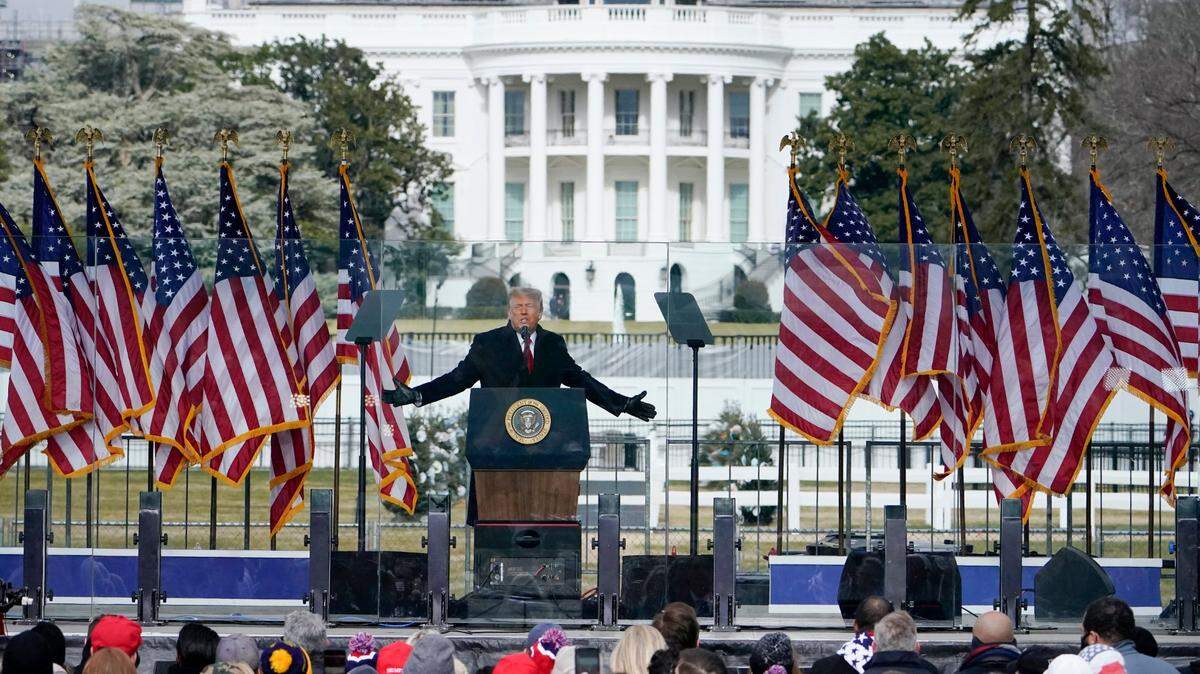
In a narrow sense, a federal judge’s strongly worded ruling this week requires California attorney John Eastman to turn over contested emails to the congressional committee investigating the Jan. 6, 2021, attack on the Capitol. More broadly, it serves as a cry for justice for an unparalleled and unpunished crime against the country.
Orange County-based U.S. District Judge David O. Carter wrote that most of the emails in dispute are not protected from disclosure to the House select committee by privileges such as Eastman’s attorney-client relationship with then-President Donald Trump. The analysis required the judge to determine whether emails exchanged by Eastman involved continuing or prospective illegal acts, which invalidates attorney-client privilege under the so-called crime-fraud exception. Carter concurred with the committee in concluding that Trump and Eastman, the author of an infamous blueprint for overturning Joe Biden’s election, likely broke the law.
Specifically, the judge wrote, Trump probably committed obstruction of an official proceeding by publicly and privately attempting to bully then-Vice President Mike Pence into thwarting Congress’ certification of the election with no legal or factual basis: “Based on the evidence,” he wrote, “the Court finds it more likely than not that President Trump corruptly attempted to obstruct the Joint Session of Congress on January 6, 2021.” Carter further found that Trump and Eastman thereby appear to have committed another crime, conspiracy to defraud the United States.
“Dr. Eastman and President Trump launched a campaign to overturn a democratic election, an action unprecedented in American history,” the judge wrote. “It was a coup in search of a legal theory.”
Eastman, the former dean of the law school at Southern California’s Chapman University, seems to have searched for such a theory in vain. The judge points out that the attorney “heard from numerous mentors and like-minded colleagues that his plan had no basis in history or precedent.” Former Fourth Circuit U.S. Court of Appeals Judge J. Michael Luttig, for whom Eastman clerked, judged his memo “incorrect at every turn of the analysis.” And Eastman himself “conceded that his argument was contrary to consistent historical practice, would likely be unanimously rejected by the Supreme Court and violated the Electoral Count Act on four separate grounds.”
Judge Carter also details the extensive evidence that Trump and Eastman knew the claims of voting irregularities meant to justify the coup were equally meritless. “Numerous credible sources ... informed President Trump and Dr. Eastman that there was no evidence of election fraud,” the judge wrote, among them Trump’s usually servile attorney general, William Barr; then-Deputy Attorney General Michael Donoghue; the federal Cybersecurity and Infrastructure Security Agency; an internal Trump campaign analysis; and over 60 unsuccessful court challenges.
Carter’s ruling isn’t the only recent such allegation. It came days after the New York Times revealed that a former prosecutor strenuously objected to the Manhattan district attorney’s apparent retreat from pursuing Trump’s alleged financial wrongdoing, arguing in a resignation letter that “respect for the rule of law, and the need to reinforce the bedrock proposition that ‘no man is above the law,’ require that this prosecution be brought.” These accounts join a growing list of credible allegations of lawbreaking from Trump’s first impeachment, Special Counsel Robert Mueller’s investigation, and the case against another Trump lawyer, Michael Cohen.
The present case is the most serious, as Carter noted, having “spurred violent attacks on the seat of our nation’s government, led to the deaths of several law enforcement officers, and deepened public distrust in our political process.” And yet, “More than a year after the attack on our Capitol, the public is still searching for accountability” — without which “the Court fears January 6 will repeat itself.”
It’s not an academic concern: The former president’s history already demonstrates that wrongdoing without consequences yields more of the same.
BEHIND THE STORY
MOREWhat are editorials, and who writes them?
Editorials represent the collective opinion of The Sacramento Bee Editorial Board.
They do not reflect the individual opinions of board members or the views of Bee reporters in the news section. Bee reporters do not participate in editorial board deliberations or weigh in on board decisions. The same rules apply to our sister publications, The Modesto Bee, Fresno Bee, Merced Sun-Star and San Luis Obispo Tribune.
In Sacramento, our board includes Bee Executive Editor Colleen McCain Nelson, McClatchy California Opinion Editor Marcos Breton, opinion writers Robin Epley, Tom Philp, LeBron Antonio Hill and op-ed editor Hannah Holzer.
In Fresno and Merced, the board includes Central Valley Executive Editor Don Blount, Senior Editor Christopher Kirkpatrick, Opinion Editor Juan Esparza Loera, and opinion writer Tad Weber.
In Modesto, the board includes Senior Editor Carlos Virgen and in San Luis Obispo, it includes Opinion Editor Stephanie Finucane.
We base our opinions on reporting by our colleagues in the news section, and our own reporting and interviews. Our members attend public meetings, call people and follow-up on story ideas from readers just as news reporters do. Unlike objective reporters, we share our judgments and state clearly what we think should happen based on our knowledge.
Read more by clicking the arrow in the upper right.
Tell us what you think
You may or may not agree with our perspective. We believe disagreement is healthy and necessary for a functioning democracy. If you would like to share your own views on events important to the Sacramento region, you may write a letter to the editor (150 words or less) using this form, or email an op-ed (650-750 words) to opinion@sacbee.com. Due to a high volume of submissions, we are not able to publish everything we receive.
Support The Sacramento Bee
These conversations are important for our community. Keep the conversation going by supporting The Sacramento Bee. Subscribe here.