
On the issues: Jim Cooper and Jim Barnes, candidates for Sacramento County sheriff
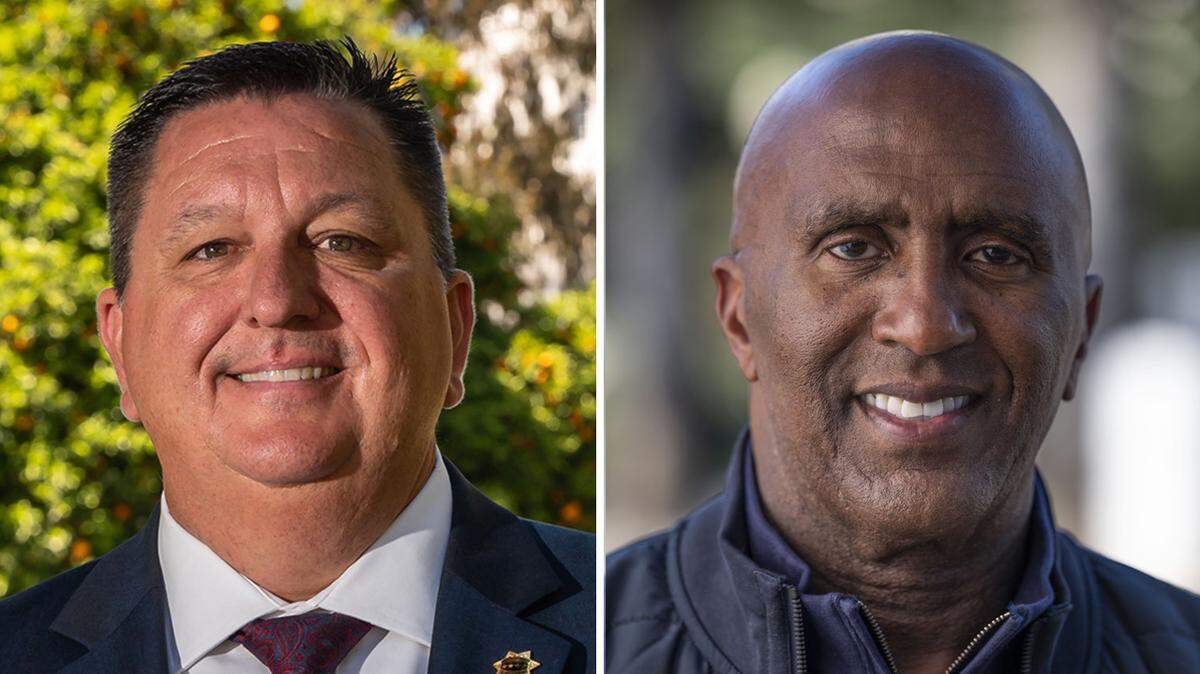
The following interview was conducted by members of The Sacramento Bee Editorial Board and the two leading candidates for Sacramento Sheriff, current Undersheriff Jim Barnes and Assemblyman Jim Cooper. It has been edited for length and clarity.
The Sacramento Bee: Please tell us about yourself and why you’re running to be Sacramento’s next sheriff.
Barnes: I think it’s important that people understand the why – why Mr. Cooper and I are running for sheriff. Being in the department now for 24 years, I have worked every level of this organization – from the very intro level of officer climbing through the ranks all the way now to undersheriff. With that, I’ve been able to navigate some of the fundamental shifts and changes in our community. It really has to start back from my beginnings. I was born and raised in Modesto. My mom, my brother and I lived in a household where my father was not a nice man. He was dealing with his demons when it came to alcohol and took his bad days out on us. My mom saw that the future was not bright for us and she made the right decision and removed us from that environment. We struggled for a little bit – my mom was on welfare for a little bit, and I got to experience what that was like. And then she got on her feet and essentially put us in the right way of mentors and coaches, and I didn’t realize that until I got older and realized who was influential in my life. But ultimately, I was able to go to Sacramento State. I was an athlete there and played football there. At the end, when I was done playing, I coached for a year and then had to decide what I was going to get into and it really got to the point where I went on a ride along. And when I went on the ride along it was one of those moments where it hit me that this is my calling – serving our community, being able to help those who can’t help themselves and protect those who can’t protect themselves. I understand the pitfalls – this job can have an effect on the employees. I worked homicide for four years and I saw things I’ll never unsee. I did more death certifications than I cared to admit. Watching how families are torn apart – it takes its toll on someone. So it’s really important that I focus on the health and wellness of our officers. I’m excited to be here today because this is something I never thought in my wildest dreams. So I appreciate this opportunity. I look forward to it. There’s a lot of community support that I have. I thank the grassroots organizations that are behind me right now. I look forward to answering questions, especially the tough questions.
Cooper: This is a watershed moment for us here in Sacramento County. It’s a quality of life issue. I was born in France, my dad was in the Air Force, and we came here to Mather 58 years ago, so I’ve been in Sacramento for a long time. I’m running for three things: change, experience and leadership. I’ve got three members of the board of supervisors who are endorsing me. The Sheriff’s Department does not have good relationships. I’ve talked to some of the board members and the only time they talk to the sheriff is at budget hearings. There’s no conversation. The board funds your money, you’ve got to work with them. The Sheriff’s Department – top staff – don’t have a good relationship with them. Also, $25 million in lawsuits paid out by the Sheriff’s Departments because of the sheriff and its top management. Think about that, $25 million. They’re down approximately 130 deputies. What would that $25 million do to staff deputies and put them on the streets? Think about homelessness, crime. Crime is up right now. It’s an issue right now. We see the shootings in Downtown Sacramento. How do we fix that? Also, seven deaths in the jail. Let’s talk about experience – 30 years in the sheriff’s department, I retired as a captain. I commanded every division. Ten years – I spent a third of my career – in narcotics and gangs. I worked undercover for five years, buying drugs every night and dealing with gang members. So I have a very intimate knowledge of what the issues we’re facing right now. Fifteen years as a mayor and council member. I started the city of Elk Grove as its first mayor, built the police department so a lot of experience building a city from the ground up. I’ve been in the legislature as an assemblyman for eight years. I chaired the Public Employees Retirement System and I stood on three other committees. I’m known in the Capitol as the cop in the Capitol. I’ve authored over 30 bills. So I’m kind of the go-to guy for public safety issues and really leadership – being the cop in the Capitol, I accept that. Because of the work I’ve done on bills protecting women and children and taking care of a lot of predators, I’m happy to have the endorsement of our District Attorney Anne Marie Schubert, 50,000 police officers statewide, deputy sheriffs, police officers, investigators, 30,000 firefighters statewide, crime survivors and Crime Victims United. Those groups are coming in for a reason. I’m also proud to have been named legislator of the year by the California Police Chiefs. I’m proud to have also been named by Crime Victims United as legislator of the year. That’s important because it shows the track record I’ve had of leadership and getting things done. When I talk about relationships, that’s so important.
The Sacramento Bee: The downtown jail is a disaster. It is hopelessly out of compliance with a court-ordered consent decree. It’s a place where advocates are not properly treated for their mental health challenges as prescribed by the court-ordered consent decree. And in the last 18 months, inmates have left the jail only to be accused of committing heinous crimes – such as the inmate accused of sexually assaulting and killing Mary Kate Tibbitts of Land Park. What specifically will you do to bring the jail into compliance with a court order? And what will you do to ensure that fewer released inmates commit crimes in the downtown core?
Cooper: Thank you for bringing Mary Kate Tibbitts into this. This is an important issue in a case that never should have happened. I’m actually writing a bill on Mary Kate Tibbitts so when folks are released who are transient parolees, they have to have ankle bracelet monitoring. That bill is scheduled to be heard in the next two weeks in the legislature. That’s in her memory. I’m working with their family. I’ve worked with the Downtown Partnership, and they’re fed up with what’s going on. Folks are brought in and they’re arrested all over Sacramento County with the police departments and CHP and multiple agencies in the federal government. We’ve got to ensure they get back to where they came from. That’s giving them free rides. That’s not an issue. The Downtown Partnership wants to work with that. So getting them back. Unless they have a ride, make sure they get a ride home so they’re not downtown to plague downtown and deal with that. It’s just being a good neighbor with that. You can’t physically move the jail from downtown. It’s cost prohibitive, but you can be a good neighbor. On the question of mental health, the reason we have a consent decree is because you’re not doing your job. You’re failing to do your job. And the Sheriff’s Department has to do a better job with mental health, and it’s simple stuff from the top down. Having been a jail commander before, I was down there in the evening hours talking to my deputies, making sure that they complied with my rules and my instructions. It’s okay to be a leader, but you have to be seen and be involved and engaged with that. Some of those things are easy fixes. There are other fixes with mental health because you have so much limited space with that. Part of that is working with your board of supervisors, having good relationships, because to fund that, whether you build a fourth tower or you move it somewhere else, you have to have those relationships. And the right now the Sheriff’s Department has lacked those relationships for 12 years. That’s really what hurt them. Think about the inspector general that could help in some of these things and investigate that. The sheriff got mad at him and locked him out. That’s not good. The public wants transparency – bottom line – and the sheriff didn’t do that. If you have problems, sit down, talk and work it out. One thing I’ve learned in my years as a council member and mayor and assemblyman is people have different views, but you can always work it out. You don’t need to go nuclear. People want dialogue, they want results at the end. And locking the inspector general out is a disservice to the Sheriff’s Department, the community and the county of Sacramento and we’ve got to change that. To me, it’s just having goodwill and being a nice person. It’s really easy to be discontent, but you can’t do that as a leader, you have to be more professional.
Barnes: Those are very hot topics. With the Sheriff’s Office and the consent decree, we continue to work with the leadership of our Correctional Health Services to find better ways to provide that mental health care, but I think there has to be a clear delineation of who provides those services. That’s not the Sheriff’s Office. It’s not employees of the Sheriff’s Office. It’s part of the contract service that we do for medical and mental health. But I would look back at Assemblyman Cooper – when AB 109 came in, they started offering money to the jail system. They started releasing prison inmates to the jail population. I believe this year it’s roughly $47 million that they’re going to give the local county for funding for housing those inmates. These are long-term inmates. You have to remember, the county jail is for pre-sentence and sentences up to one year. Now, we have people with sentences up to five years and we’re not equipped to do so. So, for Mr. Cooper in the assembly and other legislators to not have that foresight to provide initial funding for building is neglectful. It’s now up to the county to solve those problems. Mr. Cooper hasn’t taken any position on the homeless until now. He says he’s writing this legislation. You’re talking about putting a parolee who’s homeless on an ankle monitor. How are you going to control that when you’re homeless? You have to charge ankle monitors in order for them to work. So yes, he’s trying to take some initiative now as he’s trying to become sheriff. And he identified the inspector general. I was not the one who locked him out. It was the sheriff who did. I’m strong on my relationships even currently, right now, working with the Downtown Partnership under early releases and working with the county probations and public defender’s office on how we identify those times of release because we’re mandated by law to have someone out by midnight. There are some restrictions we have to abide by, but for Mr. Cooper to say it’s failed leadership, he doesn’t understand the relationships that I have right now. He has three members of the board of supervisors, I have one, but I work with all of them and they know that and it is about relationships. He’s correct. When he was a commander at the jail, there’s documentation that says there was increased suicides. When he wants to say you have to talk to the officers, I get it. The conditions are tough inside the jails, but we’re working every day with county officials. We’re working with state officials. We worked with the BSCC and attempted to try and do an expansion project where people thought it was more expanding for officers and it was not. It was for increased medical care, and increased psychiatric care. And that was voted down by the board. So it’s important that when we have opportunities to build out 10 cents on the dollar when it comes to the bond, it makes sense to do that. And I’m a huge supporter of that. If you want to relocate the main jail, we’re not tied to that. But that’s not our responsibility. That’s where it’s at. That’s where it’s housed, but we’ll work with every partner to ensure that we increase safety and commissions.
The Sacramento Bee: Assemblyman Cooper, any rebuttal?
Cooper: I think the really big thing is the undersheriff now is the number two person of the department. He’s been a command level staff. There are several issues he could have fixed and he hasn’t fixed. You work for Scott Jones. You run the day-to-day operations of the Sheriff’s Department. You enforce these policies. This relationship with local elected officials – bottom line – is it comes back to you and what’s going on. It’s negligent with those vacancies. It’s probably close to 140 deputies you have, and you have vacancies you can hire. Yeah, retention is tough statewide everywhere. Folks offering signing bonuses statewide. You guys have a problem hiring people. You’re not hiring people, and folks are retiring at the end of last month. The lawsuits paid out – $25 million dollars – what could that have done for the county as far as putting officers on the streets. It comes back to public safety. Number one, first and foremost, people are scared, they’re worried because of the shootings. Our businesses are suffering and the Sheriff’s Department has some culpability.
Barnes: We are at 130 vacancies and you’re correct, in September we’ll be down to 50 vacancies because we’ve added people from the academies. It has nothing to do with signing bonuses. It has everything to do with the availability that every law enforcement in the region is fighting for – this same employee pool. With the new change in law that officers have to be 21 years of age or older, it has made us refocus our recruitment efforts. So to say that $25 million gets more positions, that’s not how it equates. We have additional funding for getting people inside the organization, entering law enforcement and we’re looking for innovative ways on how we can continue to recruit the retention side of our staff and our personnel. It’s important to focus on that where people enjoy coming to work, they enjoy providing that high quality of service and that’s what we’re committed to. To me, to know that we’re gonna have about 50 vacancies in September, we’re going to get through it and we’ll come through that.
The Sacramento Bee: Undersheriff Barnes, law enforcement officials in California have the authority to approve concealed carry permits. Sheriff Scott Jones has approved thousands of permits, far more than his predecessors and many other law enforcement leaders around the state. Has Jones dangerously added to the proliferation of guns in our community? And will you, as Sheriff, be stricter in granting gun permits?
Barnes: You are correct. I’m a supporter of the CCW program, but I also look at ways of how it can be cost neutral. One of the complaints is how much it costs, but the reality is, we use retired annuitants, not full-time to do it. And we have a very strict vetting process. Some of the instances you’re seeing around the regions and around the nations are not CCW holders. It has been a lot more difficult because we look at some of the decriminalization of some of the crimes in Prop. 47 and 57, there’s some people whose cases originally may have been a felony, but it’s been dropped to a misdemeanor and they’ve been able to get their case expunged. We have people like that who are applying. We’re very strict on who we’re allowing to carry the CCW and a firearm because it’s an endorsement. But our community wants to feel safe, and what we’ve seen in our region right now is that they don’t feel safe. I go around and do talks and meet and greets with people, and that’s one of the biggest concerns right now – they don’t feel safe because they feel crime is on the rise. I would continue issuing those. To say I would do the same amount that the current sheriff is doing I can’t say, but we will continue to be responsible in the issuance and reporting of CCW and we will continue to try and do it as cost neutral.
Cooper: I have supported CCW since 2010. I support a good vetting process to make sure our folks qualify. If you go back and look at the numbers and incidents, it’s just not there. Permit holders are very responsible gun owners.
The Sacramento Bee: Current Sheriff Scott Jones has had a frayed relationship with the Sacramento County government and particularly the Board of Supervisors. Jones even denied access to department buildings, effectively locking out former Inspector General Rick Braziel in 2018. Jones was angry with Braziel for questioning whether deputies needed to fatally shoot a fleeing suspect and he made recommendations for how to handle such situations in the future. Undersheriff Barnes: Did you agree with how Jones handled that situation? And as Sheriff, would you be supportive of the Inspector General or a citizen’s review committee reviewing fatal shootings?
Barnes: Personally, I don’t agree with it. I like to deal with issues behind closed doors as far as if we’re having a disagreement, but I don’t know what the decision making factor was for my current sheriff. Obviously, he made that decision, but decisions have ripple effects. I will tell you that my relationship with the County Board of Supervisors is very strong. And I feel confident saying that right now. With the CEO of public safety, Eric Jones, we’ve been very proactive in our conversations. As far as the citizens oversight committee, I think if we could get the inspector general who’s retiring and with the relationships that I know I will establish because I already have them, there won’t be a need for it. But the transparency will be there. We already have a commission that the Board of Supervisors has brought together and I continue to be forward facing and have those conversations. As far as continuing with those dialogues and those open conversations and candid conversations, I can guarantee you those relationships will remain strong.
The Sacramento Bee: Assemblyman Cooper, do you agree with how the sheriff handled the situation with Braziel? And, as sheriff, would you be in favor of an oversight or even a citizens review panel?
Cooper: Doing things behind closed doors, it’s not transparent. The public wants transparency, law enforcement wants transparency. That’s a really big issue. With the inspector general, I support it. 100% They’re trying to make the department better. Just a second set of eyes. It’s not adversarial. I wouldn’t have locked him out. If you have issues, sit down and talk with somebody. What makes it more troubling is you have zero relationship with your board of supervisors. That’s so important. It’s a partnership. At the end of the day, you’re the sheriff. You make the final decisions because your name is on the door. You deal with it, but at the same time you can work through it and you’re supposed to get things done. It’s frustrating to have things like this, where folks don’t listen. That’s how Scott is. If you see this rhetoric that Scott has put out over the years. It’s frayed all the relationships – it’s scorched earth and it hasn’t benefited anyone. In the legislature, during my time, I was able to work across the aisle with other individuals. Let’s get along. At the end of the day, we can agree to disagree, but do it civilly. Locking somebody out is a temper tantrum and who does it really benefit? The inspector general can do a lot. Rick Braziel is knowledgeable, so how can you make things better to make sure deputies go home safe at the end of the night? We’re one of the largest agencies in California; the sheriff’s department has had more officers killed in the line of duty than anybody else, even bigger agencies. Why is that? Because they don’t want to go back and look at things and see how we can do things better. It’s an issue and it’s gotta be fixed.
Barnes: I appreciate Mr. Cooper’s position, but he’s talking about my current Sheriff Scott Jones. I would encourage all of you, at some point, to reach out to the Board of Supervisors and I encourage you to talk to them about the relationship that I have. I think it’s important we stay focused currently in this debate – what the relationship currently is between me and Mr. Cooper and not about the relationship with my current boss. He appointed me to be the undersheriff because I’m a proven commodity. My reputation is unmatched. I lead and I develop leaders, and my ability to strengthen relationships in the community with community-based organizations and county partners is already established. That’s why I was picked. When I have an issue or when I have a disagreement with somebody, I just don’t do it out in public.
The Sacramento Bee: Rick Braziel, as the inspector general, wrote a report after the fatal shooting of Mikel McIntyre on the shoulder of Highway 50, an African American man who was having a mental health crisis when he encountered sheriff’s deputies. He was accused of hitting one of the deputies in the head with a rock and he fled. And not only was the videotape not released, even long after the court had ordered Sheriff Jones to release the videotape. But what Rick Braziel was advocating for in his report was better practices to de-escalate situations. And the result was he was locked out of the building. And the situation went nowhere. Assemblyman Cooper, what would you have done differently in that case, as the sheriff, when a third party was questioning whether your officers were correct in fatally shooting somebody?
Cooper: Number one, Jim is Scott’s hand picked successor, so he has the same opinions and that’s the reason why Scott put him there. And one thing about Rick Braziel is you may disagree with him, but we can sit down and have a civil conversation. One thing that’s important to know for the public is that when you start your shift, you don’t want to have to go out there and take someone’s life and use deadly force. God forbid it ever happens. That’s so important in law enforcement. But the issue is you need to train that, and training is so important. Just think about less lethal force. The public wants to see more of that. As your sheriff, I’m going to have more of that. You only qualify twice a year under less than lethal weapons. Twice a year. You have to become proficient at that. You should qualify much more. From the leadership standpoint, why are they qualifying twice a year? Use less lethal when you can. It’s difficult. An officer was injured, severely, and could have been killed. You’ve got to make a split second decision. Training goes into it. Doing reviews of what happened and what you should do better. There’s nothing ever wrong with going back and reviewing your operations and how officers performed.
The Sacramento Bee: Assemblyman, was that a bad shot?
Cooper: I’m not going to say that. I haven’t seen the details. I haven’t had a chance to view the report. All I know is what I’ve read in the papers. But like I said, I think less lethal training could happen, but twice a year is inadequate. Think about that.
The Sacramento Bee: Undersheriff, if you had been in that position and there was a third party who was suggesting that your officers could have taken a different course of action besides killing a suspect, how would you have handled that?
Barnes: It’s a conversation about where do they draw that opinion from and what fact patterns did they use to get it and are they using all relevant information? When Assemblyman Cooper talks about less lethal training, we have transitioned. We have changed our 870 Remington Sharp guns into less lethal weapons. We no longer carry shotguns to add an additional, less lethal option. We carry tasers, we carry OC. In a violent encounter – and that’s what that was, a rock hit him in a head and he fell and he felt intentionally incapacitated – I really firmly believe in what we’ve been doing since then. How do we start looking at this and add training? What are best practices moving forward? We’re going to be developing a research and development team that’s going to identify these key issues and best practices across the nation internally. Is there a better way to do things? We’ve got to look at what we’re currently doing. Is the type of training adding to some potential challenges? We have to, after action, do debriefs looking at these major incidents. Bring in community leaders to be part of those discussions. So when they look at these incidents, we can get the viewpoint from the community. To me, once we get the community leaders involved and we start doing these roundtable discussions, we’ll be able to do that research and get that dialogue in place that I know our officers are wanting. And at the same time, our community will receive benefits from.
The Sacramento Bee: Was it a bad shot?
Barnes: No, it was not.
The Sacramento Bee: I can see where he has a rock and he’s close to the officer and he ran away, but the officer shot him from a distance.
Barnes: I don’t believe the report said it was a bad shoot if I’m correct.
The Sacramento Bee: It did not.
Barnes: As I look at it, there’s obviously takeaways from every major incident when you talk about individuals experiencing mental illness. We’ve established additional training. We have mental health clinicians that ride with officers to combat some of these issues we’re seeing in our communities.
The Sacramento Bee: A parolee with a lengthy criminal record is accused of killing Mary Kate Tibbitts in her Land Park home. Sheriff Jones quickly blamed “liberal” zero bail policies for the release of the suspect from the downtown jail. But Superior Court officials told The Bee that the parolee could have been held for violating parole and had a 2017 assault conviction used as the underlying charge for a $50,000 bail. A county court spokesperson said no one from the Sheriff’s Department notified the court before releasing the suspected killer was released without bail. Do you believe the Sheriff’s Department was at fault in this instance? And if so, what would you do as Sheriff to ensure repeat offenders with violent histories are not sent back on the streets?
Cooper: From what I know on a superficial level, having not been inside, there was a problem over communicating and finding that out. You’ve got to hold those people, that’s an important thing. There’s a lot of talk about bail or no bail, and that jail books 55,000 people a year but it only holds 2,500. So most folks go in and go out. The ones that stay have multiple failures to appear, have high bail, so they’ve got to do a better accounting system to ensure those folks are held. That was a very tragic case that never should have happened and you can’t point the fingers at everybody else. It’s how we can come together and work and, as your sheriff, I’ll work with the judges in the Superior Court on pretrial release and try to get these things resolved to make it safe. At the end of the day, violent crime is up. We can’t have incidents like this happen again. It’s tragic, and we’ve seen far too much death with Miss Tibbitts and the woman in Rancho Cordova. We’ve got to change that narrative and really hold people accountable. And the public’s looking at us. So these are some good questions to answer.
The Sacramento Bee: Undersheriff Barnes, this is your department that was scrutinized. Do you believe you were at fault? And what would you do differently as sheriff to ensure that something like this never happens again?
Barnes: In the current time of the COVID pandemic, there was zero bail in those early release, so there was a lot going on. That’s not an excuse, but I want to make sure everyone is educated on this. When someone is booked into jail on a charge and they’re on parole, we will contact the parole office and see if there’s a parole hold that we can put on it. It’s not up to us to contact the courts and see if they can stay longer. There’s actually steps that have to be taken in order for that parole hold or increased bail on that. So that was not done. Obviously, the tragedy that happened was brought to light. It got elected officials and leaders on board to say, ‘We have to do something better.’ We’re already moving toward that. We worked with the district attorney’s office. There was a training video that came out to not only us but to our regional partners on how to triple check, if we’re looking into somebody’s criminal history record. And is there a way or a mechanism if there is an increased possibility to do that to prevent violent crime. So we’ve currently done that, that video is out. Our officers and our staff at the jails have already been educated on that. And just continuing to not only work with the judges and the public defender’s office and the DA’s office to make sure we’re more strategic as we move forward with all of the releases. But I kind of go back to my opponent, Mr. Cooper, who’s sitting at the very building in the capital that can affect that change and put in safeguards to make sure that happens. But unfortunately, that doesn’t happen. And in eight years that hasn’t happened. Now he wants to come and be sheriff to protect this community. I find it very interesting that when he’s at the state level, the lawmaking level, that wasn’t done. Now, as a sheriff, he’s going to ensure that safeguard is in place. I would tell you that we’re already working on those mechanisms as far as making sure the community stays safe.
Cooper: We have a bill, AB 42, by Rob Bonta on the bail. I led the charge on the floor to kill that bill with my floor speech. The Sacramento County Sheriff’s Department and none of their command staff ever weighed in, never sent a letter of opposition. So you saw main law enforcement agencies, police, sheriffs, DAs, weigh in on that. The Sacramento Sheriff’s Department never weighed in. In my eight years in the legislature, they have never weighed in on one piece of legislation – landmark legislation, use of force, body cameras, they’ve never opposed or supported anything, and there’s paper documentation on that. So I’m not sure what Mr. Barnes is talking about, but you have to weigh in. What’s criminal is these folks were one mile away from the Capitol, they never showed up for one hearing to testify in support of opposition. So that’s why we have the Kate Tibbitts act. They didn’t weigh in on that, the bill going forward. I’ve got lots of letters in support of that bill. The Sheriff’s Department has been absent.
Barnes: I think it’s interesting how Mr. Cooper talks about relationships as the big issue but I’d be interested to see what type of efforts his office did reach out to our organization for that. Again, when he talks about attacking this bill and the efforts he’s making on the floor, I just find it interesting that he says in eight years that we’ve not been at the table. I haven’t been in this position in eight years, but he’s obviously talking about my current boss and I’d be interested to see what current efforts were made there in terms of opposition or support. But I’ll tell you right now, I’m continuously working with our county leadership, our county partners, our community-based organizations to make sure that not only when we start putting in these efforts to find out if we’re going to increase bail and is that responsible. Not just say it as a tagline. But we’re going to ask: Is it the best for the safety of the community and the individual that this is impacting? We can’t forget about the victims. Making sure that when we do it, we come to the table and can all agree on something to move forward on and not just throw something out there so it can be a hashtag or a tagline.
The Sacramento Bee: After Mary Kate Tibbitts was killed, Bee reporter Sam Stanton reported that Superior Court officials said the parolee in question, the suspect, had been held for violating parole and had a 2017 assault conviction. Had his 2017 assault conviction been used as the underlying charge, it would have been a $50,000 bail. The court spokesperson said that nobody from the Sheriff’s Department notified the court before this suspect was released. So I want to make sure I understand you, Undersheriff. What happened in this case?
Barnes: I don’t know the exact steps, I wasn’t involved. But I can explain that process – when somebody is about to be released, they enter in the time credits they’re due to be released. Are there any outstanding warrants that are coming in? And there was nothing either from the court side or the state parole side, the probation or the like, that would have shown that we needed to keep that individual in custody. So that’s how the individual was let go. But to say that it was the sole responsibility of the Sheriff’s Office, I find that to be neglectful because I think there are many roles played in this. And as we look at this now, everybody’s looking for a solution to make sure this doesn’t happen again.
Cooper: I’m hearing a lot of ‘I don’t know, I wasn’t there.’ You’re part of leadership and as a captain, as a chief, as the undersheriff, you’re part of executive management of the Sheriff’s Department, and ‘I don’t know’ doesn’t cut it. You’re responsible for that. Your leadership can affect change. I want to make changes. I’ll make changes when I get in there. You’re the sheriff’s handpicked successor. I’m sure you could have mentioned some of these things, but it’s problematic to say ‘I don’t know.’ That’s not sufficient.
Barnes: When he’s focused on the ‘I-don’t-knows,’ I wasn’t part of that investigation. What I do know is it was the totality of missteps along the way. It was sad to see it. We have laws that continue to be passed that basically compromise the safety of our community. And as we decriminalize certain things, these types of things happen. But what bothers me is Mr. Cooper sits here on this platform and when it’s something that’s tragic like that all of a sudden these elected officials step up and decide they want to start making changes. This was predictable. Everything that’s gone on over the past eight years is predictable – that our community is not safer today than it was eight years ago.
The Sacramento Bee: Assemblyman Cooper, under California penal code, it is unlawful for any person to knowingly possess a firearm within any so-called “sterile area” of an airport, yet you had a firearm in your possession when you were stopped at Sacramento International Airport recently. Why did you do that?
Cooper: As a retired police officer and a peace officer, I carry a gun. I spent 30 years as a law enforcement officer and 10 years in narcotics and gangs. I’ve had a lot of threats in my life. I’ve had songs written about killing me. So I do believe in the CCW Act and I carry that gun. I was traveling out of town for work and failed to put it in the safe.
Barnes: When I saw that news article, I was shocked. We are responsible for carrying that firearm everywhere we go and knowing where that firearm is. To say that you are in a hurry and, when asked about it, say, ‘I didn’t commit a crime,’ I don’t think is responsible. You just talked about transparency. You didn’t even mention anything about it inconveniencing the passengers behind you in TSA, which caused group delays for everyone. Everyone now has to handle that situation. As a law enforcement leader, as sheriff, it’s important that you’re able to provide an example because part of providing a firearm is knowing where it’s at at all times.
The Sacramento Bee: Undersheriff Barnes, you are being strongly supported by the Sacramento County Deputy Sheriff’s Association. In fact, they endorsed you before you even officially had an opponent in this race. The DSA in general, and former President Kevin Mickelson in particular, have used their website to advocate for former President Trump. Should cops be that political and would you tell our audience if you agree with that kind of conduct?
Barnes: We’re in a political department, we shouldn’t be voicing opinions especially on a platform while in our uniform or in our official capacity. When you take the uniform off and you now become a civilian and you’re going to voice your opinion, that’s your constitutional right. But the misinformation that has been out there – Mr. Cooper was invited to the Deputy Sheriffs Association, and we both conducted interviews, both the Deputy Sheriffs Association and Law Enforcement Managers Association asked the same questions. We got through the questions and then went to the vote for both memberships. Seventy-six percent voted for me 24% for my opponent, Mr. Cooper. From the Law Enforcement Managers Association, it was 70% for me, 30% for him, which indicates that if there’s a fundamental shift, law enforcement going forward wants me as their leader.
Cooper: As far as the DSA endorsement, it’s got about 1,200 members, but I go back to the support of 50,000 cops statewide 30,000 letters, the district attorney in Sacramento and Crime and Victims United. Those types of endorsements, they don’t give them out very lightly. It’s because of the work I’ve done. Eight years fighting for victims in the legislature. That’s one of the biggest things. Why are those victims’ rights organizations supporting me? Why are those cops and firefighters supporting me? It’s because of the work I’ve done in the Capitol. That’s really what it comes down to. I’m proud of that. That speaks volumes in my mind.
Barnes: Never having gone through this political process before, I find it interesting when groups throw an endorsement out with someone without interviewing both candidates. I’m grateful the editorial board is doing that because I think that’s what’s responsible as far as getting to know your candidates, why they’re doing it, not what favors you’ve done together. I’ve also put in requests to meet with them. And those meeting requests were not accepted because I was never invited to the table to talk about it. It’s unfortunate, so I’m glad to have this platform here. He should be proud of his endorsements. I’m proud of mine, too. I have endorsements from elected officials, but I’m more proud of the community leaders that have gotten behind me because they’re really doing the work out in the trenches and in the streets. When I get those endorsements, those make me feel special because they know that partnership and the work I’ve committed to doing.
The Sacramento Bee: We had our second mass shooting in Sacramento in five weeks with six dead, 12 wounded and more than 100 shell casings found by investigators on downtown streets. The Sacramento Bee reported that this mass shooting was a gang dispute between at least five gunmen. What new initiatives will you take as sheriff to seize more of the illegal guns on our streets and what will you do to deal with gang violence?
Cooper: I’ll be at the Capitol testifying with my local legislators. I ran a ghost gun bill in the legislature several years ago, but it got killed in committee. I ran Prop. 20 which was on the ballot two years ago to deal with serious and violent crimes. One of the things on the ballot right now is domestic violence is a felony, but it’s not considered a violent crime. Hence the reason one of the individuals was released after five years in prison. I ran that bill. My opponent, as the undersheriff, never supported that bill. The rest of law enforcement did. The rest of district attorneys throughout Sacramento did. Union attorneys did. I keep going back to that: They never weighed in. As a legislator, it’s not my job to ask them to weigh in. For those folks to have never weighed in on Prop. 20 – you’ve got to be engaged. You’re in the Capitol city. You’re the sheriff of Sacramento County. Take your butt down to the capitol and testify on some of those issues and be engaged. It’s tragic. Prop. 20 should have passed. We look at some of those things – serial theft that was part of Prop. 20. Those guys that had guns never should have had guns. I’ve talked about this for eight years as part of the legislature and it’s coming home to roost. It is a soft on crime issue and a lot of money was used from the EDD fraud – a lot of that money was used to buy guns and drugs. So that’s where these guns came from. I’ve run the bills, I’ve testified on the floor against the same issues over the last years and there’s enormous amounts of videos of me standing up testifying against this. I can still be a sheriff for Sacramento County but I can also be out there testifying in the legislature. That’s what’s called being engaged. It’s a travesty. I’ve worked with gangs. I’ve spent 10 years doing that, and it’s gotten worse and in part that is because of the soft on crime laws. That’s why I’m called the cop at the Capitol, bottom line. I put forward bills for public safety. My voting record on public safety issues is good.
Barnes: In Sacramento, as agencies, we talk about how it was going to be a matter of when and not if this type of event happens. It was a tragedy on many different levels. There was gang violence, there was somebody that should have been imprisoned longer than they were and they got out early and now, to have lost a life like this at this level, it’s unacceptable. Mr. Cooper talks about the bill that got killed. It was because of his failed leadership. He talks about relationships, but he talks about predicting it so it can come to fruition today. How did he continue to reintroduce it? Did he continue to build up those relationships in the capitol because, as he says, he knew this would become a problem. So going down and testifying in committee, you’re right. I will be there. I will tell you how we’re working in the community right now is we’re working at regional gun violence – working with all allied agencies and our federal partners because of the state level crime. When we have people getting arrested for crime and going back out and having a gun on the same day, it’s unacceptable. How do we partner with our federal partners? Can we take this arrest or multiple arrests at the federal level, because that seems to be where the accountability is. For the past eight years. Mr. Cooper has talked about being the tough on crime cop in the Capitol, but he hasn’t gotten anything done. If you look at his record – and I would ask you to look at his vote record – he was silent. He didn’t take a vote on a lot of issues. Fact check it, you can look it up. There’s positions on law enforcement bills he didn’t take a position on that should have been critical as being the cop in the Capitol. So for me, it’s continuing to work with our allied agency partners, our federal partners. When these guns are being made at home, these are ghost gun type guns that are untraceable. We have untraceable guns. We need to have stricter sentences because those are the people that are going to do it for nefarious reasons. The ones who go out and buy it legally over the counter are not the ones who are doing what happened over the weekend.
Cooper: If I didn’t get anything done and was ineffective why did the police chiefs name me Legislator of the Year? Why did the probation officers name me Legislator of the Year? Why did crime victims groups name me Legislator of the Year? You go and amend bills. Bills may be bad, but you make those bills a little less worse. That’s negotiating, getting amendments on bills. It’s changing those bills, and that’s what it came down to. Anne Marie Schubert has been a stalwart down there for fighting for victims rights. She endorsed me, not him, for a reason – because I’ve worked with her hand in hand. I’ve been concerned about victims. I’ve talked about victims before. So it’s more than votes. The ghost gun bill was signed, no other ghost gun bill has gotten through. It’s hard, but I’ve been there. I’ve been down there fighting that fight and getting beat up but I never wavered because the victims matter. Public safety matters to me. I’m not some talking head. And I go back to those endorsements. Those are endorsements from what I’ve done because I’ve been there. I’ve fought the battles and I continue to fight the battles by offering 30 bills. That’s how it speaks for itself.
Barnes: I respect Anne Marie, she worked on many levels as far as cold cases. But I would say that I’ve heard Jim Cooper say how he worked on bills and to make it less worse on people. But it seems like everybody else at the Capitol has figured out how to work on bills together as a bipartisan initiative, but they still go out and cast a vote. And so I go back to the voting record. Where does he stand? When it comes time to take a stand for the safety of Sacramento County, look at how many times he’s been absent to take those votes, or didn’t want to take those votes. You’ve still got to take a position because that’s what the residents of Sacramento County are going to ask you to do, especially in times of critical need and chaos.
The Sacramento Bee: The region’s local government is considering additional steps to enforce anti-camping rules, how do you see the department’s role in responding to the homelessness crisis?
Barnes: It’s a tough challenge we have in front of us. As sheriff, you have to follow the laws that we’re governed by, obviously. There’s decisions that we’re governed by, like the Boise decision, that tells us what we can and can’t do in terms of homelessness. But as far as taking the enforcement side of that, we need to take a more holistic approach as we do it. Bring the peer navigators in for transitional housing of individuals. For it to be up to the sheriff alone or law enforcement alone is not the best way to do it. We have to continue to work together on these initiatives. Homeowners are upset, business owners are upset. It’s time to get to the table and continue to work on it and develop a strategy and plan and see where law enforcement fits into that plan. But that’s not the sole responsibility – to go in and enforce. You go in and move somebody, but where do you move them to? We’ve got to get in the mindset of looking at state level laws that can help us to push toward getting people the help they need and getting them off the streets.
Cooper: It’s about accountability and compassion. Housing is a big part of it. But mental illness, substance abuse, you got to deal with that too. There’s not been a concerted effort. You talk about wraparound services, but it’s been the mental health aspects. It’s also a substance abuse issue. Look at the American River Parkway, a jewel, but folks are scared to go down there. Most of that territory is in the county. The Sheriff’s Department doesn’t do a lot down there. They should try to get those folks held accountable and move them along. There’s been 100 fires in the Parkway in the past two years. The Board of Supervisors’ Homeless Outreach team has been reduced. That’s an issue. But for the Sheriff’s to go in the parkway, just start somewhere because the public should enjoy that Parkway. They should find a place for these folks to go. I’ll tell you one thing, the governor has mentioned conservatorship, and it’s a start, but we need to go a lot further. Some of them are walking around nude eating out of garbage cans. It’s not compassion, that person is better off being taken care of. Conservatorship has to be an issue. Nobody wants to talk about it, but it’s gotten bad. We’ve spent $15 million on homelessness and it’s gotten worse. We’ve got to change – it’s the number one issue in the public, the number one by far. We’ve got to deal with it. It’s got to start somewhere. The amount of resources that are drained in law enforcement dealing with homeless issues is insane. I’ll do that. I’ll commit to putting my folks out there and getting those folks out there and getting them somewhere else. It’s about being compassionate and being accountable.
This story was originally published May 8, 2022 at 5:00 AM.