
On the issues: Placer County Sgt. Brandon Bean, candidate for sheriff
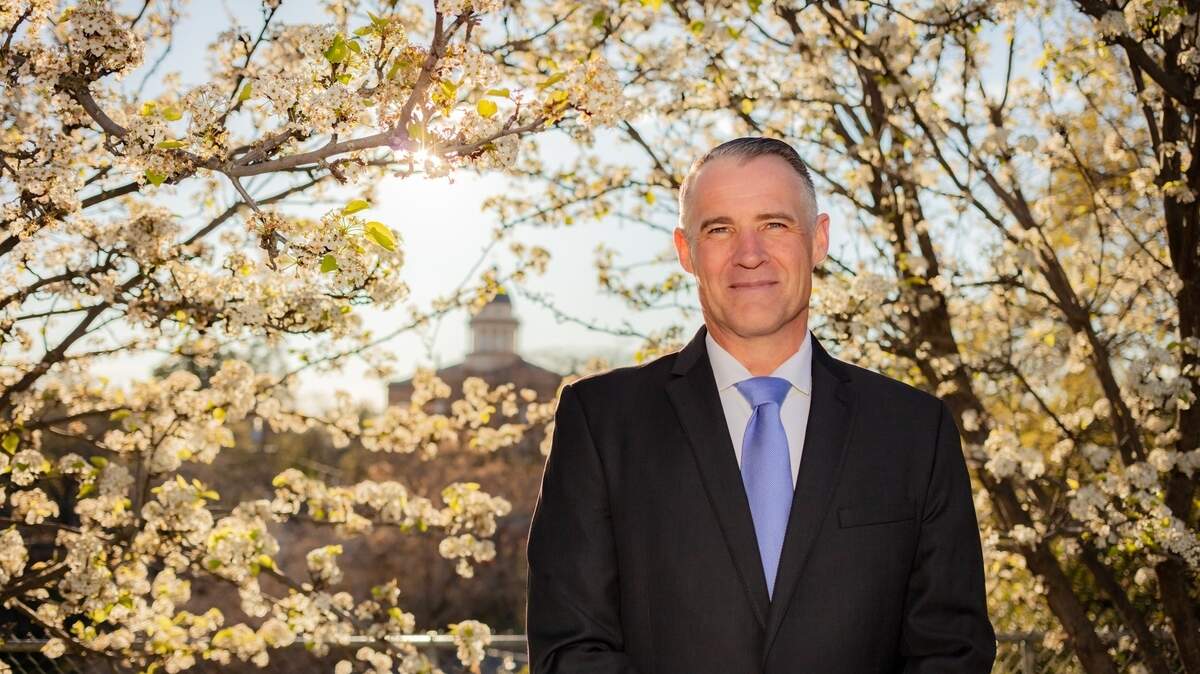
The following interview was conducted by members of The Sacramento Bee Editorial Board and Sgt. Brandon Bean, a candidate for Placer County Sheriff. It has been edited for length and clarity.
The Sacramento Bee: Can you introduce yourself and tell us why you’re running for Placer County sheriff?
Bean: I am one of three brothers who have served the public in many different facets throughout our lives. My older brother was Sacramento police officer Bill Bean, Jr. who was tragically killed in 1999. And it really made me question what I was doing to help mankind. What can I do to help protect our citizens? So in 1999 I went into the academy and, at the time, my wife and I had been married 27 years. She really questioned me and I had to make sure that was the calling where God wanted me to go. I went into the academy and graduated No. 1 in just about everything you can and got a job at the Roseville Police Department back in 2000. During going to the academy, we had our second son and it was a tremendous amount of work. But I really enjoyed the work. So I went to the Roseville Police Department in 2000 and worked for them for 14 years and in those 14 years I did just about everything you can do in patrol, detective, I was in undercover narcotics for five years with the Placer County Special Investigations Unit. I really admired the teamwork we all pitched in to make a difference to keep drugs outside of our county. When I was working at Roseville, I started to notice somewhat of a decline in the leadership and the morale at the agency took a sharp downward turn. I wanted to be led and work where I felt valued. I made the jump in 2013 to go to the Placer County Sheriff’s Office and worked for Sheriff Ed Bonner who I absolutely love, a great leader. For the years I was working underneath him, I really enjoyed my job. I was a patrol deputy, a corrections deputy, a crimes against persons detective, a member of the special enforcement team. You name it, I wanted to do it. I’ve done everything except school resource officer and K-9. I was blessed enough to get a promotion and have worked as a supervisor in corrections on patrol in our courthouses. Now, I’m currently assigned as the administrative sergeant in our agency. When Sheriff Bonner left, it created somewhat of a vacuum in the leadership, and morale started to once again decline. I couldn’t understand how Placer County, with the legacy that we have in surrounding areas, could have this happen to us. I was a little dismayed and starting thinking to myself, ‘I came to Placer County to be led, and now I’m having the same thing I was facing before – a lack of morale.’ Our deputies, unfortunately, used to go out and work very hard because they didn’t want to disappoint the sheriff. Now, they’re afraid of doing their job for fact of either being retaliated against for doing something that’s unpopular but still right, or just a feeling that the administration doesn’t care enough about them to have their backs even when they do something right when it’s in the public eye. That’s the main thing I’m running for and how come I got over 72% of the Deputy Sheriff’s Association to endorse me over my opponent. And my opponent and I both work for the same people. His big claim is that experience matters. Well, we have seen the last five-and-a-half years of where that experience has led us, and that is why the Deputy Sheriff’s Association has endorsed me. It goes beyond that. We’ve gotten so politicized in law enforcement that now it lacks what it should, which is the strength to stand alone without political pressure. The constitution is what the sheriff bows to. The U.S. Constitution is the supreme law of the land, and that is our barometer for everything we do. Going out, doing this grassroots style, I have to knock on doors. I don’t have political money, what I do have is just about every law enforcement and fire agency in our county, with the Nevada County Sheriff’s Office, we just received that endorsement, the Sacramento Sheriff’s Deputy Association and we’re working on the El Dorado Sheriff’s Association. We have the Sierra County Deputy Sheriff’s Association. The big thing is that this isn’t about me. This is not an ego boost for Brandon Bean to be the top law enforcement officer in the county of Placer. This is for the men and women who do the job every single day. They’re the ones we should be gearing how our policies read to make the job easier for these people to go out and combat crime and take bad people to jail and off the streets. Right now, it’s backwards. It feels like we’re all working for the sheriff and the undersheriff, when it should be flipped around and upside down – the sheriff and undersheriff work for the men and women who do the job and therefore they’re working for their community. When you have bad morale, you have people who don’t want to do the job. When you have good morale, you have people who want to go out there, be engaged with their community and be able to enforce the laws as they’re written as opposed to watching the winds that favor decide their faith. I’m blessed to know that I have the support of these people, the support of my family and it was very, very important for me to get the support of the men and women who do this job.
The Sacramento Bee: For those of us who are not in Placer County, could you give us a sense of what your opponent did to lose the support of the rank and file? What caused this rift, and what do you think you did to convince them you were a better choice?
Bean: I didn’t have to convince anybody, I was the one who was getting the phone calls when Sheriff Bell announced his retirement. There wasn’t a lot of convincing they had to do to give me this A-OK, but obviously being that going through an election is such a difficult process, it took me several days of talking it over with family, doing some very hard praying about it to come to the conclusion that yes, I wanted to do that and put myself out there. The rift is between our administration and the line level and because we went to the hierarchical model where any idea that anybody has has to go through this very rigorous chain of command that at any point during that chain of command, an idea that has value, could be quashed without anybody hearing it. My opponent is, for lack of a better term, he’s not very forgiving. If you make a mistake or you do something that is not popular to him, your career ends right there – you’re done. Unfortunately, a lot of people feel that he should have more grace, allow us to be able to talk to each other inside our four walls like human beings. We haven’t seen the undersheriff in probably five-and-a-half years. He’s made one briefing in that time. And people are going, ‘Where is he? Why isn’t he working for us?’ It makes it very difficult when you’re trying to inspire people to come to work here, especially in our corrections division where we’re suffering. When I’m elected, I need to be in the trenches with those people, listening to what the problems truly are and how we can better hire the caliber of people in our jails to work for us. Unfortunately, recruiting – as much as people want to say, ‘Oh, you have to have a good advertisement, you have to have a good post route’ – it’s all about word of mouth. If somebody comes to our agency from a different agency and they do a ride along with one of our deputies, and they say, ‘Hey, tell us the truth, what’s going on here?’ And they hear, ‘Hey, you don’t want to work here, the grass isn’t greener over here.’ They don’t come, and we lose our prospective recruitment through that. It has to be based on caring about the people who are actually doing the job, and that’s where we’re divided. We don’t feel that we have value, we’ve been billed as a number and not as human beings anymore. If you work 25 years and you realize, ‘My gosh, I can be replaced any second, and everything I’ve done in the last 25 years has no value to these people, well then I can do it for $2 more somewhere else.’ And then you start losing good people who have been legacy employees and you lose all the knowledge and experience they’ve gained and given to your agency. That’s probably why we have the biggest rift right now.
The Sacramento Bee: Is it a case of a lack of confidence among the front line troops in the other candidate? Is it that simple, or is it more complex?
Bean: It is that simple but it’s more complex. My opponent came into the Deputy Sheriff’s Association interview for endorsement and basically told us that up until two weeks before then he really didn’t want the job. Him and his family were going to move to Arizona, they had already been looking at property and he was going to be retiring. And then two weeks ago he felt the fire and said he still had more in the tank. He was asked, ‘How long do you expect to be our sheriff?’ And he goes, ‘Well, if I get the engines running on all cylinders, probably two or two-and-a-half years.’ And I’m thinking to myself, ‘That’s a four-year term, how is that going to happen?’ Basically what he said is he has to build the bridges with our board of supervisors for that to happen. So in the last 42 years, this is the first election where people get to actually vote between two people. What has happened in the past is a sheriff gets re-elected, they do two, two-and-a-half years, they’re on good terms with the board of supervisors, they are the ones who choose their sheriff and give the torch to that person. That person is now the interim sheriff for two years and gets to run as the incumbent. As an incumbent, we all realize it’s a very difficult thing to overcome if you’re running from the outside.
The Sacramento Bee: Law enforcement agencies are paramilitary by nature. As an editorial board, we have to try to figure out how much of the internal strife is of public interest and which candidate would serve the public interest the best. Given the scenario you’ve laid out in terms of the internal dynamics, what would you say to the public who may not be as interested in these internal dynamics but are interested in public safety?
Bean: Look at where we are with recruitment for law enforcement. We don’t have a lot of people who want to do the job as a deputy sheriff. They just don’t. They feel like it’s too much of a risk because you could be out there doing your job and then you make a wrong choice and now you’re in prison for the rest of your life, you’ve lost your house and everything else. Retaining our employees is one of the biggest things we have to do, otherwise we lose the public safety that has made Placer County the best county to live in, in my opinion. Right now, I feel like my opponent is doing a better job of driving people away from organization than they are at keeping people at our organization. If I had to tell somebody in the public why they should vote for me, it’s because I have those relationships with the men and women who do the job, they understand that I stand for them and support them. Obviously, I’ll hold them accountable if they do anything that is illegal or immoral or unethical. At the same time, I’m also one of them. I spend my Christmases coming in to help them and work for them. That’s huge. That’s leadership. That’s leading by example, and we don’t have that anymore. We have people who tell us they are super busy in the administration yet I’m always there before them and I leave well after they’ve already gone home. It paints a very different picture on what they’re saying they’re doing and what they’re actually doing. People should know that a leader shows you what they’re going to do, and it’s so imperative to keep our county as safe as possible. We need to have somebody who’s there, leading the troops, making them feel valued. Because with bad morale comes bad decisions. One bad decision could tip a whole agency.
The Sacramento Bee: So you’re saying there’s bad morale right now?
Bean: Yes, I am.
The Sacramento Bee: How does that play out on a day-by-day basis?
Bean: If you had to sit there and get into a patrol car and realize that if you go out there and make a traffic stop and it turns ugly in any way, shape or form even though you’re doing the right thing, you don’t feel supported by your administration. You’re taking a risk. But you get paid the same if you take your car out of the station, you drive a mile down the road and you park underneath an oak tree. People don’t want to do their job, and you need leadership to make them feel valued so they understand that you are there to support them and that you actually want them to go out and work and keep the public safe. That’s the morale issue we’re having right now. It’s easy for people to go out and drive and park than say, ‘I want to be a part of this community, I want to engage the community, I want to keep the community safe.’
The Sacramento Bee: So you’re saying the department isn’t running anywhere close to peak efficiency right now because of morale?
Bean: Yes, I would definitely say that.
The Sacramento Bee: When you get into office, if you win, what’s the first thing you’re going to do?
Bean: First thing I’m going to do is get all of the administrators together, because the only working class supporting my opponent is the Law Enforcement Management Association which is made up of the lieutenants and the captains. Have a meeting, and tell them that our focus is now changing, it’s going to be on the men and women who do the job. And then I’m going to hopefully unshackle a lot of them to allow them to actually be the leaders they were promoted to be. Right now I feel like they are only, possibly, answering to one person and that’s my opponent. So any decision they want to make they have to run through my opponent before they do it. And then, on my first day off, I’m going to go in the jail and work somebody’s shift for them, because right now, on average, we hold six people over per shift mandatory, so we can continue to function as the jail is. I don’t think that’s fair to them, and a leader is going to go down there and show them, ‘Hey, I’m willing to get into the trenches with you. I don’t care if I’m the sheriff of the county, somebody needs to do something.’ That’s just a boost of morale right there. When somebody sees that you’re willing to sacrifice your time off, that you are now somebody important, it goes miles, miles. That would be the first thing I’d want to do. Then I’d start talking to the troops. Where do we need to make the improvement to get back to peak efficiency that the public expects out of the Placer County Sheriff’s Office?
The Sacramento Bee: Sergeants are critically important in all departments. They’re the lynch pin. But there is a big difference between being a sergeant and sitting in that office. What would you say to the public who may not know if you’re ready to make that gigantic leap from sergeant to the sheriff?
Bean: I have the smartest people in Placer County working for us right now. They’re the ones who are absolutely critical to the success of the agency. When people went out on COVID, the sheriff, the undersheriff, they were sequestered to their homes. They could work from home, so they stayed home. We still managed to run at peak efficiency without them being there. That’s because the men and women of our organization are consummate professionals. This position I’m going to be elected to is the top leadership position of our organization and of the county. I can prove, time and time again, that I’m the better leader than my opponent.
The Sacramento Bee: You are currently involved in a lawsuit filed by former Sheriff’s Sgt. Megan Yaws in which you are accused of using sexually charged language against her while processing paperwork related to an on-the-job injury she experienced. She has also accused you of sexual harassment, alleging you said “I’m going to rape you” and other comments I can’t repeat in a family newspaper. These are comments that, Yaws said, occurred at least once per week at the end of staff meetings. Can you respond to these allegations?
Bean: I’m aware of Ms. Yaws’ allegations. She was an employee who was, unfortunately, arrested and then fired from our organization and did not bring up any of these claims while she was employed at our agency. The only time these claims came to light was when she decided she was going to sue our organization. Although there is information out there, I have been told by the information that probably put the information out there that I am forbidden to talk about it since it’s ongoing litigation. I have been told, and I found out in your newspaper, that hopefully we’re going to be going to court in May. I’m really hoping that happens so that your readers and the public understand that what’s being put out there is completely out of context and I’m hoping for the chance to prove that in a court of law so that I can be transparent with you and the readers. I want to tell you everything, but I’ve been ordered not to.
The Sacramento Bee: You would not be precluded from saying that you deny the allegations. Can you say that?
Bean: I can say that I deny a lot of that allegation, yes.
The Sacramento Bee: Can you be more specific?
Bean: I think if your readers are as astute as they are and they do their investigation and they pull the papers they will get the full story. Unfortunately, like I said, I am absolutely forbidden to talk about it because I could potentially get wrapped up in insubordination and possibly lose my job. I have to obey the law just as I have to ask other people to obey the law. I’m told that I’m not allowed to talk about it, I can’t talk about, I want to talk about it and hopefully once the case is over you guys will have me back or at least want to talk to me about it and I’ll be as transparent as you want. I hope you understand that.
The Sacramento Bee: You have been endorsed by former Arizona Sheriff Richard Mack, an endorsement you proudly display on your campaign website. Mack was a longtime board member of the far-right militia group the Oath Keepers. He is also the founder of the Constitutional Sheriffs and Peace Officers Association and established the County Sheriff Project movement, both of which reaffirm what they claim is the constitutional power to refuse to enforce federal laws. Do you support these groups and their extremist ideologies?
Bean: Who I support is Sheriff Mack and I support the Constitution of the United States as being the supreme law that our sheriffs are beholden to. That? Yes. Extremist groups? No.
The Sacramento Bee: There has been a rise in extremist ideologies in Placer County. As sheriff, would you address that in any way?
Bean: I still think that everybody is entitled to their First Amendment rights, as long as its a peaceful gathering of people who are sharing ideas and it doesn’t obviously threaten the safety of our public, then I’m going to enforce the First Amendment and make sure they have the right to speak. That doesn’t mean I need to support it. Does that make sense?
The Sacramento Bee: Absolutely. Does that mean you would also support rallies on the other side of the spectrum as well? Say if Black Lives Matter showed up and protested outside the Galleria?
Bean: Absolutely. As long as people are peacefully gathering to share their ideas and opinions then we should honor that. Men and women have died for that right. Who would I be to preclude certain groups from exercising that First Amendment right?
The Sacramento Bee: What are your thoughts on Gov. Gavin Newsom’s decision to release certain California inmates during the height of the COVID pandemic?
Bean: I’m very passionate about speaking out against any of that. There are just so many people we’ve allowed back onto the street who have committed heinous crimes under the guise of COVID, prison overpopulation, work credits – you name it. They’re being released and they’re causing more harm. Unfortunately, the only time we notice that is when people die. And we’re so reactive to things we can predict. If we can predict it we can prevent it. We know that this experiment to release these prisoners because you think it’s going to save them from COVID, we could have all seen that what comes from that is an increase in violence and an increase in crime. We need to think about better ways of doing what we’re trying to do.
The Sacramento Bee: Do you have any suggestions on what would have been a better way?
Bean: I think they should have kept them there. They’re already exposed to the people that are in there. How is releasing them now going to prevent them from getting COVID? If you don’t want COVID, don’t get arrested because you’re going to be put into jail or prison and you’re going to be around people a lot. I wish people would understand that we have these criminals who come out under a COVID knee-jerk reaction when we don’t even have all the facts yet. We have to think: Public safety first and then we can find a way to work together to find a solution to the problem. Right now, we just do things without coming together on both sides and sitting down and saying, ‘How can we do this safely?’
The Sacramento Bee: Your endorsements are heavy on law enforcement. What about among the Placer County Board of Supervisors or other non-law enforcement leaders in the county?
Bean: When I first started, I really looked to the men and women who did the job for their endorsement first. By the time I secured the Deputy Sheriff’s Association – which was by far the greatest endorsement next to the Placer Public Employee Organization’s endorsement – my opponent already had all of the politicians on his side. That didn’t bother me. I don’t think a politician should be the lead law enforcement officer for the county, I think that sends a mixed message.
The Sacramento Bee: Last year, Roseville waitress Vita Joga was shot and killed in broad daylight at her place of work by her former fiance. According to the Education Fund to Stop Gun Violence, over half of all intimate partner homicides are committed with guns, and a woman is five times more likely to be murdered when her abuser has access to a gun. How would you, as sheriff, get guns out of the hands of domestic abusers? And what else can be done to curb domestic violence in our community?
Bean: One of the things we have at our disposal is when we respond to a domestic violence incident, we are able to seize those weapons. There’s a form we can fill out and a judge will sign removing the weapons from that situation. Unfortunately, when people who have the intent to murder or kill somebody, they’ll find whatever they need to accomplish that goal, and it’s not necessarily the law-abiding citizen who has a gun and decides one day they’re going to shoot somebody. It usually ends up over a span of time. To curb domestic violence in general, it needs to be education and it needs to come from when we, as law enforcement, are presented with these opportunities to talk to the victims who have been abused, it really matters that we show the compassion and care that you have to have for these people so that they understand that there is a place they can go that is safe. So we can find them some alternative living arrangements. We can toughen our laws on domestic violence, especially domestic abusers who might only go in on misdemeanors, and track that and have them serve longer sentences. It really comes down to the compassion we provide the victims when we get there, and that’s such a huge component. Being a crime against victims person, I dealt with a lot of that. I had to sit down and take the time – because it takes time – to really care about somebody. Once they feel like you care about them, you can guide them to the right information and they’ll want to respond to that.
The Sacramento Bee: Is there anything you would do as sheriff to seize more illegal weapons off the streets?
Bean: Absolutely. Our deputies do a great job of going out there and trying to find guns at every chance we get. The sentences, for somebody who has an illegal firearm or a stolen firearm, they’re not punitive enough to make it so that people don’t want to get caught with a gun. They know it’s a misdemeanor and they’ll probably go to jail, get booked and be out the next day. That’s a travesty, and we need to tighten those gun laws that are punitive to the people that are using stolen guns, using guns that aren’t registered, that are on probation or parole and in possession of these guns. Because the law-abiding citizens aren’t the ones who are committing these crimes, the law-abiding citizens are filling out their concealed weapons permits, we know where they live, we know their history. That’s the difference.