
Californians face annual trauma with wildfires. Why don’t we talk about our eco-anxieties?
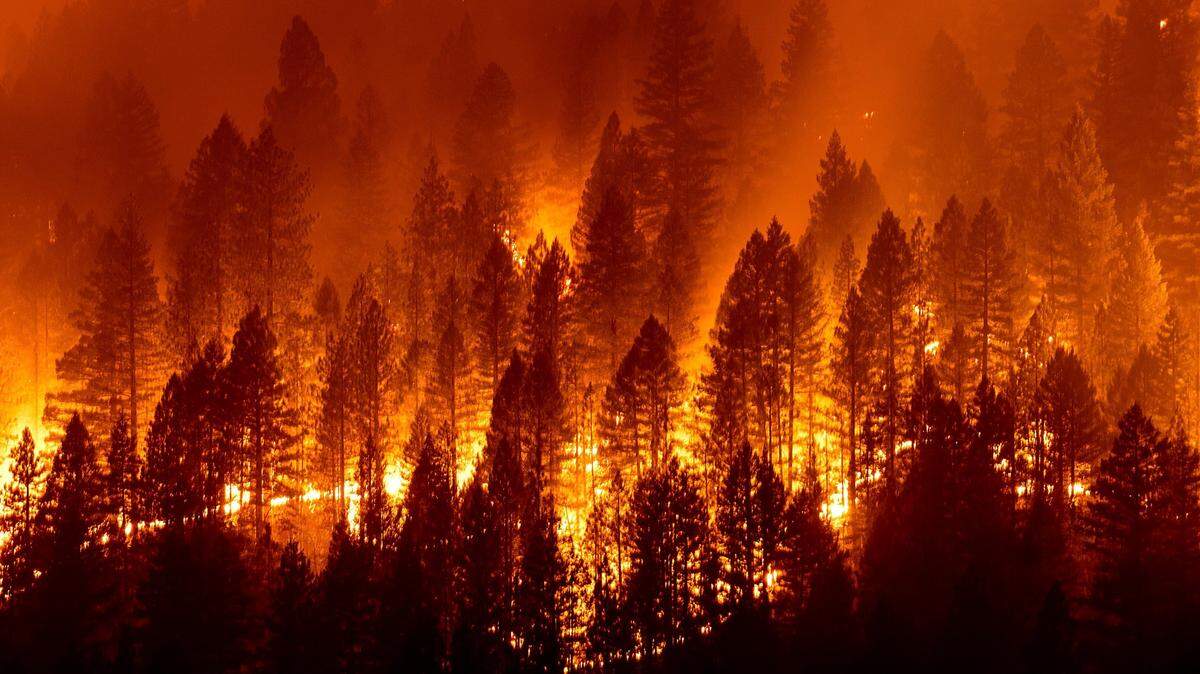
Ever since the pivotal 2019 California wildfire season, when I awoke more fully into the reality of the climate crisis, I’ve often felt alone. This is odd, considering I live in a community surrounded by family and friends and many in my circle work directly on climate issues. But when it comes to talking about my raw, undeniable fears and concerns as a Californian facing more wildfires each year, there has been a well of near silence.
As a psychotherapist, I’m particularly curious about how other people experience their own vulnerabilities about wildfires, and how this influences choices and behaviors. In talking to other people — parents, therapists, neighbors, friends and clients — I’m struck by how much Californians don’t want to talk about wildfires, even as we anticipate them every day from May to November.
The Yale Program on Climate Change Communication identified “Six Americas” to capture the range of national responses to the climate crisis. Here on the state-level, I often feel like I’m living in three very distinct Californias.
The first California I see is one of reflexive pragmatism; folks who adopt an attitude of “grin and bear it” each wildfire season, who go through the motions of readying supplies, monitoring news and data maps and feeling casually confident they’d know what to do if a fire loomed nearby.
As soon as wildfires fade in late November and the holidays bring welcome distraction, though, the topic is often shelved. Little — if any — talk is initiated during what has become our state’s shrinking “off-season.”
The second California, the one which I find myself identifying with, involves a fairly consistent waxing and waning of anxiety and dread. Like the first group, we do all the right things, but with an added layer — after another dry winter this year and the inevitable creep toward hotter, drier summer months — of gearing up, mentally and physically, primed for a large dollop of eco-anxiety.
The dawning of wildflowers and birdsong is now paired with dread of what’s to come. In May, we welcome that automated call by the local emergency evacuation system, which simultaneously soothes nerves and also ratchets up the angst.
Since becoming a mother in 2014, my feelings of vulnerability have increased, as protective mode permanently set in. Each year, wildfire season amplifies this for me all over again. Climate psychology experts concur that experiencing “eco-anxiety” is a normal, adaptive survival response to the climate crisis and should not be pathologized. That means, I suppose, that the second California is supposed to be the majority, but still a relatively silent one.
What does that say about the first California — those who seem to be able to ignore wildfires unless they are threatening their own neighborhood?
Perhaps I shouldn’t be so surprised by how much is left unsaid. There are countless reasons why emotions stay buried in the subconscious. Grappling with existential threats can be exhausting and painful. And it also requires time, which is a luxury for overworked Americans. Amid other stressors — lack of safety, illness, financial insecurity and grief — climate concerns have little room to surface. But let’s not confuse emotional suppression for resilience.
Over the 18 years I’ve lived in California, I’ve observed both toughness and strong will in the California mindset. It’s evident in the people born here (Jack London, Julia Child, Kamala Harris) as well as those who’ve come to call California “home.” The state is a beacon for dreamers (Gold Rush ‘49ers, tech startups, Hollywood) and pivotal social movements (suffragettes, 1960s anti-war protesters, LGBTQ+ rights). But there is a shadow to this grandiosity in Californian culture of apathy, cutthroat individualism, greed, oppression and lack of humility.
While it’s perfectly natural for defense mechanisms to kick in during wildfires, on a deeper level there may be a cultural blind-spot: A sense of immunity from modern-day catastrophe.
The quietest of all is the third California. These are people and communities who’ve survived the unspeakable from a wildfire: death, injury, emotional suffering, multiple evacuations, relocation, loss of possessions and livelihoods. In a geographical sense, the aftermath of wildfires is an insular experience; long after the smoke has dissipated, local communities endure harsh environmental impacts and gradually begin a long, uncertain road to recovery infused with the after-effects of trauma that most living in the rest of our huge state are spared.
Wildfire-affected communities are regionally disparate — largely out of sight and earshot to those in unaffected areas, contributing to a notable lack of integration in the collective psyche. Attempting to heal trauma and secure affordable, insured housing while enduring wildfires all over again each year is an overwhelming challenge.
By now, I know friends, acquaintances and clients who have chosen to move, citing wildfires as their primary driver. I wonder if and when my own family will leave. As breathtaking and dynamic as California can be, it seems to me that great tolerance is required just to be here anymore. Perhaps fierce roots, loyalty, community and sense of place maintain the status quo.
This year or next year, or the one after that, when my brain repeatedly signals a flight response instinct, do I pick up my family and move to greater safety? How long can I reasonably silence my internal alarm, which is really a basic survival instinct? And at what cost? Although I’m not sure of these answers, now that I have found people who feel as I do, I can talk about all of this.
We all need to talk about all of this. If more people are able and willing to talk about wildfires and their impacts — emotionally, spiritually, through an environmental justice lens — a fourth California may emerge, one of empathy, solidarity and radical climate engagement.