
Supreme Court opens door for dark money by striking down California campaign disclosure law
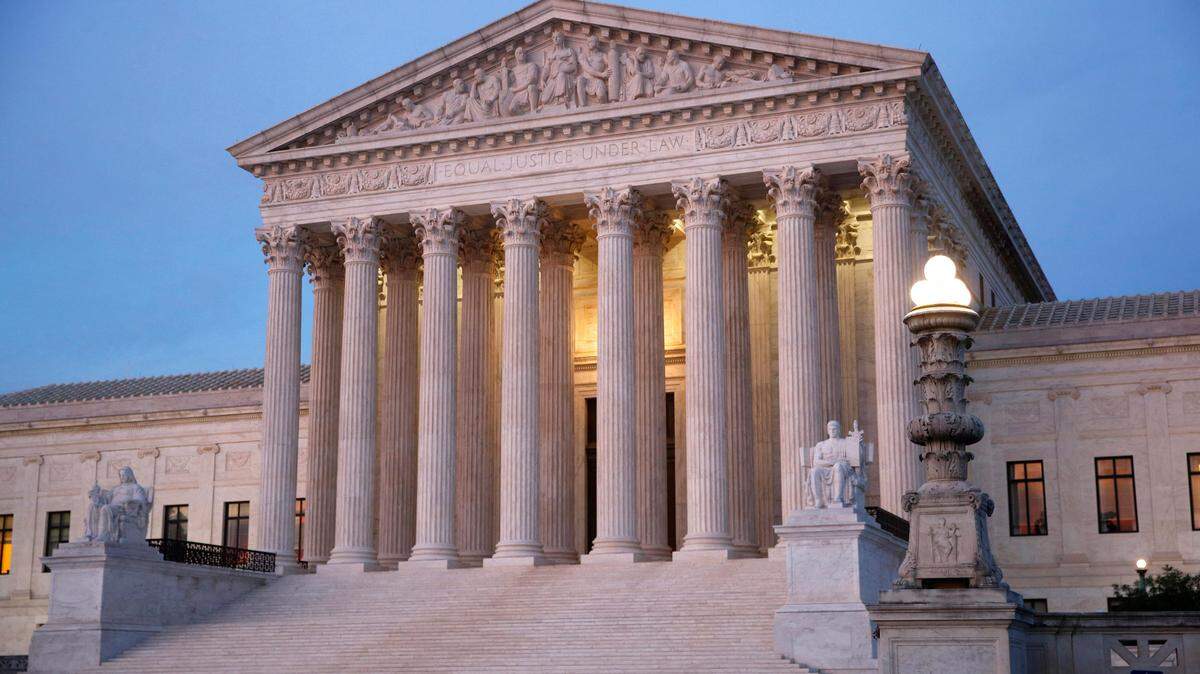
In a ruling that received relatively little attention, the Supreme Court put countless laws requiring disclosures of contributions and political spending in serious jeopardy. Such disclosures have long been regarded as crucial to prevent corruption and the appearance of corruption.
The law requires that political candidates and parties reveal the sources of their funds. While the Supreme Court has invalidated restrictions on campaign spending, such as in Citizens United v. Federal Election Commission, it has also exalted disclosure as the solution. But on July 1, in Americans for Prosperity Foundation v. Bonta, the court opened the door to constitutional challenges to all disclosure laws.
Non-profit organizations and charities must file Form 990, requiring disclosure of the names and addresses of donors who have contributed more than $5,000 in a particular tax year, with the federal government.
The California Attorney General’s Office, responsible for enforcing state laws regulating charitable fundraising, requires that charities, in renewing their state registration, file copies of Form 990.
Two conservative organizations — Americans for Prosperity Foundation and the Thomas More Society — brought a challenge to the California requirement based on the First Amendment. The issue before the Supreme Court was whether the state’s requirement violated freedom of association because of the possible chilling effect of disclosure.
To clarify, California simply required that it receive a form already given to the federal government. The state, like the federal government, kept Form 990 information confidential.
In a 6-3 decision, split along ideological lines, the Supreme Court declared the California law unconstitutional. Chief Justice Roberts wrote for the court and was joined by Justices Thomas, Alito, Gorsuch, Kavanaugh and Barrett.
Quoting the federal district court, Roberts said there was no evidence that the disclosures “did anything to advance the Attorney General’s investigative, regulatory or enforcement efforts.”
The court expressed great concern that association would be chilled if donors’ identities are disclosed, dismissing as irrelevant the fact that California keeps this information secret and that it’s the same information already given to the federal government.
Justice Sotomayor, in a dissent joined by Justices Breyer and Kagan, wrote that the court was abandoning its prior decisions which required some proof that association was actually chilled.
“Although this Court is protective of First Amendment rights, it typically requires that plaintiffs demonstrate an actual First Amendment burden before demanding that a law be narrowly tailored to the government’s interests, never mind striking the law down in its entirety,” Sotomayor wrote.
Sotomayor expressed great concern that this will put many other disclosure requirements in jeopardy. She’s right. The court said challengers don’t need to show they are actually burdened by a disclosure requirement — the mere possibility that disclosure will chill donations and association is sufficient.
Without requiring proof of actual harm from a disclosure requirement, it would appear that any such requirement is constitutionally vulnerable. Indeed, this almost surely means that it’s unconstitutional for the federal government to require that non-profit organizations complete Form 990 and reveal donors.
The court has opened the door to a constitutional challenge to every campaign disclosure law.
Any candidate or political party can claim that having to reveal its donors will chill association, and the court has been clear that no proof of actual harm is required. Knowing who spent and contributed money to a candidate’s campaign can be crucial in preventing corruption and deciding who to vote for. The law should be changed to eliminate so-called dark money, but the Supreme Court has gone in exactly the opposite direction.
The late Justice Louis Brandeis spoke of the need for transparency, saying sunlight is the best disinfectant. The Supreme Court’s recent decision casts an ominous shadow over disclosure laws.