
California must protect children from wildfire smoke. Here’s a cheap, effective solution
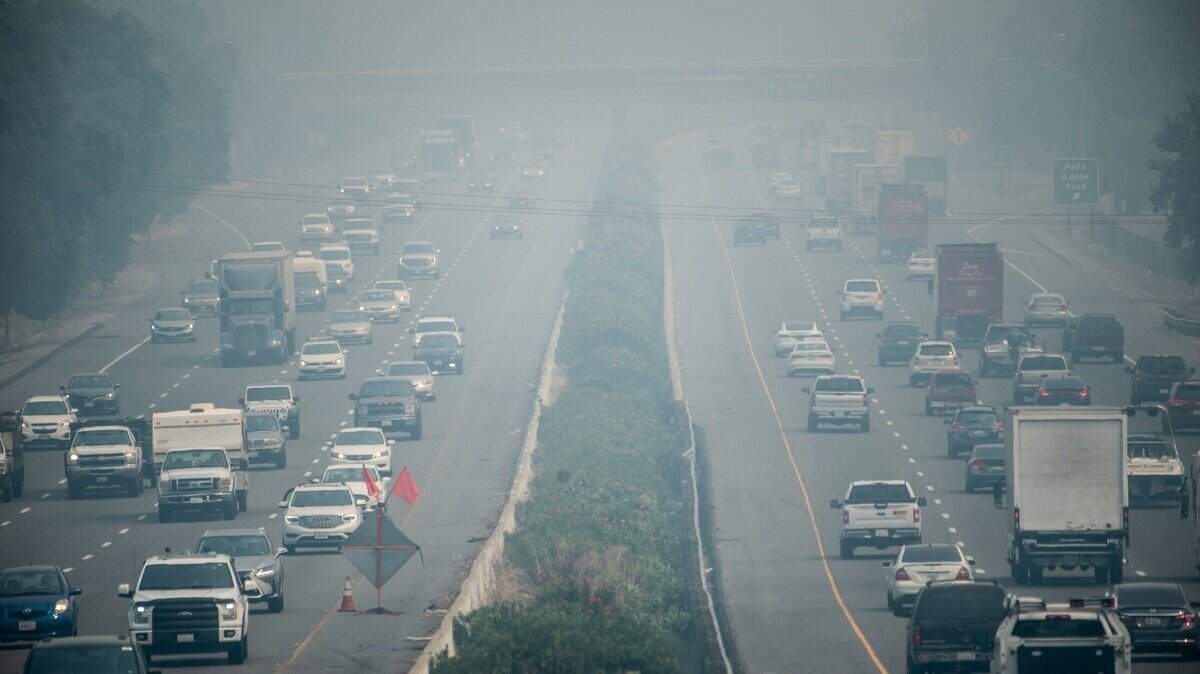
The start of the new school year unfortunately coincides with what Californians are coming to recognize as “smoke season.” As the health hazards of wildfire smoke become more evident and widespread, there’s a simple step we should take to begin protecting some of our most vulnerable as they head to class.
We need to put air pollution monitors inside a few classrooms in every school in California. This is the first step toward protecting our kids from wildfire smoke.
We know that intense smoke causes severe health problems, especially for kids. The consequences are worse for kids who live in areas of our state that still suffer from poor air quality in general, especially the San Joaquin Valley and Southern California.
The harm is also greater for kids who belong to low-income families, live in low-quality housing or suffer other environmental injustices. The climate-change-fueled epidemic of wildfire smoke compounds the other health hazards these children face.
The truth is that we don’t know the extent of the pollution in California classrooms. Our almost 11,000 public schools vary enormously in age, construction and ventilation. Some need to leave the windows open to keep classroom temperatures bearable. Others can tightly seal their classrooms and run well-maintained air conditioners with high-quality particle filters.
It should be an urgent priority for the state to identify which schools have a problem and then make proper investments to ensure clean air for our children.
Because of the advent of cheap, small indoor air pollution sensors, it’s now possible to measure the air in every school. We estimate that such a program could be implemented statewide for as little as $8.8 million — and that it could be done this fire season. Monitors could be purchased for as little as $200 each and hosted on school-only cloud platforms for statewide monitoring.
It would take years to retrofit thousands of school ventilation systems to protect kids from smoke. Monitoring will help determine which schools have to be targeted first. Installing one outdoor and three indoor air monitors at every public school in California would identify the most problematic locations, allow for a statewide planning effort and focus resources cost-effectively.
We owe it to our kids to protect them from the consequences of climate change. Their lungs shouldn’t have to endure lifelong damage from annual fires. A focused and efficient effort to reduce exposure needs to begin now.
This year, California taxpayers and electricity ratepayers will spend billions of dollars on wildfire prevention and many more billions on wildfire suppression. We need to address the causes of these wildfires to stem the costs and consequences.
While we do that, we must also protect our kids from their harmful effects. We can and should find the small amount of money needed to begin the process of keeping our kids safe where they learn.