
Why California had to replace Junípero Serra statue on the Capitol grounds in Sacramento
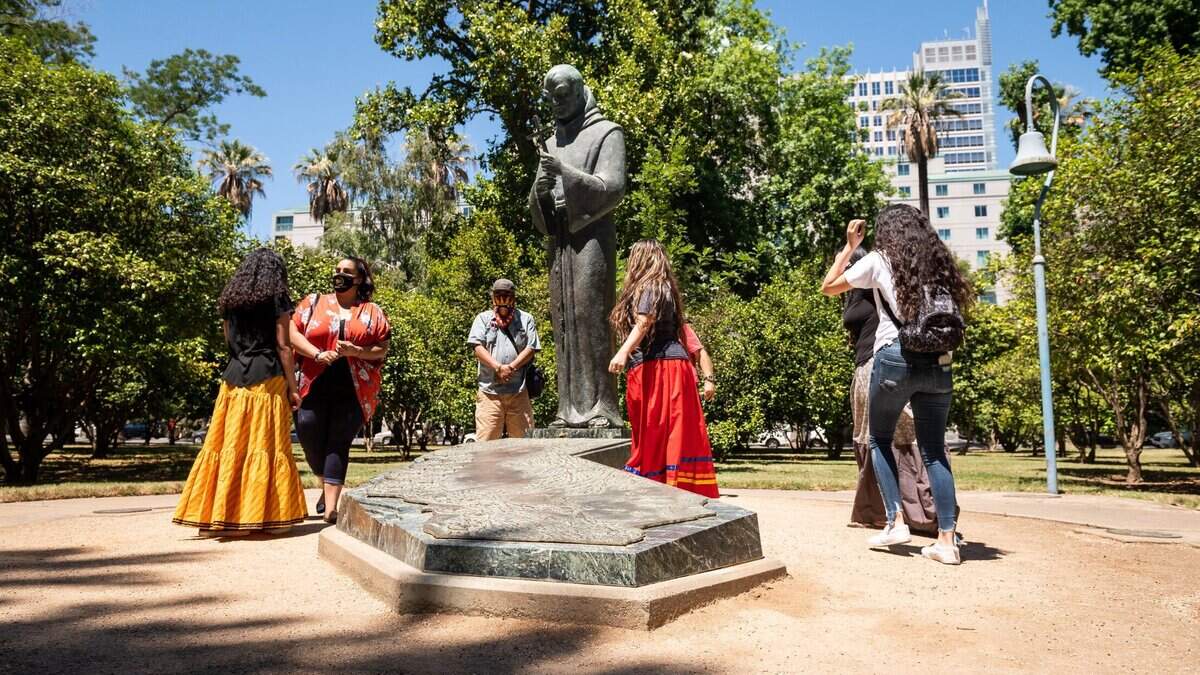
Gov. Gavin Newsom did the right thing last week when he signed Assembly Bill 338, which calls for the statue of Junípero Serra removed from the state Capitol grounds last year to be replaced by one honoring Native Americans from the Sacramento region.
The governor’s action acknowledges, at least symbolically, the terrible history of genocide and oppression endured by California’s indigenous peoples, and furthers awareness of the continuing inequities we face. Now it’s time to accept the facts about Serra and focus on the important work of improving the lives of native Californians.
Much has been written about Serra, an 18th-century Franciscan priest, especially since his controversial canonization by Pope Francis in 2015. Serra’s supporters defend him as a complex and misunderstood leader who dedicated himself to protecting Native Americans.
They are wrong.
Serra may have had good intentions, but judging by his actions, he was not a good man. He presided over a California mission system that resulted in disease, servitude and death.
Before the Spanish arrived, the Indigenous population of what is now California numbered as high as 300,000. During the mission period of the late 18th and early 19th centuries, tens of thousands of Native Americans died. By the end of the Gold Rush era, 80% of the native population in California had perished.
Much of the truth about Serra and his missions has been excluded from the revisionist history taught to generations of California schoolchildren and perpetuated by Serra’s supporters.
One of Serra’s strongest advocates is Archbishop Salvatore J. Cordileone of San Francisco, who, alongside Archbishop José H. Gomez of San Diego, recently mounted a vociferous defense of the Franciscan priest in an essay in the Wall Street Journal. They argued that history is complicated and that Serra was a “complex character.” They argued that “cultural misunderstandings” explain the cruel treatment of Indigenous Californians.
Cordileone has asserted in public statements that Serra had little control over the diseases that ravaged the native population. But why was nothing done to mitigate the squalid living conditions that bred disease? What about syphilis from rapes committed by Spanish soldiers?
That the slaughter of Native Americans worsened during the Gold Rush years hardly amounts to a defense of Serra’s cruel project.
The enactment of AB 338 should put an end to the bishops’ absurd proposal that statues of Serra and a Native American stand side by side on the Capitol grounds. This is an affront to our people.
I am a descendant of Miwok and Nisenan tribe members, who once flourished in the Sacramento Valley, on sacred ground where the Capitol now stands. Serra’s statue served as a constant reminder of the cruelty and oppression our ancestors suffered as they were pushed to the edge of extinction.
Serra’s legacy of repression continues today. Native peoples face a far greater than average risk of infection with the coronavirus, just as they suffer disproportionately from obesity, heart disease and diabetes. They account for one-third of all drug overdose deaths in the state. Only about two-thirds of Native American students graduate from high school, compared with more than 80% of all California students.
We applaud Newsom for signing legislation to ensure that the state’s Capitol remains a bastion of democratic values, hopes and aspirations, and that a symbol of Father Serra’s dark legacy is removed from the grounds once and for all. Let’s focus on improving lives — through education, housing, jobs and health care — for future generations of native peoples.