
Kaiser would hurt California workers and patients by creating second-class employees
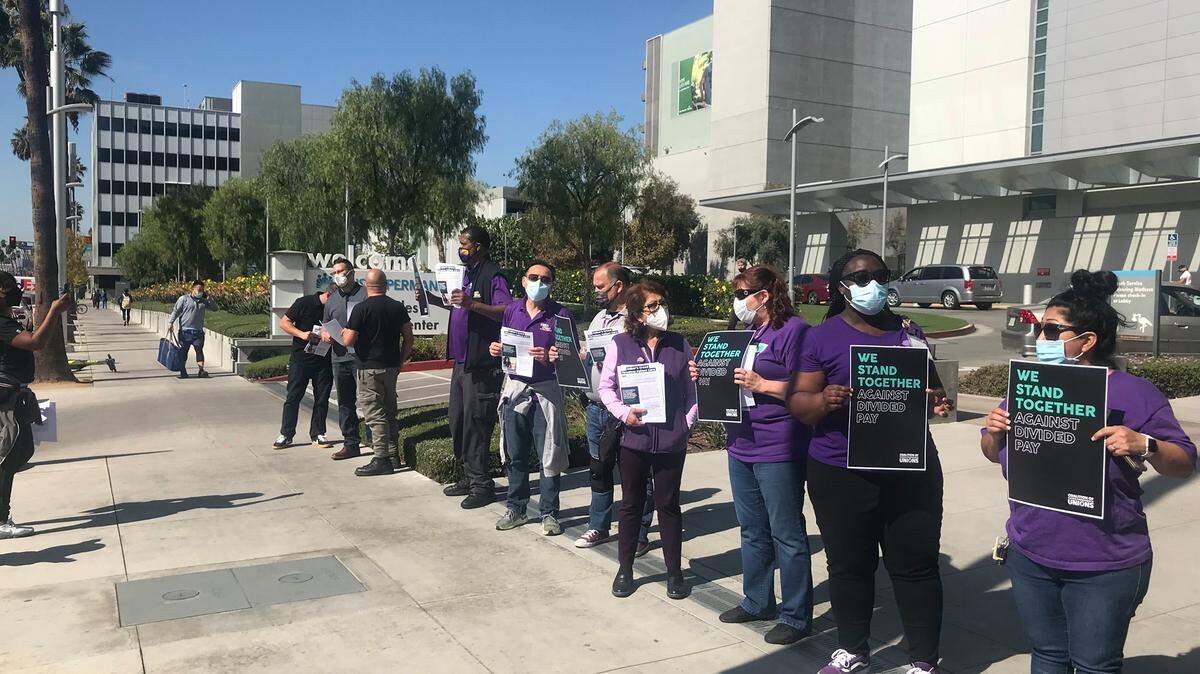
Heroism comes in many forms, and this pandemic has underscored the brave efforts of our nurses and health care providers as they battle to save lives and care for those in need.
That’s why I’m concerned about the impact of Kaiser Permanente’s proposed two-tier pay structure. It would hurt both workers and patients and result in a health care system that does not reflect our values.
A two-tier system means one group of workers receives lower wages and/or benefits than another. The employer reduces overall wage costs by paying new employees less than incumbent workers. Companies have used two-tier systems to cut costs in industries that are labor-intensive.
Introduced in the 1970s, this unequal system has been a favorite of corporate executives, particularly in the airline, retail and automotive sectors. It became more popular in the ’80s when employers threatened to close down, file for bankruptcy or relocate work. Claiming they were facing financial peril, companies negotiated with labor groups to implement two-tier systems, saying they would lower labor costs and increase profit to ensure solvency.
Kaiser is hardly a company in financial peril. In fact, it has a staggering $44.5 billion dollars in reserve. Despite being caught in the grips of a pandemic, Kaiser made $2.2 billion in sheer profit in 2020 even after returning more than $500 million in federal funds. Under the system proposed by Kaiser’s executives, new hires would start at up to 26% less than current nurses doing the same job. This would immediately create a new class of lower-paid health care professionals.
Kaiser’s new hires would be working alongside others doing the same work — with the same training and likely the same education — while earning a lot less money. This two-tier system would disproportionately affect women, who make up 80% of Kaiser’s workforce, and workers of color, who make up 70%.
Women already earn 87 cents on the dollar compared with their white, male counterparts in the state. Women of color in particular suffer from a greater wage gap across the nation, with Latinas earning on average 42 cents for every dollar paid to their male peers. A lower pay scale and scaled-back benefits for new hires would further perpetuate existing inequities.
Nurses are already struggling to keep up as the demands of their work increase. According to a report on two-tier wage systems in nursing, employees subjected to them experienced a decrease in job satisfaction and morale in both tiers. The system causes new employees to resent being paid less for the same tasks as veteran workers, and veteran workers are irritated by constant turnover and lack of training among new employees.
Companies should be focusing on bringing employees together rather than driving them apart by creating tiers, especially at a time when divisions in society are widening.
Two-tier pay will affect not only new hires but also health care workers who quit temporarily to care for their families or attain more education. Health care workers with a break in their service may be forced into the lower tier, creating additional barriers and pay inequities among women.
Another byproduct of two-tier is increased turnover. A recent review of two-tier plans found that turnover soared from 29% to 52% among new employees and from 19% to 32% overall. And according to a 2019 report by Nursing Solutions, turnover costs hospitals an average of $4.4 million to $6.9 million a year.
Some health systems have refused to implement two-tier systems because of the unforeseen costs experienced in other sectors. They have instead decided to attack increasing burnout rates by increasing the pay and benefits of nurses. For instance, Northwell Health, located in a high-cost New York market in which labor costs have reached 63% of total operating expenses, implemented a plan to retain nurses by providing educational opportunities. In a few years, turnover dropped 9%, and tenure now averages over nine years. The system is also reporting higher profit margins.
This shouldn’t come as a surprise. It’s been shown that turnover is lower and job satisfaction is higher at unionized hospitals because they treat workers better.
Attempts to weaken health care unions through two-tier systems and other means also hurt patient care.
A two-tier wage system is not consistent with Kaiser’s tremendous profits. While it may help the company’s balance sheet in the short term, it will cost far more in lost lives and livelihoods. It certainly isn’t how we should treat our heroic nurses and health care workers.