Three reasons the deal ending the UC strike won’t end the struggle for many workers | Opinion
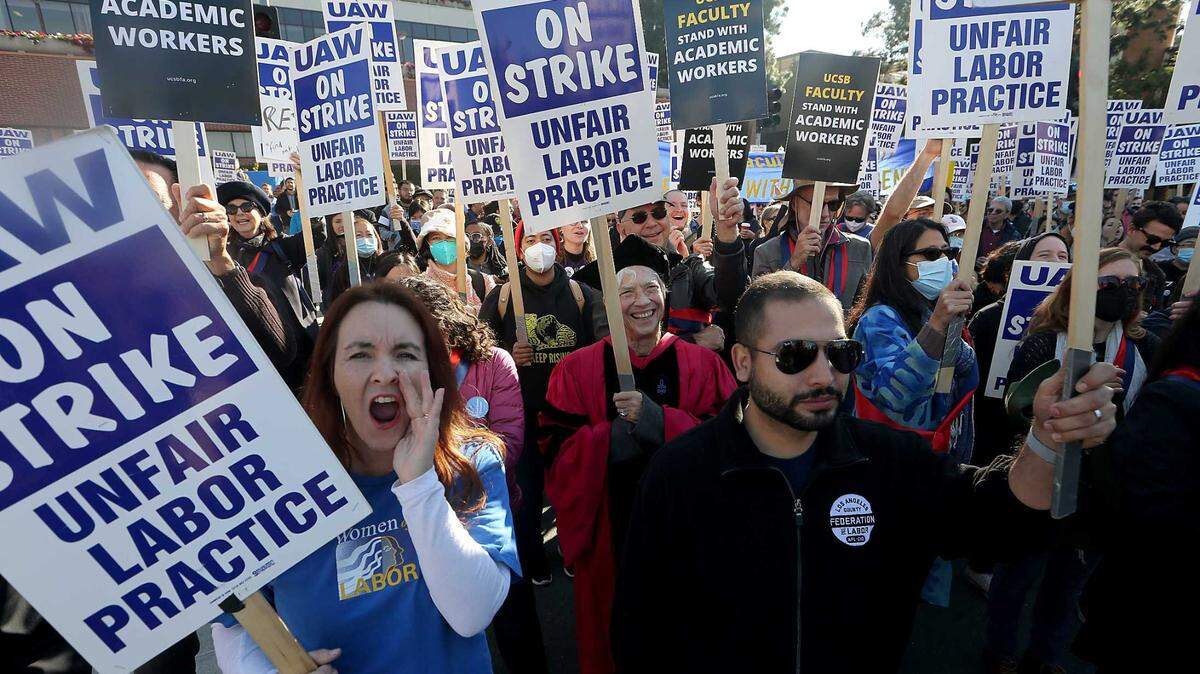
The recent labor agreement between the University of California system and United Auto Workers, the union representing graduate student employees, was hailed by some as a holiday miracle. The contract was ratified by members two days before Christmas, whereupon union and UC leaders told us the strike was over: Time to go back to work.
“I’m so excited for it,” one UC Davis doctoral candidate exclaimed. Another Davis Ph.D. candidate and bargaining team member described the new contract as “historic” and “transformative.” But this contract may be historic for all the wrong reasons.
The compensation increases in the agreement are insufficient for three reasons: our salaries are puny; the raises are largely delayed for over a year; and inflation.
Starting with the first, our salaries are so low, and the rent is so high. Most grad students I know make around $25,000 a year. I make around $27,000, 80% of which I pay in rent. Many of my colleagues in UC Davis’ history, English, physics and anthropology departments make similar salaries and pay similar shares to their landlords.
In a tragic irony, many grad students rent from the University of California, the employer and also the landlord for thousands of underpaid grad students across the state. So some of us are effectively giving much of our income back to our employer.
After I pay the rent, I have little left. I eat a lot of peanut butter sandwiches. I love peanut butter, as my friends can attest, but I don’t love it this much.
The compensation gains won by the contract will help my financial situation, but they will not ease my overall rent burden. When you are paid peanuts, a few more peanuts only goes so far.
Other, less privileged friends of mine are sharing ramshackle apartments with several similarly rent-burdened roommates or even living on the streets of Sacramento. Almost all of us have “side hustles”: tutoring work or babysitting or barista jobs. Those with families and children find themselves in an even more precarious position.
Second, according to the terms of the contract, much of the salary increase will happen in the fall of 2024, nearly two years from now. That won’t help grad students who are struggling to pay the rent right now.
Third, we are living through a period of historic inflation. The rising cost of gas, milk and, yes, peanut butter necessitates actually historic raises.
When I came to the University of California seeking a doctorate in history, I was proud to be joining the richest and best-regarded public university system in the world. Grad students have helped UC faculty members win tens of Nobel prizes and make California’s economy one of the largest in the world, as we are often reminded. At the same time, the UC system has helped thousands of low-income and first-generation students earn college degrees and share in California’s bounty.
When I came to UC Davis, I was proud because I knew this history, and I was eager to learn from brilliant peers, teach motivated undergraduates and contribute to the research community here and across the state.
The recent agreement betrays this history and the grad students it is supposed to benefit. I hope the state and its university system will listen to the cries of its workers — not just those who are grateful for the Christmastime gifts of this contract but also those who are the most rent-burdened and the most in need.
As far as university and union leaders are concerned, the strike may have ended. But many grad students remain on strike in our hearts and in our minds until we win the compensation and the contract we deserve.