
Newsom’s China trip is an important first step in facing our global climate realities | Opinion
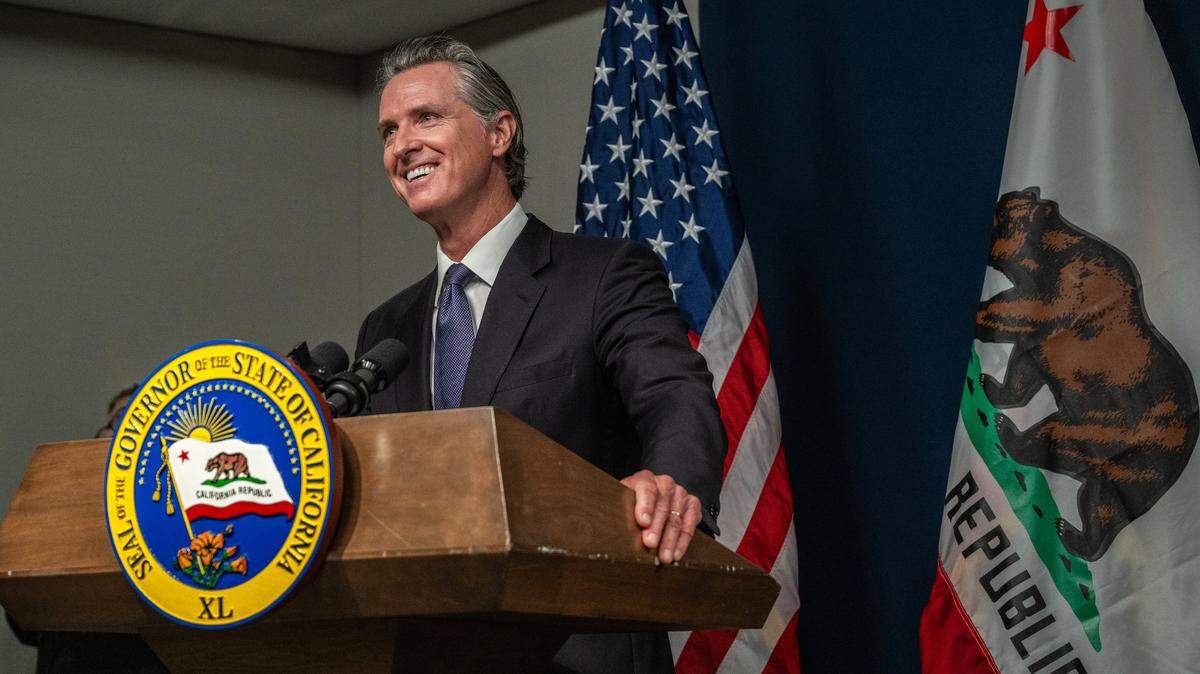
Gov. Gavin Newsom’s recent trip to China wasn’t just a success, it was a lifeline of hope for a world on the brink of abandoning climate diplomacy, as war descends and populism rises. This was a politically brave move, considering the deep distrust underlying our relationship with China. But if agreements like the Memorandum of Understanding with Shanghai result in cleaner air in the Ports of Long Beach and Los Angeles, and a shift to clean energy in maritime shipping, this will prove to have been a chance worth taking.
For that agreement to become more than words, it must be girded with data that can be trusted. Otherwise, we run the risk of engaging in performative steps that do nothing to reverse climate change while the world burns.
Legislation we co-authored and that the governor recently signed could hold the key. Thanks to the Corporate Climate Accountability Package, Senate Bills 253 and 261, the California Air Resources Board (CARB) now has the authority to review emissions data from multinational corporations that utilize China’s shipping lanes and factories as the backbone of their supply chains.
In the coming months, we will be taking a closer look at the recent agreements with China, and how our laws could motivate corporations to take more climate leadership with stable reporting systems to disclose climate emissions and risks in their supply chains.
To falsify or ignore climate is risky business for everyone. If China doubles down on coal and imported oil from Russia, Iran and Saudi Arabia, this will leave California workers vulnerable to being undercut abroad, as we hold our industries to the world highest environmental and labor standards. Our frontline communities also remain in harm’s way, as freight from China burning the dirtiest fuels on the planet continues to pollute the ports of Los Angeles, Long Beach and Oakland.
While adversaries on many other fronts — with divergent worldviews and objectives — we must find ways to meet Special Envoy on Climate Change John Kerry’s mission of “disentangling” climate from other matters. California and China are two of the world’s largest petroleum consumers and carbon emitters, but we are both also the world’s biggest electric vehicle and clean energy markets.
To make the Great Wall Climate Dialogue truly a turning point in history, we need more accurate information about how much pollution is actually being emitted from China and other jurisdictions to feed California’s economy.
SB 253 and 251 require that large, multinational corporations disclose their climate emissions and risks all the way upstream to where their supply chains originate. Whether it’s raw steel, cotton, plastic, lithium, fertilizer or other basic inputs into millions of American products, like or a pair of Nikes, an Apple Watch or jeans, the largest corporations doing business in California have the majority of their supply chain wrapped up in China.
If the state implements this legislation without delay, we could offer corporate and financial climate leaders a pathway to disclosing the kind of data required to make the Shanghai MOU solid. The agreement calls out “informational exchanges” and a “pilot project of mutual interest and benefit” to both Shanghai and California. This requires a secondary, CARB-vetted set of emissions data to corroborate whether our energy and air are really getting cleaner, or if the Chinese are merely shuffling the data to make their efforts look greener than they are.
Ignoring climate, especially in our supply chains, is risky business. American companies, investors and even our pension funds are starting to get smart and embrace the disclosure standards we just adopted to improve their bottom lines and leverage the unique competitive advantages domestically sourced supply chains can have across America. That’s a good thing for American workers, especially in the building and construction trades.
Newsom made all the right moves in China on climate change. At a time when disinformation and distrust pervade our world, we can send a global signal that California remains a beacon of innovation.