
Are mosh pits the cure to America’s male loneliness epidemic? | Opinion
America is facing a crisis of masculinity that’s playing out in devastating ways across our communities. From mass shootings and domestic violence to the epidemic of male loneliness, the data paints a stark picture: Men are increasingly dangerous to themselves and others.
But what if the solution isn’t psychotherapy and pharmaceuticals? What if it’s something far more primal, visceral — and surprisingly healing?
What if it’s mosh pits?
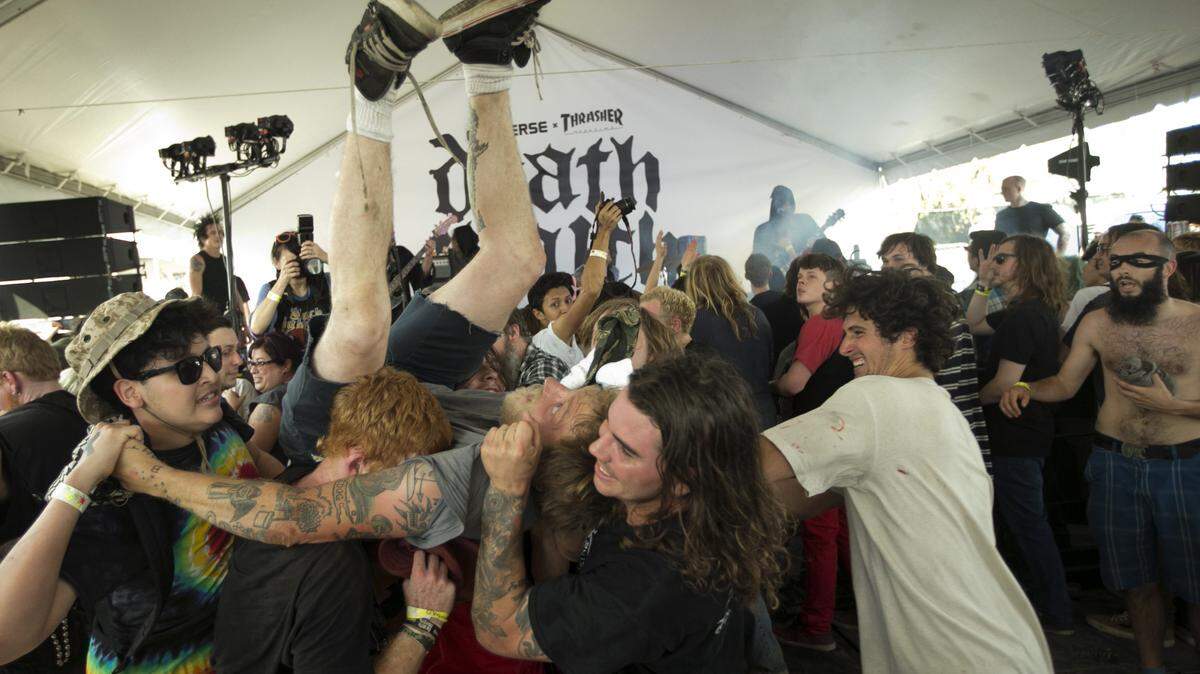
At a recent concert in Sacramento, I witnessed something remarkable. As the band, The Hives, launched into their opening riff, the floor erupted into controlled chaos. Bodies collided, sweat flew and, for a moment, I feared for my safety. But as I watched more closely, I saw something beautiful unfold.
These men who were strangers just moments before, were now engaged in an ancient ritual of connection. When someone fell, hands immediately reached down to pull them up. When the smaller guys got overwhelmed, the bigger ones created protective barriers. There were encouraging pats on the back for those who joined the circle.
There was aggression, yes, but it was channeled, consensual and strangely nurturing.
These men discovered what modern society so often strips away from them: A space to be physical, to release tension and to connect with other men without the burden of words or emotional vulnerability that many find impossible to navigate. The men were experiencing unfiltered camaraderie. Most importantly, they were keeping each other safe while honoring something deeply instinctual.
At The Hives show, anyone who crossed the line — anyone who went too hard, showed disrespect or violated the unspoken code — was immediately removed by the collective. No exceptions, no second chances.
How remarkable would it be if men held such strict, immediate expectations for their fellow men in real life when it came to the treatment of women?
The mosh pit creates accountability that our broader culture desperately needs.
The statistics on American men are alarming: Studies show that men report fewer close friendships than ever before, with many claiming they have no one to confide in during a crisis. Meanwhile, women are increasingly choosing to remain single, viewing relationships with men as economically and emotionally disadvantageous. Is it any wonder that male rage is erupting in our schools, homes and public spaces?
The mosh pit embodies qualities that allow men to be authentically masculine in healthy ways. It demands respect for others while honoring individual expression. It requires physical courage alongside emotional intelligence — you must read the room, protect the vulnerable and know when to step back. Crucially, it provides what men desperately need: a space where they can be intense, physical and emotional in the ways they know how, and without shame.
Whether on social media, in the news or even in the White House, Americans are inundated with examples of toxic masculinity. It’s easy to see why men’s natural inclinations toward physicality and intensity are pathologized or suppressed entirely.
Perhaps it’s time we start to focus on a solution: Rather than make men less masculine, let’s give them better, safer ways to express that masculinity.
Natalia Battaglia is a writer and communications consultant at Whiteboard Advisors. A proud East Sacramento resident, she enjoys tennis, live music and adventures with her two kids and their dog.