
Jane Goodall’s legacy is about animal rights — and the choices on our plates | Opinion
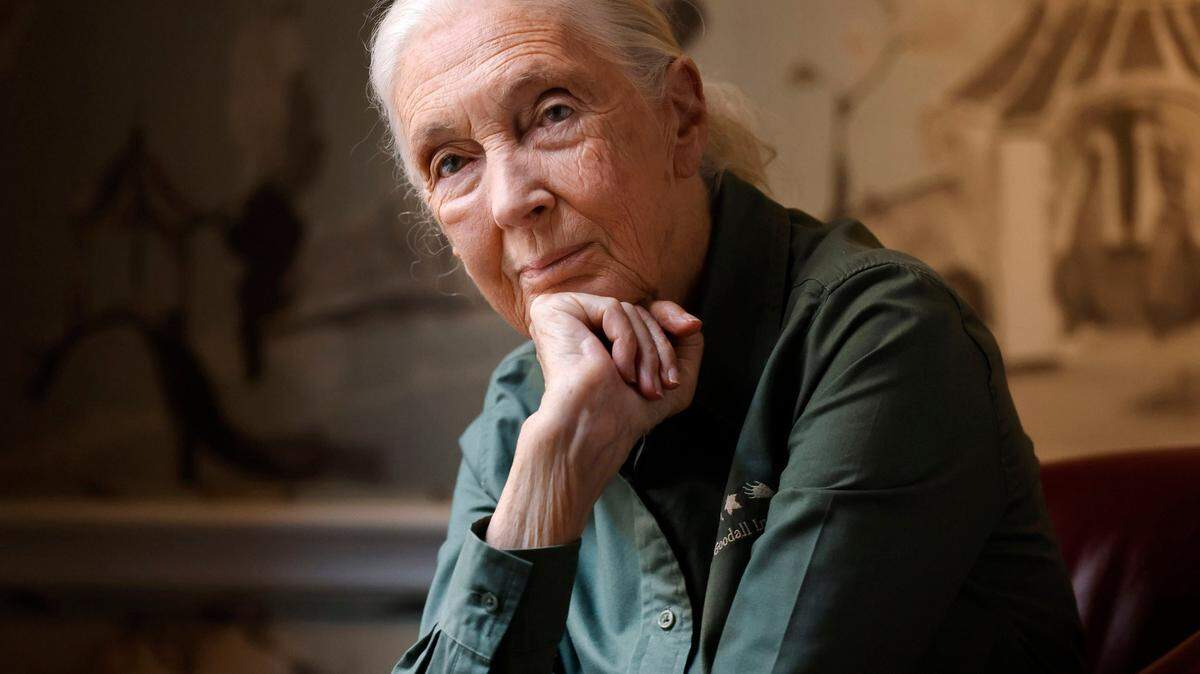
When Jane Goodall died this month at 91 years old, we lost a pioneer — and I lost a hero.
In my 20s, I devoured Goodall’s books. Her groundbreaking work in Gombe Stream National Park in Tanzania demonstrated to the world that chimpanzees use tools, form lifelong bonds, grieve and even wage war.
Goodall shattered the artificial boundary between humans and the rest of the animal kingdom. But what made Goodall special wasn’t just her science — it was her moral courage. She didn’t stop at describing what she saw; she asked us to rethink who we are in light of it.
I admired her blend of gentility and ferocity in pursuing her mission: To teach the world that animals are not “things,” but rather individuals with personalities that deserve compassion. That philosophy extended beyond the forests of Africa and into our daily lives.
Goodall loved farm animals and spoke adoringly about horses, cows, chickens and pigs. She condemned the “unspeakable cruelty suffered by animals on our factory farms,” saying that farm animals are “utterly deprived of everything that could make their lives worth living.”
She loathed factory farms, animal testing and other forms of animal exploitation. And she lived her values, adopting a plant-based diet more than 50 years ago — long before vegan became a household term.
Goodall said that after reading Australian philosopher Peter Singer’s 1975 book “Animal Liberation: A New Ethics for Our Treatment of Animals” — a seminal work in the animal rights movement — she looked down at the meat on her plate and thought, “this represents fear, pain and death.”
When Goodall spoke about hope, she never meant complacency. She meant action. Her message was that every person — through their choices — shapes the future. Her “Roots & Shoots” youth program embodied the belief that small actions, multiplied by millions, can transform the world.
But if we truly take her words seriously, then the most immediate and powerful action any of us can take is to stop supporting industries built on animal suffering.
That means reconsidering the chicken wing, the leather jacket and the animal-tested cosmetics. It means facing the moral inconsistency of loving animals while paying for their suffering and slaughter. It means honoring the empathy for animals Goodall helped awaken in us by rejecting animal abuse and exploitation.
Goodall’s legacy also intersects directly with climate change and environmental degradation. She often reminded audiences that the meat industry is one of the leading drivers of deforestation, water pollution and greenhouse gas emissions. Protecting animals, Goodall argued, isn’t just about compassion — it’s about survival.
It’s easy, in the wake of her passing, to romanticize Goodall — to share black-and-white photos of her with young chimps and to celebrate her curiosity. But doing so without confronting what she stood for is a kind of moral evasion. The best way to honor her isn’t by nostalgia, it’s by transformation.
Her death should push us to stop compartmentalizing empathy. Goodall cared for all animals, not just chimpanzees. We cannot mourn the loss of a woman who devoted her life to understanding animals as personalities while continuing to treat billions of them as commodities.
When Goodall passed away, many of us lost a hero. But that hero left us with a clear direction: Protect her legacy by making choices that reflect her values — eating plant-based foods, fighting for stronger animal protections and rejecting cruelty in all its forms.
Because that was the heart of her message: Goodall didn’t just study animals, she saw them as individuals worthy of respect. And she wanted us to treat them that way.
Michael Freeman is a volunteer organizer with Mercy For Animals and serves as a policy volunteer leader with Humane World for Animals.