
Why Bad Bunny will divide America by taking the Super Bowl halftime stage | Opinion
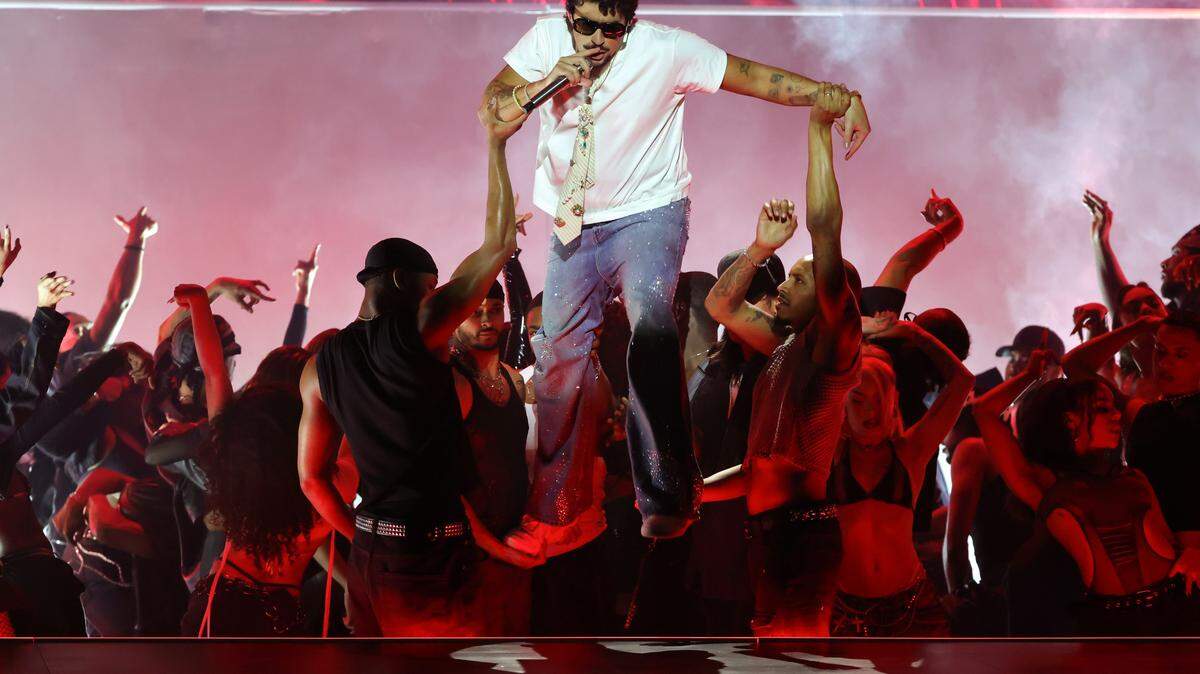
Bad Bunny’s performance at the Super Bowl halftime show represents something far more significant than entertainment. It is an act of defiant presence, a cultural assertion that doubles as a political declaration in an era when the two have become inseparable.
Days before taking the world’s biggest stage, Bad Bunny accepted his Grammy Award with characteristic directness.
His album, DeBi TiRARA Mas Fotos, which means I should have taken more photos, had won in the face of an industry that has long demanded linguistic assimilation as the price of mainstream success. It was the first time in history an album in a language other than English had won the top award at the Grammys. His acceptance speech included a pointed message against the U.S. Immigration and Customs Enforcement, a reminder that for millions of Americans, immigration enforcement isn’t abstract policy but lived reality.
The Grammy moment was prologue.
Politics and culture at the Super Bowl
The Super Bowl will be the main event where politics is no longer downstream from culture.
Politics is culture now.
In this environment, the Super Bowl halftime show, perhaps the last remaining spectacle when the entire country and much of the world focuses on a single cultural event, becomes not just entertainment but a battlefield on the 50-yard line between two teams and two Americas.
The NFL understands this. They chose Bad Bunny knowing that for this artist, there is no code-switching, no bilingual concessions. He performs in Spanish. Full stop. At a moment when America has never been more fraught over changing demographics, when the rhetoric around language and belonging has reached fever pitch, when simply being brown-skinned can get you arrested, the nation’s most-watched sporting event will feature an artist who refuses to perform in English.
Bad Bunny isn’t the first Latino artist to take the Super Bowl stage. Shakira and Jennifer Lopez headlined together in 2020, Gloria Estefan performed multiple times in the 1990s, and artists like Ricky Martin have made appearances. But only Bad Bunny is a Spanish-only artist.
That matters in this moment.
A U.S. citizen from Puerto Rico born Benito Antonio Martinez Ocasio, Bad Bunny excites the world in a language reviled by the current administration. For President Donald Trump, Spanish is the language of invaders.
A Spanish-language idol in the Trump era
And yet, could there be any other choice to perform at the Super Bowl today? Bad Bunny is the top-selling artist in the world. He represents a younger, browner generation of Americans who are the future of this country. He is proudly and unabashedly Latino and defiantly American for being so.
This creates a fascinating tension. Half of America is going to lose its mind over this performance. Not because of any overtly political message Bad Bunny might deliver, though he certainly could. But because his mere presence on that stage, singing in Spanish to well over 100 million viewers, is itself a political statement.
Bad Bunny will enter the temple of American culture and his voice will ring across the world as if declaring “I am here! I am American! I am the future!”
He doesn’t need to mention ICE. He doesn’t need to speak about Latino belonging or define his vision of America. Just showing up says it all. His presence is the politics.
Bad Bunny’s halftime show will be remembered as a marker of demographic inevitability colliding with cultural anxiety. As I wrote in my book, “The Latino Century: How America’s Largest Minority is Transforming Democracy,” our country is presently in a demographic footrace. It’s between an emerging generation - younger, browner, poorer but more optimistic about the future of America - and an older generation, the wealthiest, most privileged ever, that feels threatened by our changing demographics.
In 1980, there were 14.8 million Latinos in the United States. By 2021, that number had swelled to 62.5 million, according to the Pew Research Center. And between 2040 and 2050, for the first time in our history, non-Hispanic white people are expected to fall below 50% of the population.
Latino culture is American
Bad Bunny at the Super Bowl tells us where we’re going as a country. Is it any wonder that Donald Trump won’t show up in Santa Clara to see it? Or that Turning Point USA, the group founded by Charlie Kirk, the slain conservative activist, is putting on its own halftime show?
I believe our changing demographics point us to a pluralistic society where color and ethnicity are less divisive than they are now. I look forward to that day.
But today, Bad Bunny represents millions of Americans who have been told, explicitly and implicitly, that they need to change who they are to belong. His performance rebuts the false premise of America as a “melting pot.” Bad Bunny proves you can be American and speak Spanish. You can be American and be proudly Latino. You can be proudly Latino and be the center of attention at the Super Bowl, the biggest American stage of all.
The culture war didn’t create this moment. It simply revealed it. America has always been multilingual, multiethnic, constantly evolving. What’s different now is that we can no longer pretend otherwise. We can no longer maintain the fiction of a single, unified American culture that others must assimilate into.
Bad Bunny on that Super Bowl stage, watched by everyone from Kansas City to San Juan, destroys that fiction simply by existing.
The MAGA movement is about stopping cultural change. It’s about viewing someone like Bad Bunny as a threat to being American. These false ideas will lose on Sunday.
Ultimately, MAGA will be as successful as stopping time. America is changing, and no border wall can stop what is happening.
Half the country will celebrate today with Bad Bunny. Half will rage. But everyone will watch. And in watching, they’ll confront the reality that the NFL, that most American of institutions, has already accepted: The future speaks Spanish. The future is brown. The future is here.
Mike Madrid is a political analyst and a special correspondent for McClatchy Media.