
From Bad Bunny to Amazon, boycotts mean nothing if nobody really cares | Opinion
Since Super Bowl weekend, I’ve been boycotted out.
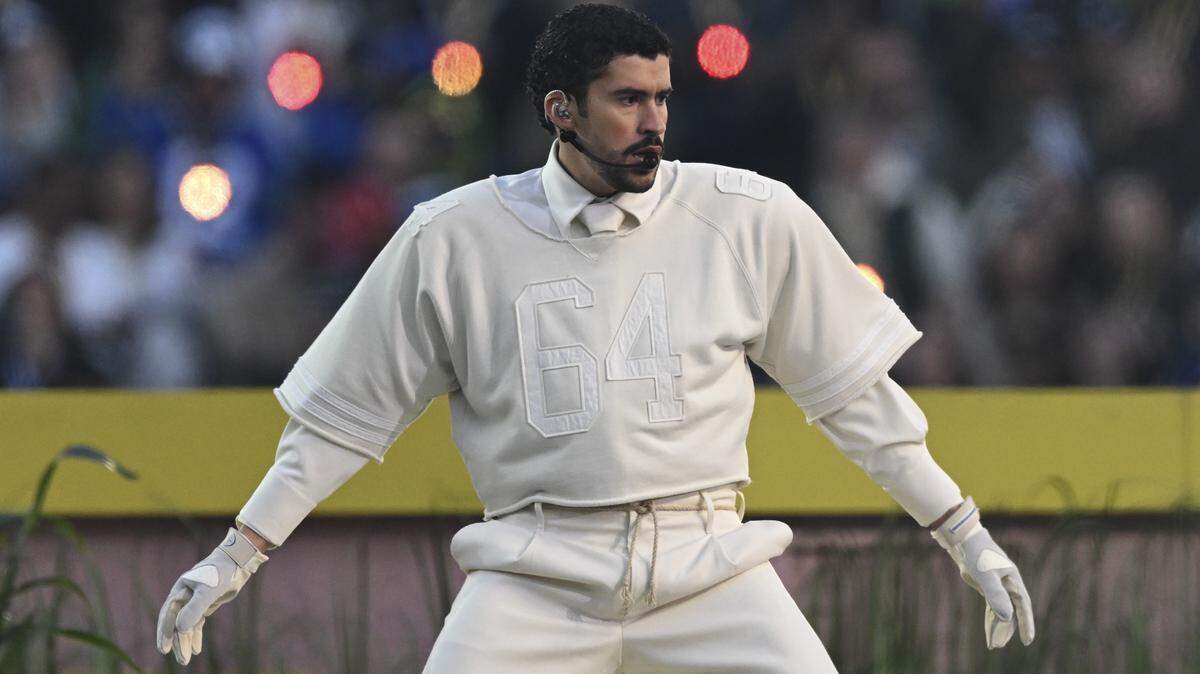
On game day, there was a lot of pressure to shun what I was told would be a woke, immoral show performed in Spanish by Puerto Rican artist Bad Bunny. But it was going to be hard for me to avoid unless I walked away or changed the channel, and I was not in charge of the remote.
I learned the next day that the boycotters watched enough of what they were boycotting to form an opinion. It was not good.
Then my beloved Scott Galloway, author of one of my favorite newsletters, professor, podcaster and political pundit, called on me to free myself of the shackles of Big Tech in an effort to fight President Donald Trump’s immigration policies.
According to Galloway, I was supposed to boycott Amazon, Apple, Google, Microsoft, Paramount+, Meta, Uber, Netflix, OpenAI and X.
That’s a huge list. I use nearly all those products all day long, except Uber (because I drive myself, thank you very much) and Paramount+ (which I’ve already been boycotting since Manchester United crashed out of all European soccer competitions).
But Galloway wasn’t done. I was also supposed to boycott AT&T, Comcast, Charter Communications, Dell, FedEx, Home Depot, Lowe’s, Marriott and UPS, because “these consumer-facing companies that we have identified as active enablers of the U.S. Immigration and Customs Enforcement.”
I joked to myself, “This list is crazy! Is Galloway kidding?” Then I saw Galloway on Instagram musing from what appeared to be his living room. Wearing a hoodie, weirdly tinted sunglasses and surrounded by dogs, I realized he’s never been more serious in his life.
Galloway’s logic is that by resisting Big Tech I would be sending a message to Trump and “thwart(ing)” his “assault on our nation’s values.”
So, as the logic goes, I would be sticking it to Trump by sticking it to Big Tech and by telling my boss I would only be communicating via handwritten faxes this month because Microsoft Word, Google Docs and Apple Pages are all out.
Oh, and hey boss, don’t try to call me, email me, or slide into my DMs either. No, I can’t take that package to FedEx and no, I will not book the hotel for the event, and do not ask me why I am changing our Internet provider!
It’s very messy.
So messy, in fact, that Galloway couldn’t even boycott Instagram for a day! He says “we’d boycott Instagram too if we could, but we need it to get this message to you.”
Yeah, Professor, boycotts are hard.
Galloway’s betrayal of his own boycott reminds me of California’s ban on travel to states that had enacted anti-LGBTQ laws. That ban was enacted in 2017.
California Democratic lawmakers wanted to send a strong message with the boycott but found it really tough to stay out of those states. The law was filled with exceptions, and a common workaround was to use private or campaign funds to book trips to boycotted states.
It’s like Rev. Martin Luther King Jr., told everyone during the Montgomery Bus Boycott. He said: “Don’t ride the buses, unless you need to go to work, or get home, or if your feet hurt.”
Kidding, King didn’t say that. The bus boycott was straightforward and had a clear objective; they weren’t simply raging at the world. It wasn’t for show. King led a movement where the boycotters had real leverage and made real sacrifices. And he continued to engage his opponents, provocatively, but also peacefully. Contrast that with today’s “leaders” who tweet performative slogans thousands of miles away, when they aren’t sending out fundraising emails.
And King was successful, unlike our boycotts of multiple halftime shows, Galloway’s attempt to bring down a president and the S&P 500 and California’s attempt to rein in hate.
I’m not saying today’s boycotters aren’t concerned about issues in this country; I’m just saying the country is boycotted out. And judging by their inability to follow their own boycotts, the boycotters are boycotted out as well.
What eventually ended the state travel ban in 2023 was the wisdom of then-Senate President Toni Atkins. Though an early supporter of the policy, and openly gay, Atkins came to realize that the policy wasn’t working and that it was a poor substitute for engaging others with empathy and humanity.
“I think polarization is not working,” said Atkins at the time. “We need to adjust our strategy. We know what we need to do, but we need to be able to be there to do it.”
Atkins was right, as was King before her. We should follow their examples.
Matt Fleming is an opinion writer and special correspondent for McClatchy Media. You can follow him on X at @flemingwords or email him at flemingwords@gmail.com.
This story was originally published February 25, 2026 at 11:32 AM.