
Balcony solar is viable affordable energy option for California renters | Opinion
With retail electric bills rising 61% faster than inflation, more Americans are looking for ways to address their high energy bills. One obvious answer is solar, which is now the cheapest energy source in history. California lawmakers are currently considering a law, the Plug and Play Solar Act, that would allow many more residents, including renters, to take advantage of this technology and its cost-savings.
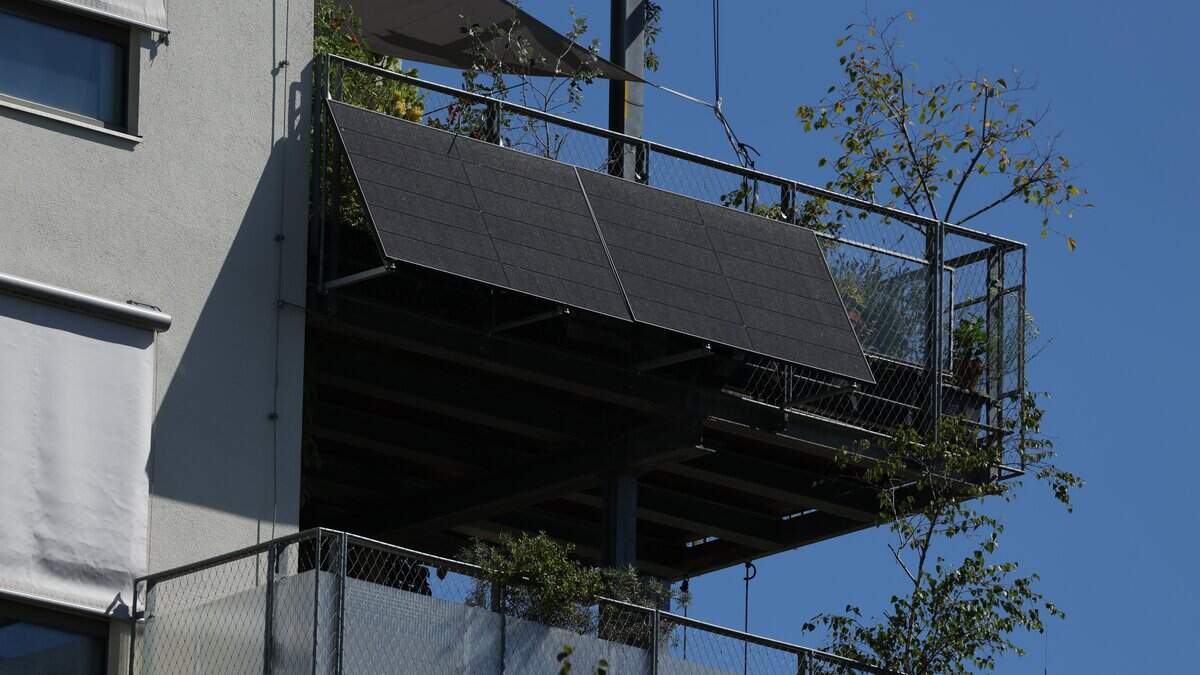
California Senate Bill 868, sponsored by Senator Scott Wiener, D-San Francisco, passed the Senate 35-1 and is now making its way through the Assembly. This bill would cut the red tape around plug-in solar — a system of portable panels that generate electricity and, through a connection to a standard home’s 120-volt outlet, channel it safely into a household’s wiring to power its appliances.
Without the Plug and Play Solar Act, the small 400-watt panels that these systems use, which are typically hung from balconies or put on patios, are treated as much larger solar arrays that require permits and approvals by utility companies.
If passed, the law will help millions bypass red tape to harness the power of the sun — no contractor, permitting or fussy install required. Estimates suggest that plug-in solar could save Americans $13 billion a year, all while offsetting thousands of megawatts of electricity demand, which is often otherwise met by burning more polluting coal, oil and natural gas.
California is in good company in its pursuit of affordable solar options. Bills that would make DIY solar easier to adopt have already been introduced, with bipartisan support, in over half of U.S. states. And six states — Utah, Maryland, Colorado, New Hampshire, Virginia and Maine — have already passed laws allowing homeowners and renters to use plug-in solar systems.
In addition to displacing millions of metric tons of emissions every year, plug-in solar can ease strain on our electric grid. California is facing skyrocketing demand for electricity thanks to data centers and the costs of cooling in ever-hotter summers. When gas prices go up or storms take down power lines, solar panels can keep essential appliances running.
Plug-in solar could also help address affordability and equity concerns, especially for those most burdened by surges in fossil fuel pricing. Today, 70% of Americans don’t have access to rooftop solar systems because we rent or otherwise can’t afford the steep costs of rooftop panels.
Black, Native American and Latino households spend more of their income on energy than white households do, but they, along with low-income households, are also more likely to rent than to own. That means that one option to meaningfully bring down the cost of electricity — rooftop solar — is unavailable to them. Plug-in solar, which offers annual household savings between $200 and $400 and doesn’t require any permanent structural changes, could help.
Most Americans prefer wind and solar to gas and oil. What’s getting in our way isn’t a lack of interest in clean energy; it’s regulations that wrongly treat small plug-in systems the same as much larger solar arrays. Plug-in panels are already popular internationally, where permits and installers aren’t required. Twenty-seven European countries have legalized plug-in solar. In Germany, around 3 million balcony solar kits are in use, and experts say they are demonstrably safe.
That hasn’t stopped utility companies from lobbying to block their use, citing possible safety hazards to customers and workers fixing power lines during outages. But safety measures are already part of California’s plug-in legislation, which requires testing and certification of devices to ensure that they will shut off automatically when the power goes out, protecting against circuit issues.
Of course, balcony solar isn’t going to solve all of our energy affordability issues, and the costs of even small panels — around $500 for an 800 watt system — may be a stretch for the 14 million Americans with utility debt. Still, passing plug-in solar legislation is a step in the right direction. It certainly doesn’t prevent us from taking further action to help the planet.
Changing state laws can drive the price of plug-in solar even lower. Market research predicts that if five or more states adopt plug-in solar, the cost of these systems will drop, and all the more so if one of those states is California, the largest solar market in the country.
Plug-in solar will reduce utility costs and advance more equitable access to clean energy at the same time.
Shivani Radhakrishnan is an assistant professor of political philosophy at Vassar and a public voices fellow with The OpEd Project in partnership with the Paul and Daisy Soros Foundation.