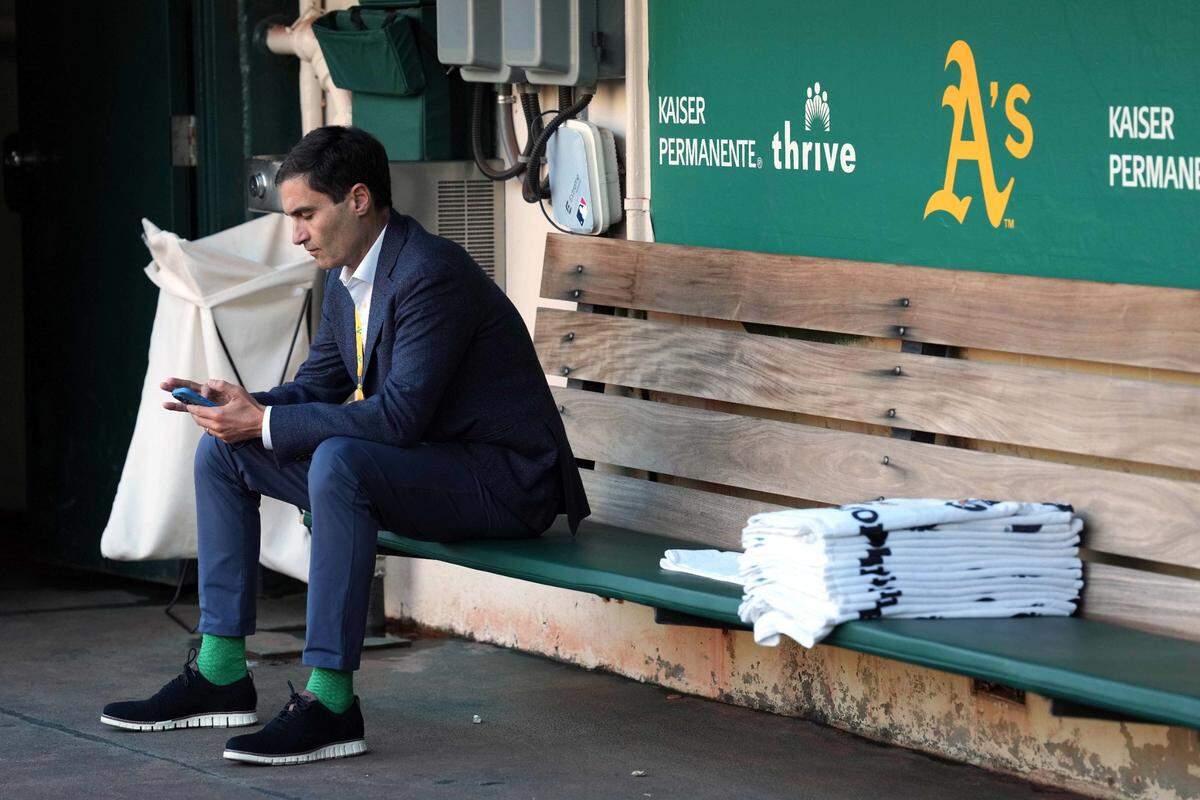
A’s president Dave Kaval resigns before team moves to Sacramento, then Las Vegas. Here’s why
After a tenure that included multiple unsuccessful negotiations for new stadiums in the Bay Area, the team moving from Oakland temporarily to a minor league ballpark in West Sacramento in 2025 and eventually to a planned $1.75 billion ballpark on the Las Vegas strip set to open in 2028, Athletics president Dave Kaval has resigned, the team announced Friday.
Kaval had been the public face of A’s owner John Fisher’s stewardship and multiple efforts to build a new stadium in Oakland before talks broke down with local officials. The team then centered its focus on relocating to Las Vegas, and will play at West Sacramento’s Sutter Health Park in the interim.
Kaval’s last official day on the job will be Tuesday. He held the position since 2016 and is leaving to pursue new business opportunities in California. Kaval previously served as the president of San Jose Earthquakes, also owned by Fisher, and worked to build their home stadium, PayPal Park, which opened in 2015 before he was tapped to lead the A’s stadium efforts.
“We are grateful for Dave’s contributions and leadership over the past eight years. He guided our organization through a period of significant transition, and we sincerely thank him for his unwavering commitment to the team,” Fisher said in a statement. “As we look ahead to the next chapter of our franchise, the team will continue to grow under new leadership, diving the organization toward success during our interim years in West Sacramento and at our new home in Las Vegas.”
Sandy Dean, a longstanding business partner of Fisher’s who has been a public face during the team’s efforts to secure its Las Vegas stadium, will take over as interim president, the team said. He will lead the search for a new president to preside over the temporary stay in West Sacramento and the planned transition to Las Vegas. Kaval was the seventh president in the franchise’s 123-year history.
“I’ve worked with Dave closely for 15 years,” Dean said in a phone interview. “And his initiative, energy and love of baseball are all qualities that make him a real pleasure to work with on a day-to-day basis.”
The A’s hope to break ground on their new stadium at the site of the Tropicana Resort during the second quarter of 2025. The team said it confirmed its ability to finance the ballpark to the Las Vegas Stadium Authority during its Dec. 5 meeting when a 30-year lease, non-relocation agreement and development documents were approved. It’s believed with those hurdles being cleared, Kaval felt it was appropriate to look for new opportunities.
“I will be staying in California to explore new opportunities at the crossroads of business and government,” Kaval said in a statement. “I am grateful to A’s ownership for the opportunities they have given me.”
Effort to keep A’s in Oakland ultimately failed
Kaval was outwardly optimistic about a new ballpark getting done in Oakland early in his tenure. In 2017, he announced the team had decided on a piece of land in the Peralta Community College District in Laney College. But the plan was met with quick opposition from city leaders and residents who were concerned the stadium would displace low-income families and businesses in the Chinatown and East Lake neighborhoods.
A year later, Kaval and the A’s publicly announced their intentions to build their new ballpark at Howard Terminal near Jack London Square. The Oakland City Council in 2021 voted to approve a non-binding term sheet to continue negotiations with the team over the $12 billion proposal that included the ballpark and a mixed-use development project. But Kaval said the team would not accept that term sheet while the two sides disagreed over infrastructure costs.
It was around that time Kaval publicly spoke about a “parallel path” that included the ballpark plans in Oakland and Las Vegas. In June 2023, Nevada Gov. Joe Lombardo signed a bill that would give the A’s $380 million in public money toward their Las Vegas stadium. The A’s began the application process for relocation a week later, and MLB owners unanimously approved the team’s eventual move that November.
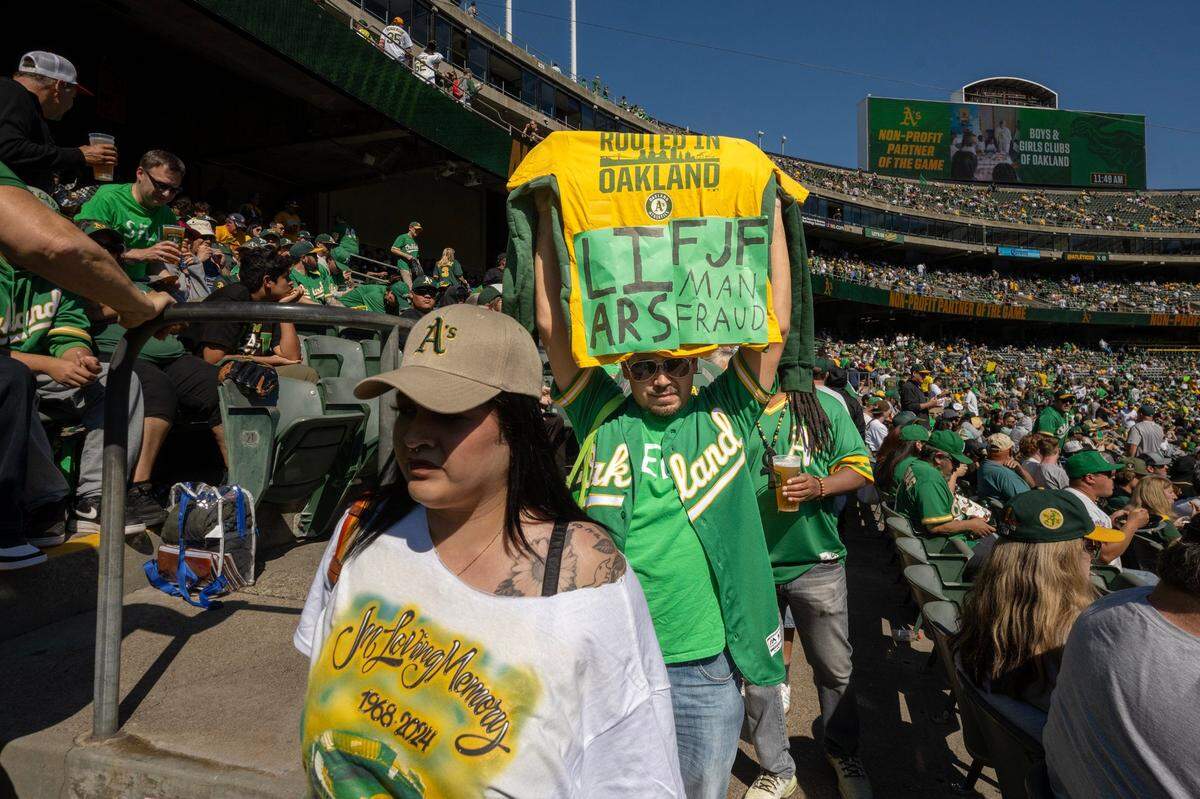
And with its lease at the Oakland Coliseum up in 2024, the team announced last April it would move temporarily to Sutter Health Park, home of the Sacramento River Cats, rather than extend their lease at their home venue they initially moved to in 1968. In September, the A’s played their final game at the Coliseum, where the team won four World Series and six American League pennants in 57 seasons.
Sutter Health Park will become the smallest ballpark in MLB, with 10,000 permanent seats and a 14,000-person capacity including grass seating beyond the right field wall. The team will share the stadium with the Triple-A River Cats, the top minor league affiliate of the San Francisco Giants. The two teams are slated to host more than 150 combined regular season home games at the ballpark from March through September.
A’s season ticket holders have been told there is no guarantee the stadium will host playoff games should the A’s reach the postseason because the stadium may not meet requirements for what MLB calls “jewel events.”
The Sacramento Kings, who own the River Cats and Sutter Health Park, are overseeing renovations to the ballpark, including new and upgraded clubhouses, dugouts, bullpens, premium areas for fans, a larger press area, new natural grass playing surface and other amenities. The majority of premium season tickets have sold out while standard season tickets are on sale through Jan. 9.
With Kaval as president, the A’s decided to become the third MLB team to permanently relocate since 1971. That year, the Washington Senators moved to become the Texas Rangers; in 2005, the Montreal Expos became the Washington Nationals.
This story was originally published December 27, 2024 at 11:00 AM.