
Sac State football gets warm welcome from the MAC. Who are those teams, exactly?
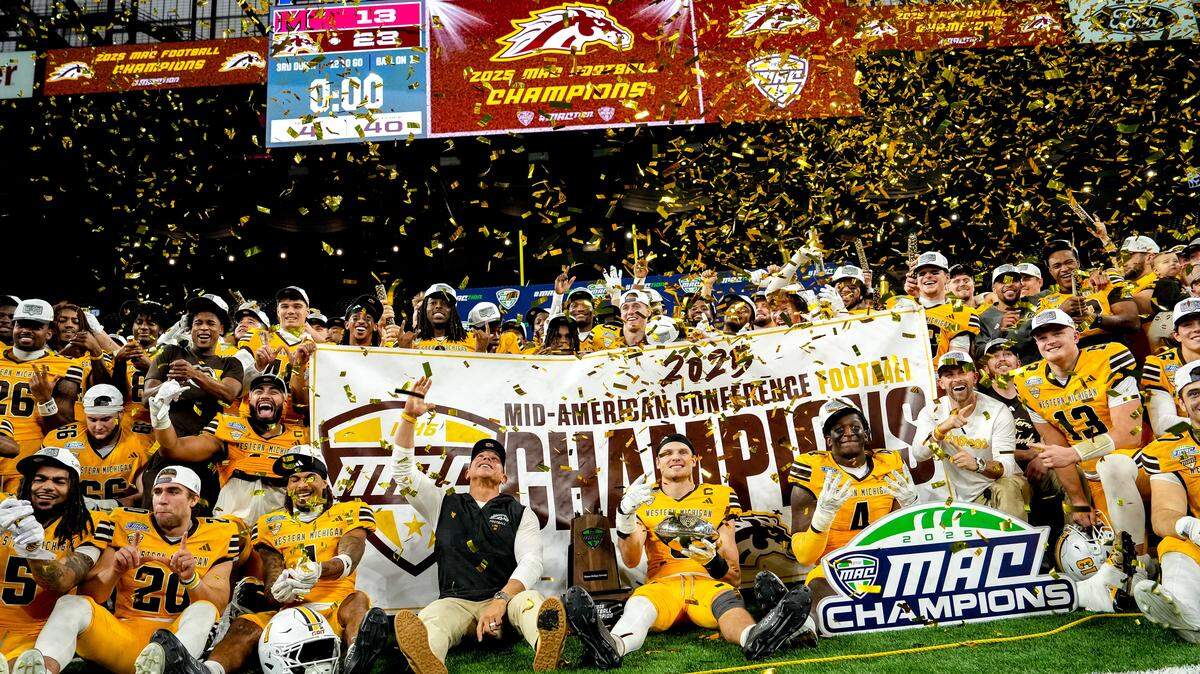
The interest between Sacramento State and those within the Mid-American Conference in becoming college football partners was mutual, as Hornets president Luke Wood and athletic director Mark Orr phrased it Monday and from a statement from the MAC commissioner affirmed.
After 33 years at the FCS level, Sac State this fall will start its five-year commitment as a football-member only in the MAC, which competes at the highest NCAA Division I classification, the Football Bowl Subdivision, and has teams dotted throughout the middle and eastern part of the country.
And yes, cue the one-liners that “nothing says Mid-American more than Sacramento State,” as the MAC has a membership base heavy in the Great Lakes region (think snow and ice in late fall games, some of which are telecast on ESPN midweek). As many have noted on social media
Well, Sacramento is in the state capital of the largest populated state in the country, and it gives the 80-year-old MAC its first reach into California. Extra bonus: It doesn’t snow in Sacramento.
Sac State’s move is bold and ambitious as it becomes the first California program to move from the second tier of college football to the FBS since Fresno State and San Diego State made that move up in 1969.
Sac State replaces Northern Illinois University, which was invited to join the Mountain West Conference. The other 12 MAC programs are: Ohio schools Akron, Ball State, Bowling Green, Miami, Kent State, Ohio University and Toledo; Michigan schools Central Michigan, Eastern Michigan and Western Michigan; Buffalo of New York; and UMass of Massachusetts.
The Hornets are in the MAC because the MAC invited them in (all other Hornets sports programs will be in the California-heavy Big West Conference starting this fall; the Big West does not offer football).
Sac State will play eight MAC games this fall, four at a Hornet Stadium that is undergoing upgrades and four on the road. The official schedule will be released by March.
“We’re excited to start new football rivalries with some of those great programs,” Orr said Monday. “It’s all new for us and for them, and that’s exciting.”
New rivalries, and no poking the Pandas
Wood said the first call he received from a MAC school to congratulate the Hornets addition was from Ball State. And yes, there are social media gags in full giddy mode, too, including the much-anticipated “Ball” playing at “Sac.” .
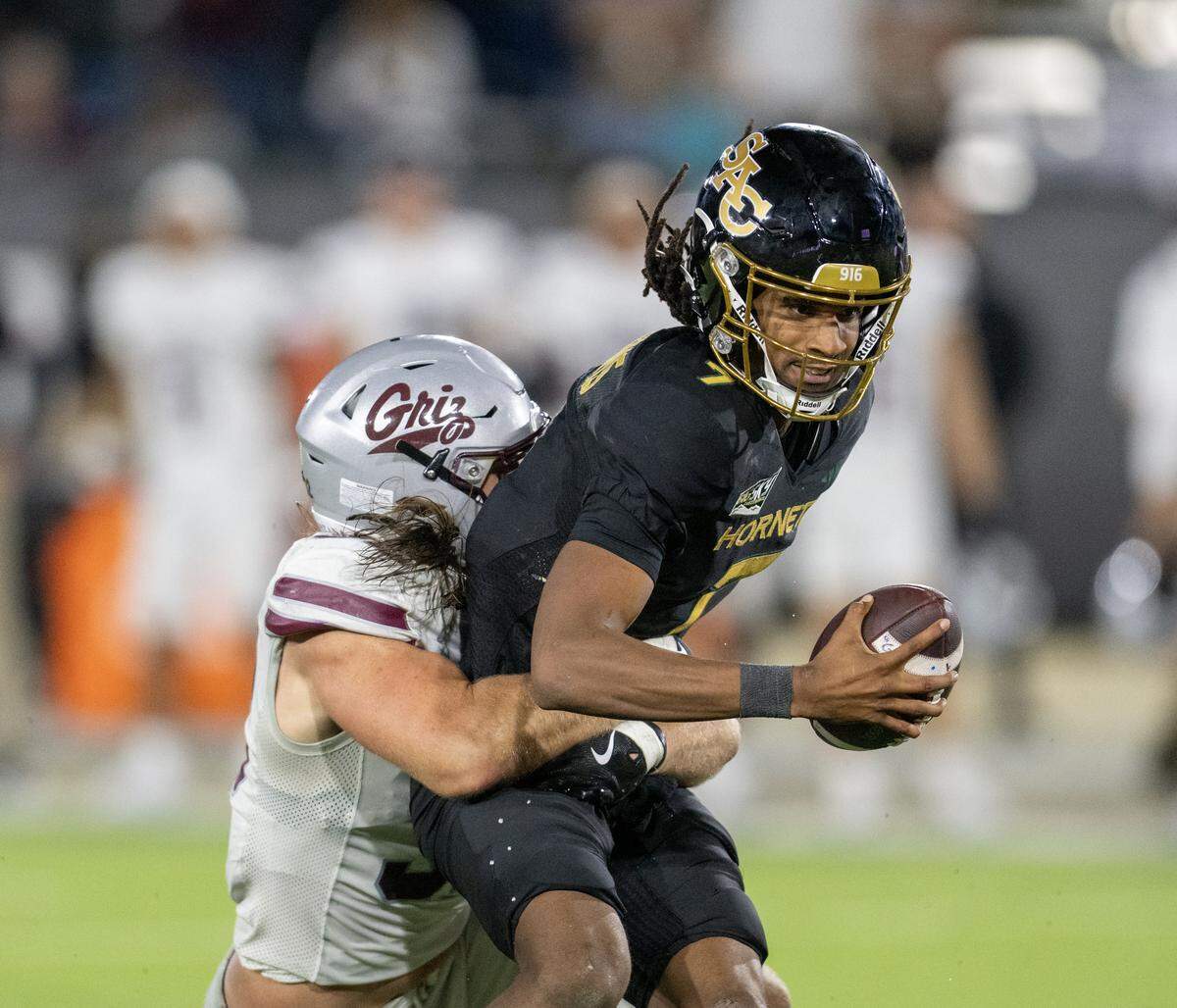
Wood, in good spirits Monday talking about the football change, said he would not poke fun at any rival mascots. He did so last fall during a halftime television appearance in ribbing an upcoming opponent in the powerhouse Montana Grizzlies as “Pandas,” which irked coach Bobby Hauck to the point that he responded by calling Wood “a clown.” Montana fans who attended the Montana-Sac State game at Hornet Stadium said they were amused by Wood and enjoyed him visiting them in the visiting stands.
Wood said Sac State is making a “bold leap into the future. Our move to the FBS represents more than a change in classification; it is a declaration of who we are and where we’re going. We are elevating our university, our student-athletes, and the entire Greater Sacramento region onto the national stage, committed to competing, leading, and winning at the highest level.”
The MAC prides itself on having the highest graduation rate among the 10 NCAA FBS conferences, and for having an entertaining football product with a theme of “Get some MACtion.”
Sacramento State is paying a total of $23 million over five years for entry into the MAC, including the $5 million fee to the NCAA for the transition up.
“Today’s exciting announcement is about strengthening our competitive profile and creating value for the membership,” MAC Commissioner Jon Steinbrecher said in a statement. “We were presented with an opportunity to add an institution with demonstrated success in football, a record of investment and commitment to the continued growth of the institution and community. Sacramento State is ready and poised for this next step.
“I welcome the Hornets to the Mid-American Conference and expect they will become a competitive and contributing member to the long history and legacy of one of the oldest Division I conferences.”
Sac State’s rise to FBS
Sac State founded its football program in 1954. It won just four conference championships entering the 2019 season with a lot of mediocre to miserable campaigns sprinkled in as coaches came and went.
Then, under coach Troy Taylor, the Hornets soared, winning three consecutive Big Sky Conference championships before Taylor was hired away by Stanford following Sac State’s 12-1 season in 2022.
It was during this championship stretch in one of the top FCS leagues that Sac State started to kick the tires on a move to the FBS. The Hornets reached the FCS playoffs for the fourth time in 2023, this time under coach Andy Thompson, in a season that included an upset over Stanford (with Taylor at the helm of the Cardinal).
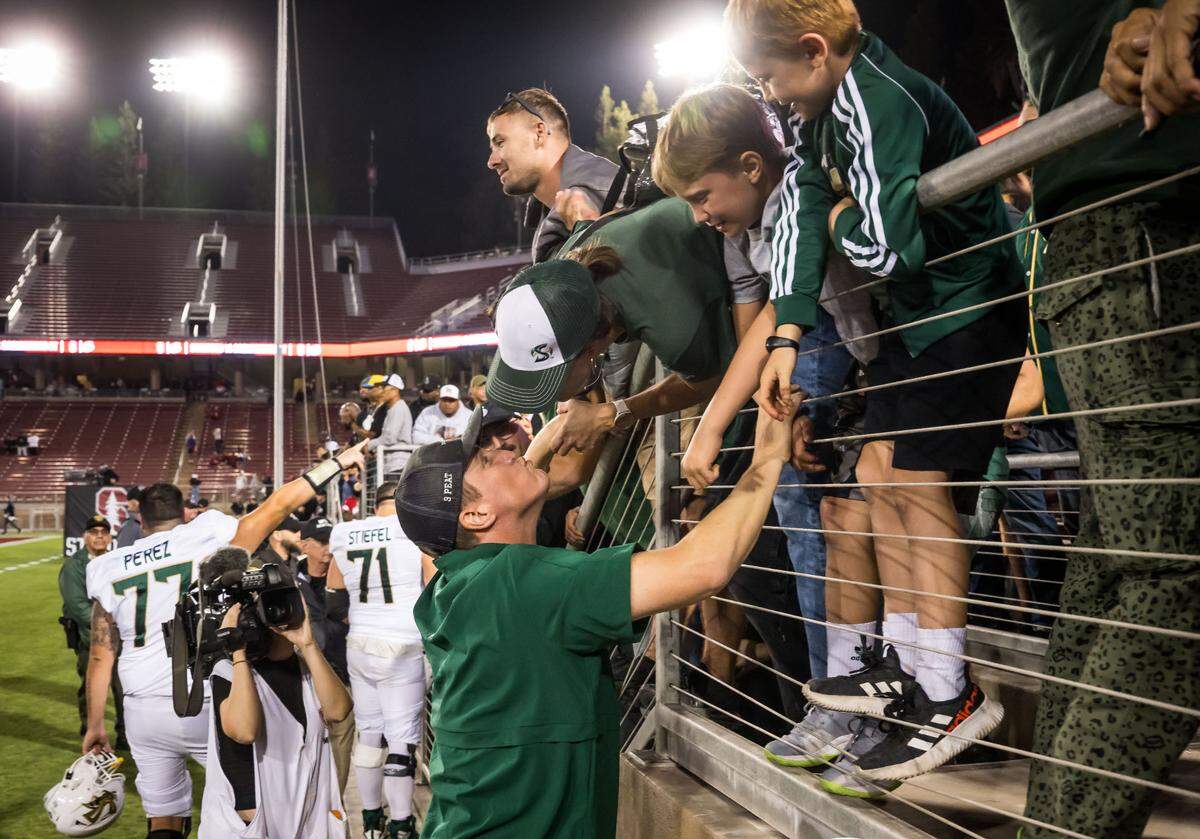
The team won seven games last season under first-year head coach Brennan Marion, who departed after the season to become offensive coordinator for the Colorado Buffaloes.
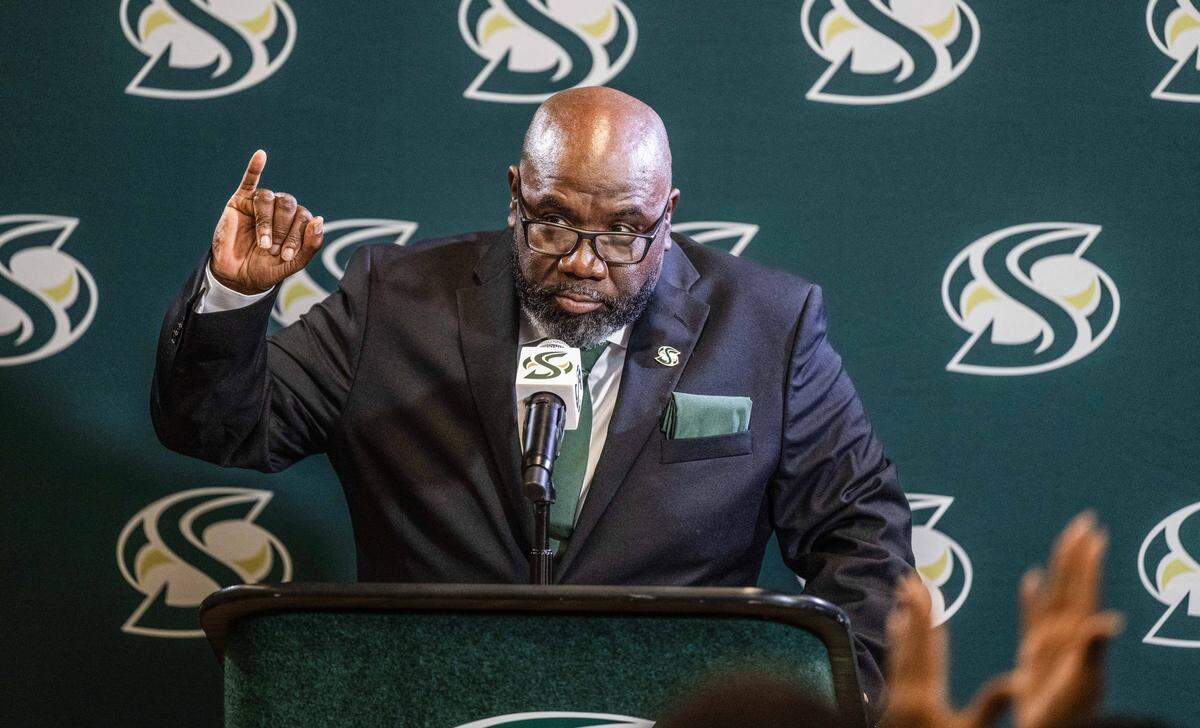
The Hornets now bound into a new era under new coach Alonzo Carter, who on Monday said, “It’s a great honor to be the coach that leads us into the FBS.”
Said Geoffrey S. Mearns, Council of Presidents Chair and President of Ball State in the MAC statement, “This partnership will immediately strengthen the Mid-American Conference’s competitiveness, and it will provide flexibility for the future. In this period of dynamic transformation, we believe we must be proactive and innovative. This relationship demonstrates the enduring viability of our conference, and it provides our member institutions with additional confidence.”
A closer peek at the MAC
The MAC for decades was a starting point for coaches who later led some of the most storied programs in the sport’s history.
Nick Saban coached the Toledo Rockets to a 9-2 record in his lone season of 1990. He won a national championship at LSU and six at Alabama.
Brian Kelly from 2004-06 coached the Central Michigan Chippewas to a 19-16 record with one conference championship. He became the winningest coach in Notre Dame history from 2010 to 2021.
Matt Campbell spent most of 2003 through 2008 as assistant coach at Bowling Green, coached Toledo from 2009 through 2015 including head coaching duties the last four of those seasons, coached Iowa State from 2016 to 2025 and is now preparing for his first season as Penn State’s coach.
By the 2000s, the MAC started to wheel out top quarterbacks, including those who had varying degrees of success in the NFL.
They include: Charlie Batch (Eastern Michigan), Byron Leftwich (Marshall, when it was a MAC member), Chad Pennington (Marshall) and Ben Roethlisberger (Miami), who from 2004 to 2021 passed for 64,088 yards and 418 touchdowns and won two Super Bowls for the Pittsburgh Steelers.
MAC in Bowl games
MAC teams are eligible for postseason Bowl games.
Sac State, per NCAA guidelines for programs that transition up from the FCS to the FBS, is ineligible for a Bowl game during its first two probationary seasons.
However, should the NCAA not find enough teams that are six-win, Bowl-eligible to play in any of the 45 Bowl games, a committee will look at others who have at least six wins, even if they are transitioning up. So, yes, Sac State has plenty to play for in 2026 and beyond.
Five MAC teams competed in Bowl games to cap the 2025 season in Central Michigan, Miami of Ohio, Ohio, Toledo and Western Michigan. Those bowls had unique names in this era of broad sponsorship branding: the Snoop Dogg Arizona Bowl, the Scooter’s Coffee Frisco Bowl, the GameAbove Sports Bowl, the Bush’s Boca Raton Bowl of Beans and the Myrtle Beach Bowl.
This marked the 16th time in conference history that at least five MAC teams received Bowl invitations.
MAC’s greatest players
The MAC has had its share of top talents who became members of the Pro Football Hall of Fame, located in Canton, Ohio — the geographic heart of the MAC.
Antonio Gates in 2025 became the first Hall inductee who did not play a single down of college football. He did play basketball at Kent State, tried out for the NFL and stuck. He set the NFL record for tight ends for touchdown receptions with 116 over a 16-year career with the San Diego/Los Angeles Chargers.
Joe Staley starred on the offensive line at Central Michigan and earned six Pro Bowl nods with the San Francisco 49ers and was named to the NFL’s All-Decade team for the 2010s.
Jason Taylor terrorized MAC teams at Akron, then had a Hall of Fame career as a defensive lineman with the Miami Dolphins.
Jack Lambert when he chased down ball carriers as a linebacker for Kent State famously picked bits of gravel from his knees and face in the early 1970s, which caught the attention of the Steelers. They drafted him in 1974, and Lambert produced a legendary career that included four Super Bowl championships.
Another Hall of Famer to come out of the MAC: Emlen Tunnell, who from 1948-1961 tallied 79 interceptions for the New York Giants and Green Bay Packers in making the NFL’s 50th and 100th Anniversary All-Time teams. Tunnell became the first African-American player to be inducted into the Pro Football Hall of Fame.
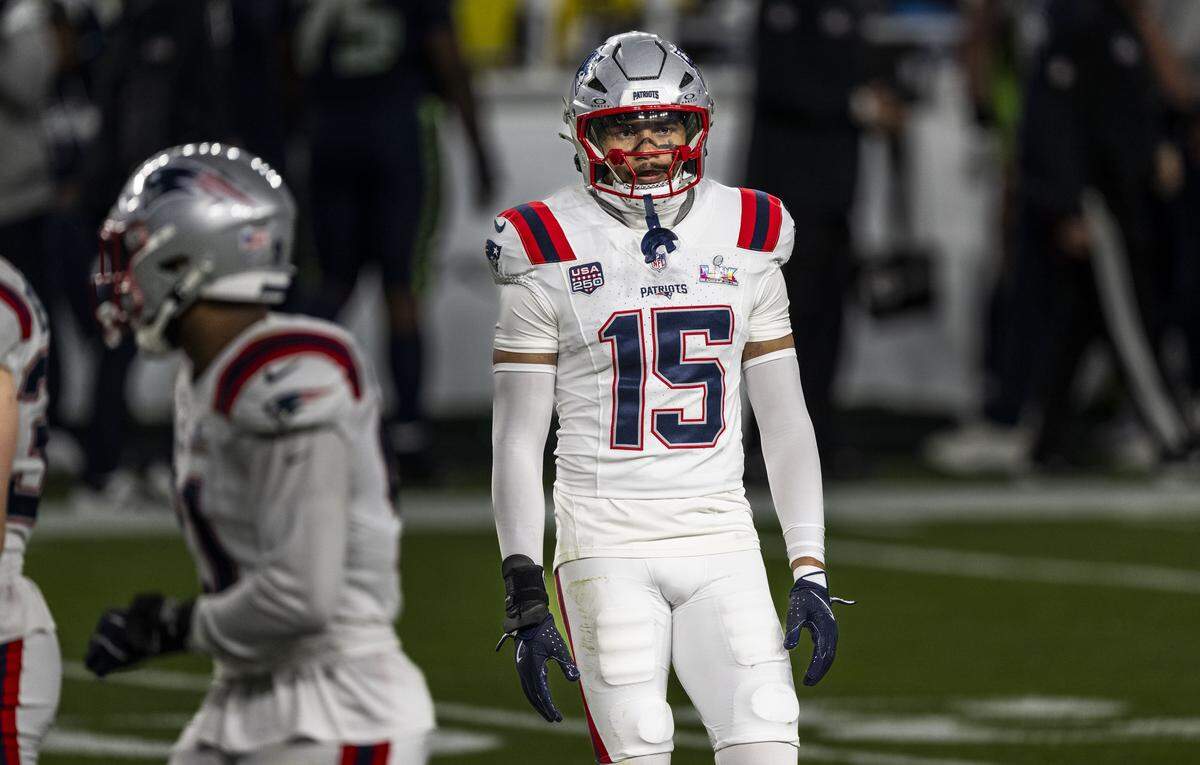
Sac State has also featured some top players, including linebacker Marte Mapu, a third-round pick of the New England Patriots who played in Super Bowl LX earlier this month against the Seattle Seahawks. Running back Cam Skattebo, who was putting together a strong rookie campaign for the New York Giants in 2025 before suffering a season-ending ankle injury in Week 8, played for Sac State in 2021 and 2022 before transferring to Arizona State.
This story was originally published February 17, 2026 at 12:12 PM.