
Tour features Sacramento-area gardens gone native
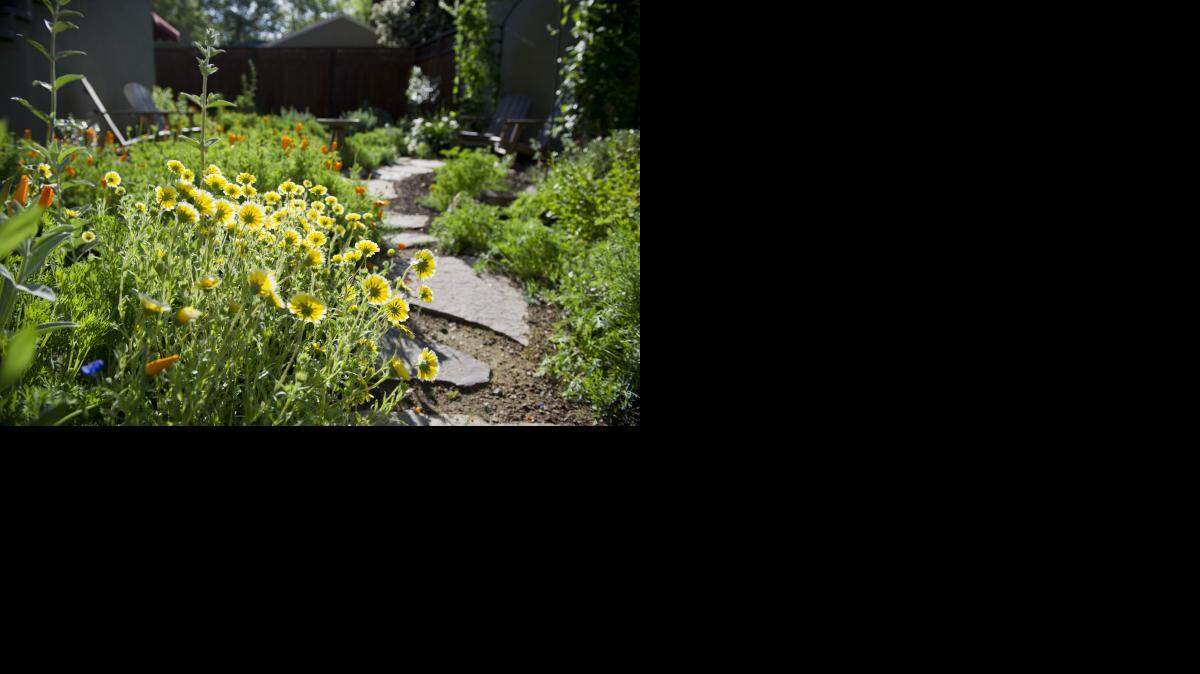
David and Rebecca Pardee went native and never looked back. And now they’re enjoying the benefits of gardening on the wild side.
With petals like rays of morning sunshine, cheery yellow tidy tips and bright orange California poppies fill the space once occupied by plain old lawn. Western blue flax sparkles like little sapphires, strung on green stems. With huge white blooms, bush anemones glow with an inner fluorescence. Everywhere, native bees flit busily from flower to flower to make the most of their natural favorites.
Under an arbor of pipevines, David Pardee likes to watch all the action in his garden of native plants. It’s a lot more enjoyable than mowing a lawn.
“The fun part of all this is the amount of beneficial insects that come into the yard,” Pardee observed. “We must have 50 different species of native bees.”
When the Pardees bought their East Sacramento home, they knew the lawn had to go. He wasn’t thinking so much about water use, David said, but the work.
“It was all lawn and a few foundation plants,” he recalled of the former landscape. “My wife and I never liked the lawn, particularly. In fact, I didn’t like mowing it at all.”
California’s ongoing drought pushed the Pardees into action.
“When we became aware of how much water (the lawn) needed to grow, we decided finally to take it out and see what else we could do with it,” Pardee added. “I started experimenting with different plants. I discovered pretty quickly that the things that worked best were California natives.”
The result? The Pardees now enjoy a flower-filled show where once there was only grass. Their urban backyard looks like a wildflower meadow.
And their water use? “It’s dramatically lower – probably 50 percent in summer,” Pardee said. “In summer, I don’t even water the backyard.”
See for yourself. The Pardees’ garden will be among 30 different stops April 11 on the fifth annual Gardens Gone Native tour. Hosted by the Sacramento-area chapter of the California Native Plant Society, the free self-guided tour features gardens of all sizes from Woodland to Orangevale. Several are concentrated in East Sacramento and Land Park.
Each garden includes at least 50 percent native plants, but usually more. The Pardees’ home, for example, features 75 percent natives in the front yard and an all-native backyard.
Attendance on the Gardens Gone Native tour has swelled along with the public’s interest in growing native plants, said Colene Rauh of the native plant society. The number of participants jumped from 260 to 556 in the past two years. More than 300 people signed up for this year’s tour as soon as it was announced.
The drought definitely ramped up interest in native plants, particularly those that grow naturally in areas without much annual rainfall. Through evolution, they’re already adapted to low-water conditions.
Native gardens can cut outdoor irrigation needs by 60 percent to 90 percent compared with traditional lawn-based landscaping, according to the society. These native gardens do need some irrigation to get “established,” usually the first full season of growth. But after their roots get comfortable, they offer an attractive alternative during times of limited water.
Due to growing interest, the society helped create California Native Plant Week, with special events and observations April 11-19. Now in its fifth year, this commemoration – annually held the third week of April – was officially established by the California Legislature. Assemblywoman Noreen Evans of Napa introduced the original resolution.
As part of Native Plant Week, the local native plant society chapter is hosting both the tour and Wildflower Wonders, a celebration of native plants for families April 18 at Soil Born Farms in Rancho Cordova.
Part of the challenge of planting a native garden is finding the right plants for a particular space. Not all natives have the same needs (for example, coastal redwoods need lots of water) and many varieties are still comparatively rare in commerce.
Pardee, for example, found several of his original plants at the UC Davis Arboretum’s plant sales. Open to the public, these sales – including one April 11 – offer a wealth of low-water natives proven to grow well in the Sacramento Valley.
“My goal is to eventually have all the soil covered with plants,” he said. “I want to create a living tapestry.”
Some natives prefer shade, but most thrive in full sun. That made conversion of his front yard a challenge, as it had been with the lawn. A large sycamore shelters the compact space from full sun for all but a few hours a day. Pardee found several natives that relish dappled dry shade. Among them are showy Pacific Coast hybrid irises, spendthrift, yarrow and several varieties of coral bells (Heuchera).
“This is a small space, and look what you can do,” Rauh said during a tour preview. “It’s so aesthetically pleasing and has so much variety in a little tiny area.”
Birds, bees and butterflies make their home amid the many different native plants. By his count, Pardee used almost 100 different varieties of native plants in his landscape.
His favorites? “I love the buckwheats, especially the red,” he said. “I didn’t water them at all last summer and they were amazingly happy plants.”
Water-wise, how low can they go?
“Last year, I stopped watering the backyard in the middle of May,” Pardee said. “I found some plants don’t do well with summer water; in fact, they prefer no water in summer. I was only irrigating once a month. I thought, what if I don’t water them at all?”
Instead of withering away, those dry-loving natives thrived. And lawn mowing? It became a distant memory.
“It’s a lot more enjoyable to work in the yard now,” Pardee said. “Because most of the year, that work is very minimal. I’m out here because I want to be. I enjoy being out in the yard because there’s so much going on, all the bees and hummingbirds and butterflies. It’s wildlife in the city.”
Call The Bee’s Debbie Arrington, (916) 321-1075. Follow her on Twitter @debarrington.
SEE, BUY NATIVES
California native plants will be featured at these three events:
▪ GARDENS GONE NATIVE TOUR
What: Participating gardens, featuring at least 50 percent native plants that docents can identify and answer questions about. Register online and get a map and brochure via email.
Where: 30 gardens in Sacramento and Yolo counties
When: 9:30 a.m.-4 p.m. April 11
Admission: Free
Information: www.sacvalleycnps.org, email gardensgonenative@gmail.com
▪ ARBORETUM PLANT SALE
What: The arboretum specializes in low-water natives and will have thousands of plants available at its first public sale of 2015.
Where: Arboretum Teaching Nursery, Garrod Drive, UC Davis
When: 9 a.m.-1 p.m.April 11
Admission: Free
Information: : arboretum.ucdavis.edu
▪ WILDFLOWER WONDERS
What: This family event spotlights California natives growing in their natural habitat along the American River Parkway. A huge plant sale includes natives grown by the California Native Plant Society’s Elderberry Farms plus Cornflower Farms and Hedgerow Farms. Learn about butterflies, birds and bees, too.
Where: Soil Born Farms, 2140 Chase Drive, Rancho Cordova
When: 10 a.m.-4 p.m. April 18
Admission: $5 donation
Information: www.sacvalleycnps.org
This story was originally published April 10, 2015 at 6:00 AM with the headline "Tour features Sacramento-area gardens gone native."